Husband Not Talking to Wife for 13 Days Does Not Amount to Cruelty, Says Supreme Court; Acquits Man in Suicide Case
The Supreme Court has acquitted a man who was convicted for allegedly subjecting his wife to cruelty, observing that differences are a part and parcel of married life and that a husband cannot be held guilty merely for not speaking to his wife for several days.

- Read in
- हिंदी
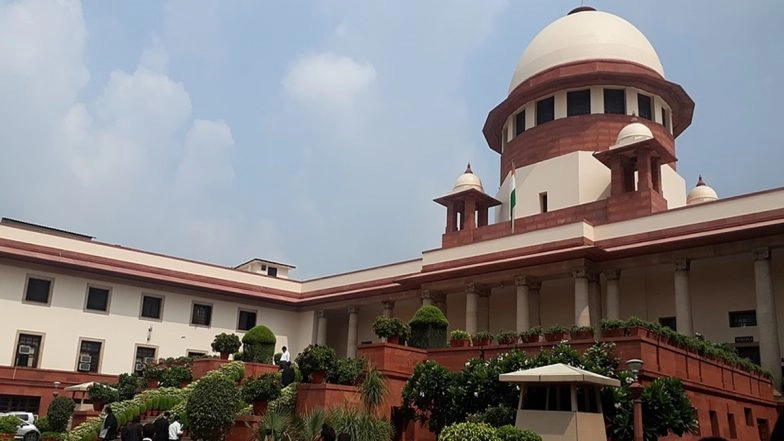
The Supreme Court has acquitted a man who was convicted for allegedly subjecting his wife to cruelty, observing that differences are a part and parcel of married life and that a husband cannot be held guilty merely for not speaking to his wife for several days.
A bench of Justices J K Maheshwari and Atul S Chandurkar set aside the conviction of the man, who had been sentenced to three years in prison under Section 498A of the Indian Penal Code (IPC) by a trial court, a verdict later upheld by the Madras High Court.
The case involved the death by suicide of the man's wife, who allegedly took the extreme step after her husband did not communicate with her for 13 days.
'Mere Non-Communication' Does Not Constitute Cruelty: Supreme Court
The apex court ruled that the prosecution failed to establish cruelty beyond a reasonable doubt and found no evidence to show that the husband's conduct met the legal threshold required under Section 498A IPC. Husband Cannot Treat Wife Like an Animal, Says Supreme Court; Denies Bail to Man Accused of Domestic Violence.
The court said, "In the absence of any material, mere non-communication with the deceased for 13 days, without substantiating the same with cogent evidence, cannot, in any stretch of the imagination, fall within the ambit of cruelty in the facts of this case."
The bench also noted that this was not a case involving any specific quarrel between the husband and wife and that there was insufficient evidence to support allegations of cruelty.
Background of the Case
According to the prosecution, the woman died by suicide by hanging while staying at her parental home. It was alleged that at the time of marriage, her parents had given Rs 3 lakh, 20 sovereigns of gold jewellery and other valuables.
The prosecution further claimed that the husband frequently demanded money from her parents and that his family continued to press for additional dowry, leading to harassment. Husband Forcing Wife To Leave Job, Live As per His Wish and Style Amounts to Cruelty, Says Madhya Pradesh High Court While Dissolving Woman's Marriage.
The woman was also allegedly reprimanded for visiting her parental home without informing her in-laws. It was further alleged that the husband refused to speak to her over the phone, causing severe mental distress that ultimately drove her to take her own life.
Based on these allegations, a case was registered under Sections 498A and 304B of the IPC against the husband, his parents and two brothers.
What the Supreme Court Observed
The Supreme Court emphasised that courts must assess whether the alleged conduct is serious enough to push a woman towards suicide or cause injury or danger to her mental health.
"In cases like these, the court clarified that what needs to be determined is whether the gravity or seriousness of the act is of such a nature that it is likely to drive a woman to die by suicide or cause injury or pose danger to her mental health."
The bench reiterated that the burden rests on the prosecution to prove allegations beyond a reasonable doubt and that the accused is not required to disprove such allegations.
Court Finds No Evidence of Cruelty
The Supreme Court noted that the woman could not travel with her husband to Muscat due to pending passport and visa formalities, a fact recorded by both the trial court and the High Court.
Referring to the allegation that the husband had not spoken to his wife for 13 days, the court observed that such conduct, in the absence of supporting evidence showing cruelty or harassment, could not automatically attract criminal liability under Section 498A IPC.
The ruling ultimately overturned the husband's conviction, providing clarity on the evidentiary standards required to establish cruelty in matrimonial disputes.
(The above story first appeared on LatestLY on Jun 05, 2026 11:21 AM IST. For more news and updates on politics, world, sports, entertainment and lifestyle, log on to our website latestly.com).