Mumbai Water Tanker Strike Called Off After CM Devendra Fadnavis Intervenes
Mumbai's two-day private water tanker strike was called off today, June 9, Chief Minister Devendra Fadnavis met with operators and paused strict licensing enforcement. The strike by 2,100 tankers had cut 550 million liters of daily supply, hitting railway stations and housing complexes already facing a 10per cent BMC municipal water cut.

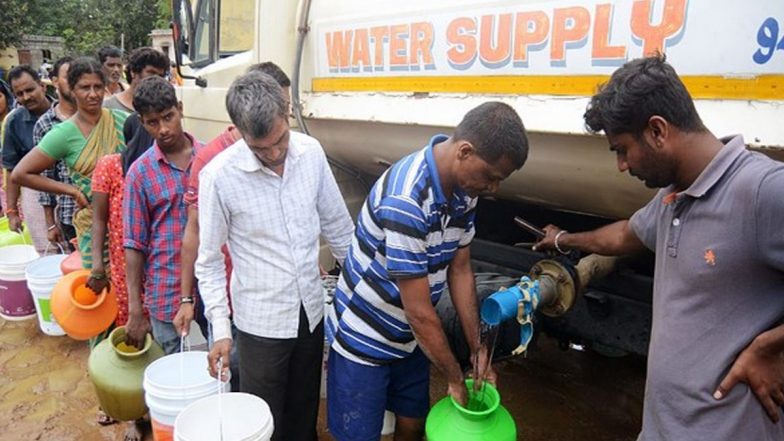
Millions of Mumbai residents and commercial establishments breathed a sigh of relief on Tuesday evening, June 9, after private water tanker operators officially withdrew their indefinite strike following state government intervention. The decision concluded a multi-layered series of high-level negotiations, capped by an emergency meeting between representatives of the Mumbai Water Tanker Association (MWTA) and Chief Minister Devendra Fadnavis at the Mantralaya.
The two-day strike, which involved approximately 2,100 private water tankers, had heavily crippled the city’s ancillary water supply. Tanker services are expected to resume normal operations progressively over the next 24 hours. Mumbai Weather Forecast for Tomorrow, Wednesday, 10 June 2026: Expect Thunderstorms With a High of 33°C.
Government Intervention Resolves Regulatory Deadlock
The standoff was triggered by administrative notices issued to well and borewell owners by district Tehsildar offices. The notices ordered local operators to immediately halt water supplies to tankers until they secured fresh licenses under stringent Central Ground Water Authority (CGWA) guidelines. The association argued that the strict terms - including mandatory digital flow meters not manufactured within Maharashtra and a clause restricting water extraction to only one tanker per well - were logistically impossible to meet on short notice.
The breakthrough came Tuesday afternoon when Chief Minister Fadnavis directed Mumbai's city and suburban district collectors to temporarily suspend the enforcement notices. "We convened a meeting with CM Fadnavis who called the collectors and asked them to withdraw the notices. The collectors have issued that no action will be taken. We will be given written correspondence over the next four days. Taking account of the dire circumstances in Mumbai, we called off our strike," said Amol Mandhare, Secretary General of the MWTA.
Widespread Disruptions Across Transit Hubs and Housing
Before the withdrawal, the strike had rapidly magnified Mumbai's existing water distress. The private fleet accounts for nearly 550 million litres of water distributed daily, supplementing areas that lack consistent municipal infrastructure. The supply gap severely hit major transit lines. Western and Central Railway networks reported immediate shortfalls at primary hubs. At Chhatrapati Shivaji Maharaj Terminus (CSMT), which requires 13 lakh litres daily for operations and train watering, a deficit of over one lakh litres forced authorities to shift coach-watering duties to outer stations like Panvel, Igatpuri, and Bhusawal. Similarly, Dadar and Mumbai Central terminals faced up to 20% drops in available reserves, temporarily halting routine onboard coach washing.
In the residential sectors, numerous housing societies in regions like Kandivali and Marol were forced to aggressively ration water and extend daily supply cuts. Some commercial centres in north Mumbai went as far as declaring half-days on Monday and Tuesday as emergency backups dried up. Mumbai Water Tanker Strike From June 8: City Faces Fresh Water Supply Concerns Amid 10% Cut.
Background About Water Tankers Strike
The private tanker strike hit Mumbai at a highly vulnerable period. The Brihanmumbai Municipal Corporation (BMC) had already enforced a city-wide 10 per cent water cut due to depleting reservoir levels. As of June 9, total storage across the city's seven interconnected feeding lakes had dropped to just 12.85 per cent of total capacity. With municipal resources stretched thin, the civic body had even begun evaluating structural provisions under the Disaster Management Act to temporarily seize control of private wells and borewells before the settlement was reached.
Following the state's intervention, the district collectors' offices are scheduled to collaborate with the BMC to draft long-term local compliance guidelines that align with CGWA norms without fully disrupting urban supply chains.
(The above story first appeared on LatestLY on Jun 09, 2026 11:39 PM IST. For more news and updates on politics, world, sports, entertainment and lifestyle, log on to our website latestly.com).