Chemotherapy Drug Outperforms Remdesivir Against Coronavirus in Lab Experiments: Study
Using this hybrid approach, scientists from the Shenzhen Institutes of Advanced Technology in China, screened 1,906 existing drugs for their potential ability to inhibit replication of the coronavirus by targeting a viral protein called RNA-dependent RNA polymerase (RdRP).

Beijing, January 3: A chemotherapy medication originally developed to treat cancer could potentially be repurposed to inhibit the replication of the novel coronavirus and treat COVID-19, according to a study based on computer simulations and lab experiments. The research, published in the journal PLOS Computational Biology, combined multiple computational techniques that simulate drug-virus interactions from different, complimentary perspectives.
Using this hybrid approach, scientists from the Shenzhen Institutes of Advanced Technology in China, screened 1,906 existing drugs for their potential ability to inhibit replication of the coronavirus by targeting a viral protein called RNA-dependent RNA polymerase (RdRP). How to Register for COVID-19 Vaccine in India Using Co-WIN; Check Step By Step Process of Vaccination Laid Down by Indian Government.
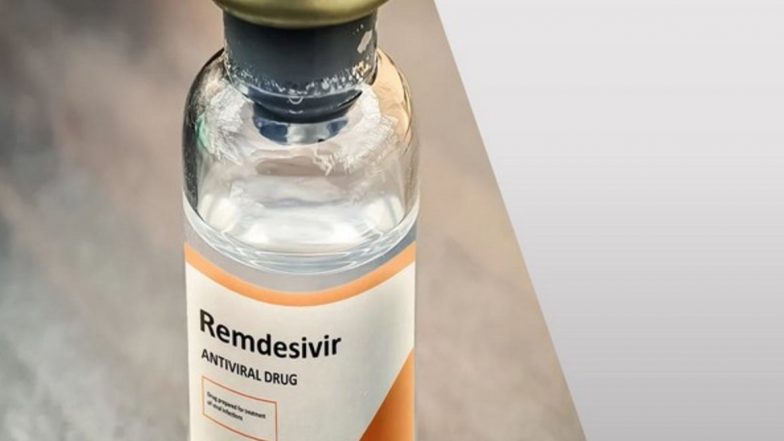
The researchers identified four promising drugs, which were then tested against the SARS-CoV-2 virus in lab experiments. They said two of the drugs, pralatrexate and azithromycin, successfully inhibited replication of the virus, and further lab experiments showed that pralatrexate more strongly inhibited viral replication than did remdesivir -- a drug that is currently used to treat some COVID-19 patients.
According to the scientists, the findings suggest that pralatrexate could potentially be repurposed to treat COVID-19. However, the researchers said the chemotherapy drug may prompt significant side effects and is used for people with terminal lymphoma, so they added that immediate use for COVID-19 patients is not guaranteed. But the research highlighted the importance of the new screening strategy to identify drugs that could be repurposed. UK Abolishes 'Tampon Tax' on Menstrual Products to End Period Poverty.
"We have demonstrated the value of our novel hybrid approach that combines deep-learning technologies with more traditional simulations of molecular dynamics," said study author Haiping Zhang of the Shenzhen Institutes of Advanced Technology. The researchers are now developing additional computational methods for generating novel molecular structures that could be developed into new drugs to treat COVID-19.