Chemotherapy To Get Costlier? Centre Approves Price Hike for Key Cancer Drugs Amid Shortage
The Centre has granted in-principle approval for price revisions of cisplatin and carboplatin, two key chemotherapy drugs facing shortages across India. The move, enabled through special powers under DPCO's Para 19, aims to improve drug availability as manufacturers cite rising raw material and production costs. Final price increases will be determined by the NPPA after further review.

- Read in
- हिंदी
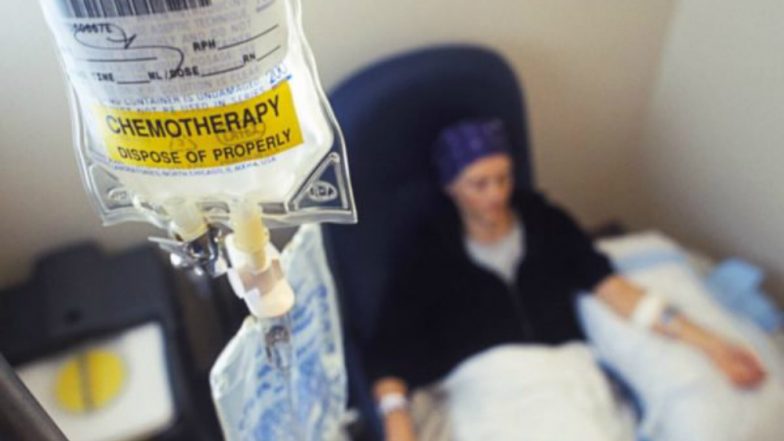
Cancer patients across India could see an increase in the cost of some chemotherapy treatments after the central government granted in-principle approval for price revisions of cisplatin and carboplatin, two widely used first-line chemotherapy drugs currently facing supply shortages.
The move marks the government's first formal acknowledgment of concerns over the availability of these medicines. Officials say the decision is aimed at addressing manufacturing viability issues and restoring supplies of critical cancer drugs that oncologists have reported are becoming increasingly difficult to procure. Kerala Shigella Outbreak: Health Department Issues High Alert After Child's Death.
Chemotherapy To Get Costlier as Government Approves Special Intervention
According to official documents, the Department of Pharmaceuticals (DoP) has granted "in principle approval" for invoking Para 19 of the Drug Price Control Order (DPCO), 2013, for selected formulations, including cisplatin and carboplatin injections.
“In principle approval of the Hon’ble Minister (Chemicals & Fertilizers) is granted for utilizing para 19 of DPCO, 2013 in respect of aforesaid formulations," a June 7 communication from the Department of Pharmaceuticals to the National Pharmaceutical Pricing Authority (NPPA) stated. Hyderabad: Telangana Government Orders Legal Action Against Travellers From Ebola-Affected Nations for Providing False Addresses.
Para 19 is an exceptional provision that allows the government to intervene beyond standard pricing mechanisms when necessary to ensure the availability or affordability of essential medicines.
Why Are Prices Being Increased?
Government records show that pharmaceutical companies had sought upward price revisions for several medicines, citing rising production costs.
According to a communication from NPPA, manufacturers pointed to "substantial increase in Active Pharmaceutical Ingredient (API) prices, escalation in production costs, fluctuations in foreign exchange rates, and other related factors adversely affecting the economic viability of manufacturing and marketing of these formulations on a sustainable basis."
Applications involving 82 formulations were reviewed by an Inter-Ministerial Committee (IMC). After examination, the committee recommended price revision consideration for only four formulations—one carboplatin injection, one cisplatin injection and two anti-tetanus immunoglobulin injections.
The committee cited significant increases in raw material costs and concerns about continued availability of the medicines.
Cancer Drug Shortages Triggered Concern
The recommendation was influenced in part by concerns raised by hospitals treating cancer patients.
“The Committee also noted the concerns expressed by Tata Memorial Cancer Hospital regarding shortages of Carboplatin and Cisplatin injections, which are widely used as first-line chemotherapy drugs for the treatment of various cancers."
The committee further stated: “Ensuring uninterrupted availability of these critical medicines is essential from a public health perspective."
Several oncologists had previously reported treatment disruptions caused by shortages of platinum-based chemotherapy drugs. Doctors said hospitals were facing inventory pressures, delayed treatment schedules and, in some cases, the need to use alternative therapies that may be more expensive or less effective.
How Much Could Prices Rise?
The government has not yet announced the final revised prices. However, the Department of Pharmaceuticals has asked NPPA to determine an appropriate increase after examining raw material costs and manufacturing expenses.
“The Standing Committee recommended 10 per cent increase per year from last fixation with a ceiling of 50 per cent could also be a guide but primary principle should be cost increase." Officials emphasised that any increase should be linked to actual cost escalation rather than a fixed percentage. The pricing authority has also been asked to review similar requests from other manufacturers facing raw material cost pressures.
What It Means for Patients
While higher prices may increase treatment costs for some patients, policymakers believe the move could help address supply shortages that have affected access to essential chemotherapy medicines.
Industry sources and healthcare experts have pointed out that low regulated prices, combined with rising manufacturing costs, had made production commercially challenging for some companies.
As a result, shortages were increasingly being viewed not only as a supply-chain issue but also as a pricing and viability problem.
With the government now allowing consideration of price revisions, manufacturers may receive greater financial incentives to increase production and stabilise supplies.
The government's decision highlights the challenge of balancing affordable medicine prices with the need to ensure adequate supply of critical drugs.
For patients and hospitals, the coming weeks will be crucial as NPPA evaluates cost data and determines whether price increases for cisplatin and carboplatin are necessary to restore availability without significantly affecting affordability. Until then, oncologists and healthcare providers will continue to monitor both supply conditions and the potential impact of any pricing changes on cancer treatment costs across the country.
(The above story first appeared on LatestLY on Jun 10, 2026 12:37 PM IST. For more news and updates on politics, world, sports, entertainment and lifestyle, log on to our website latestly.com).