Maldives Crisis Proof of India Losing Influence to China in Its Own Backyard
Maldives has drifted away from India’s sphere of influence over the past three years and embraced China with open arms.

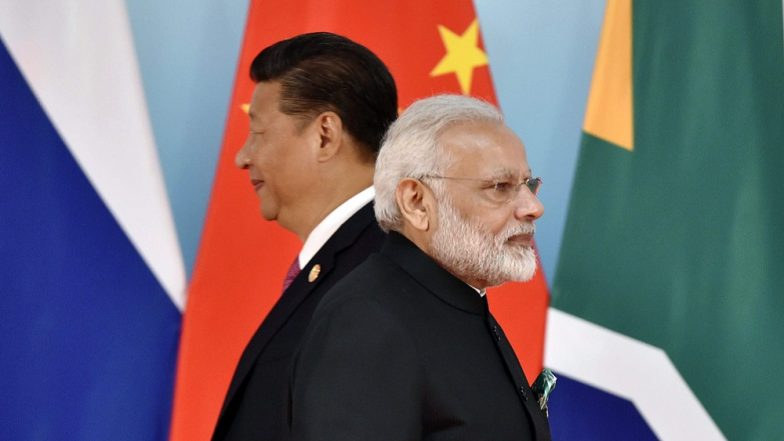
Four years ago, the swearing-in of Prime Minister Narendra Modi was most notable for its foreign policy outreach to India’s neighbours. The gesture of inviting the heads of government at the swearing in was s symbol of ‘We begin as we mean to continue – priority to India’s neighbourhood.” Yet, four years later relationship with three of India’s neighbours – Pakistan, Nepal and Maldives is worse than what the government started out with.
The recent crisis in Maldives is a case in point of the Indian government’s ineptitude of managing events in its own neighbourhood. On February 21, President Yameen extended the State of Emergency in Maldives that he had imposed 15 days ago. This despite what was obviously a reprimand from New Delhi that said, “We are deeply dismayed that the government of Maldives has extended the State of Emergency for a further 30 days. The manner in which the extension of the State of Emergency was approved by the Majlis in contravention of the Constitution of Maldives is also a matter of concern.”
India says it has kept track of the events that began with the country’s Supreme Court quashing charges against nine political prisoners on the grounds that they were politically motivated and flawed. This included the quashing of charges against former President Mohammad Nasheed who lives in exile in Colombo, Sri Lanka.
The Supreme Court’s orders were reportedly unexpected for the current government and triggered protests across the country which prodded Yameen to impose a state of emergency across the archipelago. In the following days, he had the Supreme Court’s Chief Justice and other judges arrested and the orders quashing the charges against Nasheed, rescinded. Through all of this, India has issued statements of its concern over the state of affairs in Male.
Even as India has issued statements asking for Maldives to return to the path of democracy, the decisions taken by President Yameen show that his foremost priority is cementing his power in the country and quashing any resistance against him. As Yameen has gone about cracking down on dissidents and placing those supporting him in positions of power, there have been increasing calls for India’s intervention in the country including former President Nasheed who has called for India to “act swiftly” to resolve the crisis.
But before India could take any further steps, China stepped in and warned against outside intervention. The most recent was a statement issued by the Chinese embassy in New Delhi, “We believe the Maldivian government and people have the wisdom and ability to properly handle the problems they face and restore order in the country according to law.” And Yameen’s impervious manner towards New Delhi’s concerns hints at his belief that support from China will indeed prevent India from intervening.
Whether Yameen’s calculations prove correct or not will only be proved with time however what is notable is China’s emergence as a voice in how events pan out in Male. And this occurrence is fairly recent.
- February 2012: President Mohammad Nasheed of the Maldivian Democratic Party is ‘forced to resign at gun point’
- November 2013: President Mohammad Waheed’s office cancels Indian firm GMR’s contract to build and run the Maldives International Airport
- November 2013: President Abdullah Yameen of Progressive party of Maldives (half-brother of former PresidentMaumoon Abdul Gayoom) elected to office
- September 2014: Maldives signs deal with Chinese firm to upgrade its international airport
- March 2015: Former Maldives president Mohamed Nasheedconvicted of a terrorism charge and sentenced to 13 years in prison but is exiled after an intervention from India
- December 2017: Maldives signs Free Trade Agreement with China
- December 2017: Maldives endorses China’s Maritime Silk Road project during President Xi Jinping’s state visit to the island-nation
- February 2018: President Yameen imposes State of Emergency after Supreme Court rules that terrorism charges be quashed against nine opposition politicians including Nasheed.
As the above timeline shows, Maldives has drifted away from India’s sphere of influence over the past three years and embraced China with open arms. The cancellation of the airport contract, then signing a Chinese firm to build it, followed by agreeing to be a part of China’s Maritime Silk Road project and working out a free trade agreement prove the extent of Maldives’ exposure to China. China has also provided funds to build infrastructure inside Maldives including ports under its Belt and Road Initiative (OBOR).
While India has been the provider for critical infrastructure in the past such as hospitals, schools and colleges, China’s OBOR has meant that Maldives has been given a much larger account to draw from. A new International Monetary Fund report projects the Maldives’ external debt will hit 51.2% of GDP in 2021 from 34.7% in 2016 as a result of the infrastructure projects. The fear now is that Maldives will be saddled with servicing the external debt which will average $92 million a year for four years—though the government’s total revenue is only about $1 billion. If returns on the projects fall short, the Maldives may find itself like Sri Lanka, which built the port of Hambantota with Chinese loans. In December 2017, Sri Lanka had to turn over operation of the port on a 99-year lease to a Chinese state-owned company to avoid default.
As it was with Sri Lanka, Maldives’ strategic decisions have a direct impact on India’s security. Maldives consists of 1200 islands and with its location in Southern Arabia Sea offers Chinese warships the ability to project its power in the Indian Ocean, a domain India had managed for a long time. A friendly port in Maldives also offers China the ability to intrude into India’s own backyard.
As professor Harsh Pant points out, “India has been caught off guard with the alacrity of Maldives’ embrace of China” which has meant that India’s engagement with Male has been “hesitant of late and China has made the most of it.” Maldives is the only country that Prime Minister Modi is yet to visit in India’s neighbourhood. While India dithered, the Yameen government took another remarkable decision in 2015 that heavily favoured China. The government amended its constitution to allow foreign ownership of freehold land passes, which would potentially enhance China’s military presence on the island nation. Chinese naval ships have become regular visitors since 2015 to the Maldives.
While India’s actions have been symbolic in nature in projecting a “neighbourhood-first policy”, events on the ground show that China has taken a march over India in its own backyard. If India wants itself to be taken seriously in its neighbourhood and beyond, it needs to begin implementing coercive diplomacy to underscore that India’s patience in not unlimited and not heeding its warnings comes with a price.
(The above story first appeared on LatestLY on Feb 22, 2018 03:29 PM IST. For more news and updates on politics, world, sports, entertainment and lifestyle, log on to our website latestly.com).