
Business News | Private Capex, Urban Demand Key to Sustain India's 7% Growth Momentum: Chief Economist, Piramal Finance
Get latest articles and stories on Business at LatestLY. Private capital expenditure remains the vital missing link to sustain India's domestic economic momentum, according to Debopam Chaudhuri, Chief Economist at Piramal Finance.

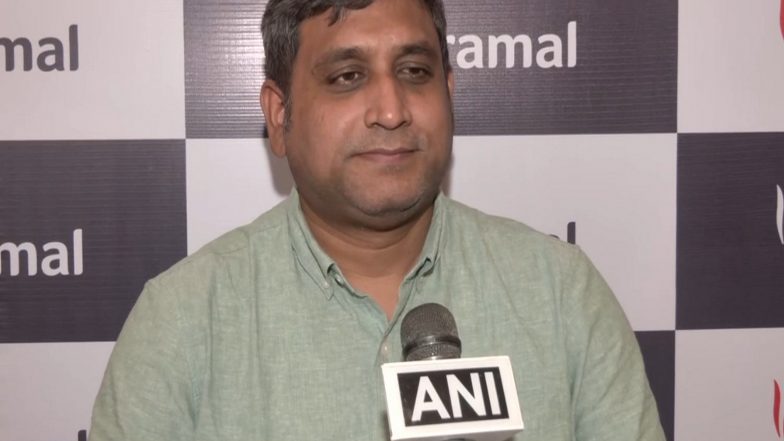
Mumbai (Maharashtra) [India], September 1 (ANI): Private capital expenditure remains the vital missing link to sustain India's domestic economic momentum, according to Debopam Chaudhuri, Chief Economist at Piramal Finance.
Speaking exclusively to ANI in Mumbai on Tuesday, Chaudhuri emphasised that private investment must build on public spending to anchor long-term expansion.
He highlighted early signals of operational deployment on the ground and noted, "Private capex is what the economy needs. And if this growth in private capex alongside government capex continues for the rest of the year, then I don't see any reason why the growth momentum that we have seen in Q1 should not be maintained."
Expressing his views on the macroeconomic outlook for FY27, Chaudhuri showed confidence that investment-led growth could override lingering headwinds, potentially taking overall national expansion close to 7 per cent.
Also Read | Janmashtami 2026 Vrat: What To Eat, What To Avoid and Proper Parana Time for Krishna's Birthday Fast.
But he also acknowledged that headline inflation remains above the Reserve Bank of India's 4 per cent target, and cautioned against premature monetary tightening.
"With this robust GDP number of 7.8 per cent, the monetary policy authorities should not consider this to be a signal that the overall Indian economy is overheating," he observed, urging policy rate stability to ensure affordable capital access for private borrowers.
Chaudhuri pointed to a key divergence in consumption patterns across the country. High-performing segments like financial services continue to spur steady urban demand. In contrast, rural consumption faces weather-related headwinds from erratic monsoons, though resilience persists due to strong previous harvest cycles.
"One year of poor monsoons or one year of poor yield in the kharif or rabi crop cycles may not be very detrimental," he explained, noting that overall rural spending is unlikely to weaken significantly beyond current baseline levels.
Speaking on the issue of global input vulnerabilities, Chaudhuri highlighted that initial corporate investment appetite has comfortably absorbed global energy cost spikes and domestic fuel volatility.
Robust aggregate demand and high capacity utilisation continue to insulate industrial capex from energy price volatility over the near term, he added.
Outlining the way forward, Chaudhuri urged targeted policy support to broaden India's growth profile beyond niche financial and technology services.
To maximise employment generation, focus must pivot toward labour-absorptive sectors like MSME manufacturing, mining, food processing, and tourism. Ensuring easy access to reasonably priced capital will remain critical to absorbing semi-skilled young workers and solidifying a durable economic recovery, he concluded. (ANI)
(The above story is verified and authored by ANI staff, ANI is South Asia's leading multimedia news agency with over 100 bureaus in India, South Asia and across the globe. ANI brings the latest news on Politics and Current Affairs in India & around the World, Sports, Health, Fitness, Entertainment, & News. The views appearing in the above post do not reflect the opinions of LatestLY)