How 'blue Dot Fever' is Affecting Concerts
Live music remains popular, but many concerts are struggling with unsold tickets and cancellations.

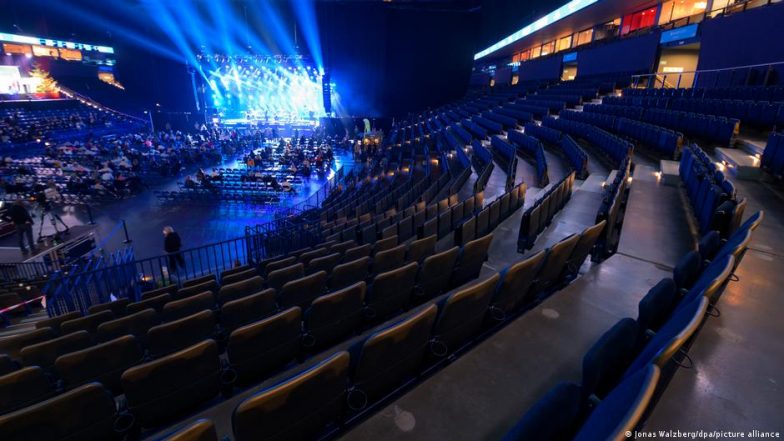
Live music remains popular, but many concerts are struggling with unsold tickets and cancellations. While superstars fill stadiums, smaller venues and acts are facing a crisis.The term "blue dot fever" has been circulating in the media for some time now. "Blue dots" refer to available seats on US ticket sales platform Ticketmaster. Lots of empty seats right before a concert can spell trouble for both artists and organizers — including cancelled shows. With more and more concerts afflicted by this "illness," is the future of the concert scene uncertain?
Also Read | World News | Pakistan to Host 2027 South Asian Federation (SAF) Games.
The economy of superstars
Also Read | Entertainment News | James Gray to Receive Lifetime Career Award at 2026 Locarno Film Festival.
The situation is quite different for big name stars. Leading musicians like Beyonce, Oasis and Coldplay still easily fill large stadiums.
According to official Pollstar charts, Beyonce had the most successful music tour in 2025, generating over $400 million (Є359 million) in revenue. The Oasis Live '25 tour was one of the biggest box office successes in recent years. Coldplay also remains a strong crowd-pleaser, with many concerts on their current world tour selling out instantly.
Yet all big concerts share a common challenge: rising costs, as points out Johannes Everke from Germany's Federal Association of the Concert and Event Industry: "Due to increasing personnel costs, rising technical costs, energy and inflation, we have soaring production costs in comparison with 2019." As a result, tickets are becoming more expensive, meaning fewer fans can afford them.
However, the impact of these rising costs are not evenly experienced across the board. Stephan Thanscheidt from FKP Scorpio, one of the largest concert and festival promoters in Europe, confirms this. "Several factors are in play here, such as some megastars having huge legions of fans who’d never miss their idols for anything. And if they need to keep an eye on their spending, many people would choose to go for a large concert, perceived to be a major event, over several smaller ones if they need to keep an eye on their spending."
The late US economist Alan B. Krueger called this "the economics of superstars," in which only a few superstars generate most of the revenue.
What about the stars of tomorrow?
Johannes Everke believes the live music market is under significant strain. Typically, organizers rely on revenue generated from large concerts to fund smaller, lesser-known acts. However, this model is at risk of collapsing if the profit margins are reduced.
Everke says that while large ticket sales at mega-events guarantee high revenue, it doesn’t necessarily mean that the promoters are gaining big profits due to ticket prices rising at a slower rate compared to promotion costs.
"The circle of life means supporting smaller bands for a period until they become big enough to start making money. You then take those profits in turn and reinvest in so-called product development by supporting smaller acts once again," Everke told DW.
One prominent example is Ed Sheeran, who, along with others, was supported by FKP Scorpio over the years before becoming a top-selling star. "Many of our current successes began as passion projects, and we couldn't always know whether they would end up being financially successful," Stephan Thanscheidt confirms. "It wouldn’t be possible without cross-financing new ideas or artists we believe in. When we succeed today, we make tomorrow’s successes more likely."
Concerts are no longer promotion tours
Another complicating factor is how the economics of concerts has changed.
Everke explains that in the past, tours served to promote new albums. "You’d play concerts and even if you lost money on them, you’d recoup the costs through album sales. So, labels would sometimes give financial contributions to concert tours." But in the age of streaming, this is no longer the case.
According to Everke, approximately half of artists’ income now comes from live performances. So, the pressure to achieve commercial success through touring is extremely high.
Additionally, many established musicians are having much longer careers now. "They’re all playing an endless series of concerts because record sales alone no longer provide enough for them to make a living," Everke says. This situation leads to a saturated market and intensified competition for audience retention.
Moving away from touring?
Some megastars have shifted away from touring and are now establishing "residencies." These are series of concerts in which artists perform at the same venue over an extended period of time.
One major example of this is Shakira, who is set to play a series of 12 concerts in the second half of 2026 in Madrid. Demand has been so high that additional dates have been announced on more than one occasion. The performances will take place in the "Estadio Shakira," a built-for-purpose stadium.
Harry Styles is another such example: In June, he played 12 concerts in London's Wembley Stadium.
Johannes Everke does not see this being a sustainable model for the future of the market though, as only very few artists are able to attract fans from all over Europe, or across continents.
Why solidarity is needed — the British example
Johannes Everke remains optimistic despite the challenges and warning signals. Live music events are in demand as never before, and the market is growing.
According to the GEMA organization, around 70 million people attended concerts featuring popular music (mostly pop and rock) in Germany in 2024, which is more than before the COVID-19 pandemic.
Even though a select few superstars will continue to account for the majority of the market’s revenue in the near future, Everke believes that the market will still expand to a broader audience. He remains certain that "people always want to hear something new and will always be wanting to hear new music and new trends."
Everke maintains that it is important to continue supporting smaller events. He cites a positive example from the British LIVE Trust model — at many large concerts, one pound per ticket is voluntarily contributed to a fund that supports small venues and the grassroots music scene.
Harry Styles supported this effort during his London residency, which Everke says is a "fantastic sign of solidarity within the industry."
Perhaps the many "blue dots" are not a sign of waning interest in live music, but instead show a market in transition. The challenge now is to preserve and nurture smaller venues and artists.
This article was originally written in German.
(The above story first appeared on LatestLY on Jul 20, 2026 05:00 PM IST. For more news and updates on politics, world, sports, entertainment and lifestyle, log on to our website latestly.com).