
India News | Compassion Must Translate into Reality: Supreme Court Calls for National Framework on Stray Cattle Accidents
Get latest articles and stories on India at LatestLY. Allowing an appeal filed by the widow of a man who died after suffering grievous injuries in a stray bull attack, the apex court awarded a lump sum compensation of Rs 15 lakh and directed that the amount be paid within four weeks.

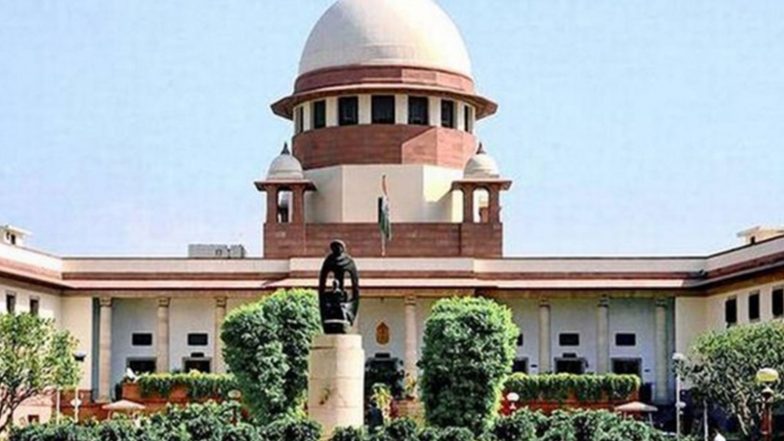
New Delhi [India], July 31 (ANI): Observing that stray cattle are "not meant to be natural speed breakers" on roads and that accidents involving bovines have become an increasingly common reality across the country, the Supreme Court on Friday called upon the Centre and state governments to evolve a comprehensive mechanism to prevent such incidents and provide compensation to victims.
Allowing an appeal filed by the widow of a man who died after suffering grievous injuries in a stray bull attack, the apex court awarded a lump sum compensation of Rs 15 lakh and directed that the amount be paid within four weeks.
It also directed that a copy of the judgment be circulated to the Chief Secretaries of all States, Administrators of Union Territories and Member Secretaries of State Legal Services Authorities for appropriate action.
Senior Advocate Ravi Prakash, assisted by Advocates Ali Khan and Taha Yasin, appeared for the petitioner.
A Bench led by Justice Sanjay Karol observed that the present case highlighted a much larger issue requiring policy intervention beyond the facts of the individual dispute.
"It is commonplace to see reports... regarding bovine-related incidents and accidents," the Court observed, adding that while India continues to be an agrarian economy where cattle occupy an important place, they "are not meant to be natural speed breakers, placed willy-nilly on the National Highways, roads and streets."
The Court noted that such incidents result not only in the loss of human lives but also unnecessary suffering for animals. Referring to Articles 48 and 51A(g) of the Constitution, it observed that while the State has a duty to organise animal husbandry and protect cattle, every citizen also has a constitutional obligation to show compassion towards living creatures.
It stressed that these constitutional values "need to be implemented" so that "every word of the Constitution can be translated into reality."
The judgment extensively examined the constitutional scheme, the Prevention of Cruelty to Animals Act, the Cattle Trespass Act, and numerous State legislations relating to cattle welfare, shelters, registration and impounding of stray cattle. It found that although many States have enacted laws and schemes, effective implementation remains essential to address the growing menace of stray bovines on public roads.
The Court observed that owners cannot simply abandon animals once they cease to have economic utility. Instead, they should remain responsible for ensuring their safe transfer to authorised shelters. It also underlined the importance of proper animal shelters, digital identification and tagging systems to facilitate monitoring, veterinary care and accountability.
Accordingly, the Court suggested that all States effectively implement existing cattle welfare laws, create statutory mechanisms for compensating victims of bovine-related pedestrian and vehicular accidents, make animal tagging mandatory, require owners abandoning cattle to hand them over to authorised shelters against proper receipts, and appoint nodal officers in every municipal corporation or department to supervise tagging, digitisation of records and shelter management.
The case arose from a September 21, 2007 incident in which Vijay Kumar was attacked by a stray bull while walking on a road, resulting in serious head injuries. Although the incident was recorded by the police and compensation was sought from the authorities, no relief was granted. After his death, his widow approached the Punjab and Haryana High Court.
A Single Judge had awarded compensation of over Rs 29 lakh by applying principles under the Motor Vehicles Act. However, the Division Bench later set aside that decision on the ground that disputed questions of fact could not be decided in writ jurisdiction and relegated the family to a civil suit.
Reversing the High Court's appellate judgment, the Supreme Court held that after nearly two decades, directing the claimant to initiate civil proceedings would be "extremely unjust, unfair and inequitable" and would effectively leave the family remediless.
The Court also noted that the occurrence of the incident had never been disputed by the authorities and that the relevant records, including the police entry and compensation claim, remained undisputed.
While holding that compensation under the Motor Vehicles Act cannot automatically be applied to every stray cattle case, the Bench considered the prolonged litigation, the severe injuries suffered by the deceased before his death and the absence of any quantified compensation under the applicable Punjab bye-laws at the relevant time.
It therefore awarded a lump sum compensation of Rs 15 lakh, clarifying that the direction was based on the peculiar facts of the case and would not operate as a precedent. (ANI)
(The above story is verified and authored by ANI staff, ANI is South Asia's leading multimedia news agency with over 100 bureaus in India, South Asia and across the globe. ANI brings the latest news on Politics and Current Affairs in India & around the World, Sports, Health, Fitness, Entertainment, & News. The views appearing in the above post do not reflect the opinions of LatestLY)