
World News | Pakistan’s Car-centric Transport Policy Leaves Public Buses on Margins
Get latest articles and stories on World at LatestLY. Pakistan needs to overhaul its transport policy by prioritising affordable public bus services over private vehicles, as limited accessibility, rising commuting costs and inadequate infrastructure continue to hamper urban mobility, as reported by The Express Tribune.

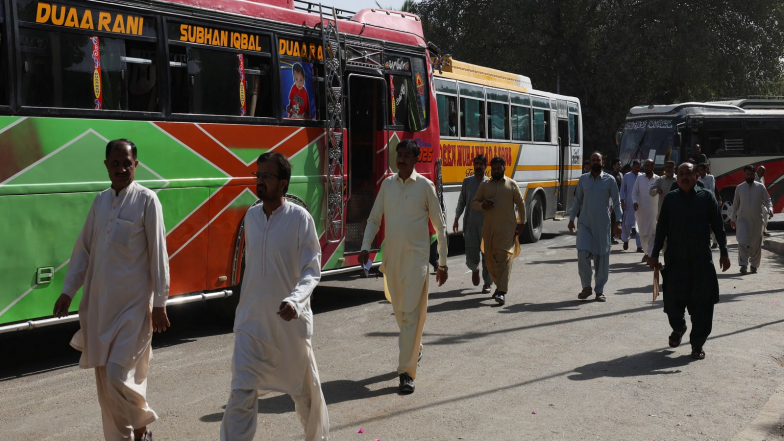
Karachi [Pakistan], October 24 (ANI) Pakistan needs to overhaul its transport policy by prioritising affordable public bus services over private vehicles, as limited accessibility, rising commuting costs and inadequate infrastructure continue to hamper urban mobility, as reported by The Express Tribune.
According to The Express Tribune, the BusCaro and Pakistan & Counting Mobility Index revealed that public transport accounts for less than 0.5% of the index’s vehicle-based weighting. Meanwhile, privately owned motorcycles, cars and rickshaws constitute 98.7%, highlighting the dominance of private vehicles in the country’s transport landscape.
Also Read | Dubai Gold Rate Today: 18K, 22K, 24K Gold Prices for October 24, 2026.
The index found that the average cost of travelling one kilometre across eight transport modes declined 7.9% between May and September, falling from Rs10.48 to Rs9.65. However, experts argue that these figures do little to conceal the structural weaknesses of Pakistan’s public transport system, particularly when only around 22 people per 1,000 can afford a car.
Auto expert Mashood Ali Khan said Pakistan should learn from transport networks in Europe, China and India, where public mobility systems connect residential and commercial areas more effectively. He stated that convenient routes, modern infrastructure and cleaner services were essential to encouraging commuters to abandon private vehicles.
Also Read | Oleshky Ceasefire: How Melania Trump's Back Channel With Vladimir Putin Helped Secure Ukraine Truce.
Khan urged the federal government and provinces to formulate a coordinated, long-term strategy to expand bus services and transition towards electric fleets. He also called for incentives to establish domestic electric bus manufacturing facilities instead of depending heavily on imported vehicles and components.
Pakistan’s infrastructure shortcomings remain a significant obstacle. Khan particularly criticised Karachi, the country’s economic hub, where worsening roads and inadequate transport facilities make daily commuting increasingly difficult. He also highlighted coordination failures between federal and provincial authorities, which can delay projects and increase costs, as cited by The Express Tribune.
Khan estimated that Pakistan’s existing bus fleet stood at approximately 2,000, while annual demand could reach 18,000 to 20,000 vehicles, presenting an opportunity for domestic manufacturing and employment generation, as reported by The Express Tribune. (ANI)
(The above story is verified and authored by ANI staff, ANI is South Asia's leading multimedia news agency with over 100 bureaus in India, South Asia and across the globe. ANI brings the latest news on Politics and Current Affairs in India & around the World, Sports, Health, Fitness, Entertainment, & News. The views appearing in the above post do not reflect the opinions of LatestLY)