Air India CEO Race: Nipun Aggarwal and Vinod Kannan Emerge As Frontrunners To Replace Campbell Wilson
Air India finds itself at a critical leadership crossroads as Chief Executive Officer Campbell Wilson steps down earlier than expected, prompting the Tata Group to weigh two internal aviation stalwarts, Nipun Aggarwal and Vinod Kannan, as frontrunners for the top role. This decision comes at an especially sensitive time, with the airline in the midst of an ambitious, yet challenging, multi-year transformation aimed at restoring its global prominence.

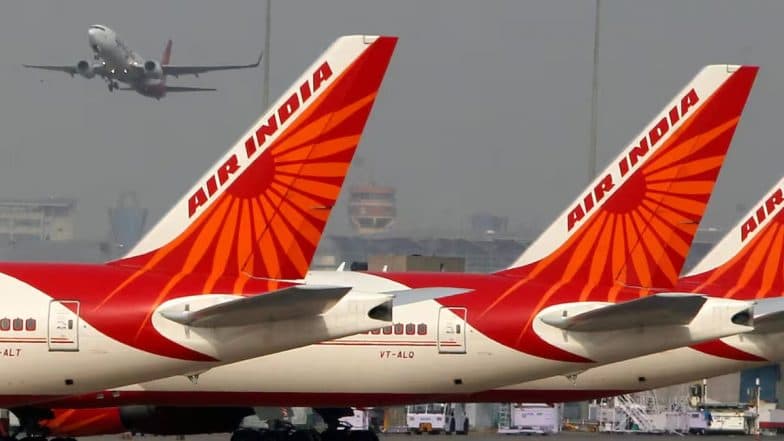
Air India finds itself at a critical leadership crossroads as Chief Executive Officer Campbell Wilson steps down earlier than expected, prompting the Tata Group to weigh two internal aviation stalwarts, Nipun Aggarwal and Vinod Kannan, as frontrunners for the top role. This decision comes at an especially sensitive time, with the airline in the midst of an ambitious, yet challenging, multi-year transformation aimed at restoring its global prominence. The choice of successor will significantly influence the trajectory of India's flag carrier, which is battling persistent financial pressures and operational complexities.
What Happened
Campbell Wilson, who assumed leadership in July 2022 on a five-year contract, conveyed his intention to step down in 2026, amid what the airline acknowledged as a period of significant financial and operational hurdles. His departure precedes the full term of his tenure, during which Air India has grappled with mounting losses, cost pressures, and a slower-than-anticipated turnaround post-privatisation. Further complicating his tenure was heightened regulatory scrutiny following a fatal crash in 2025 and reported safety lapses. As the search for Wilson’s replacement gained momentum, Nipun Aggarwal, Air India’s Chief Commercial Officer and Transformation Officer, and Vinod Kannan, former Chief Executive Officer of Vistara, have emerged as the leading candidates to steer the airline forward.
Background & Context
The Tata Group reacquired Air India in January 2022 for USD 18,000 crore, marking its return to its original founder after decades of government ownership. The acquisition was heralded as a strategic move to revitalise the airline and consolidate Tata's aviation portfolio, which included Vistara, Air India Express, and AirAsia India (now AIX Connect). Under the "Vihaan.ai" transformation plan, Air India embarked on an ambitious journey to modernise its fleet, improve customer service, and expand its network. This included placing one of the largest aircraft orders in aviation history – 470 planes in 2023, with subsequent orders in late 2024 and early 2026, and undertaking extensive retrofit programmes for its legacy aircraft. Despite these efforts, the airline has continued to report substantial losses, estimated at around USD 2.8 billion for the financial year ended March, and accumulated over INR 55,000 crore in losses since 2022.
Leadership Crossroads
The two potential successors bring distinct profiles to the table. Nipun Aggarwal has been a key architect of Air India's transformation strategy since joining in January 2022, following his pivotal role in leading the airline's acquisition for Tata Sons. As Chief Commercial Officer and Transformation Officer, he oversees critical functions including aircraft acquisition and financing, network planning, and revenue management. Supporters view Aggarwal as a disciplined executive with a strong focus on costs and operational efficiency, having spearheaded major aircraft procurement deals. However, some critics question his direct operational experience in leading a global full-service airline.
In contrast, Vinod Kannan boasts extensive operational airline experience, having served as the Chief Executive Officer of Vistara from January 2022 until its merger with Air India in November 2024. His career spans over two decades with Singapore Airlines (SIA), where he held various senior positions before his secondment to Vistara. Kannan is credited with navigating Vistara through the challenges of the COVID-19 pandemic and managing its complex integration into Air India. He currently holds a senior leadership position at Singapore Airlines. The final decision, according to reports, is also influenced by ongoing discussions within Tata Sons regarding the tenure of Chairman N Chandrasekaran.
Challenges and Outlook
Whoever assumes the helm will inherit an airline facing formidable challenges. Geopolitical tensions in West Asia have already compelled Air India to reduce flight capacity by up to 20 per cent, leading to increased fuel costs and operational disruptions. The lingering impact of Pakistani airspace restrictions continues to strain its international operations, with an estimated annual cost of nearly USD 600 million. Furthermore, global supply chain disruptions have delayed the delivery of new aircraft, hampering modernisation efforts. The Tata Group is reportedly shifting its focus from aggressive growth to prioritising cost control and operational efficiency to stem the mounting losses. Significant progress has been made in rebuilding the workforce, with over 14,000 new employees hired since 2022, significantly reducing the average age of staff and doubling pilot and cabin crew strength.
Market Dynamics
Within the highly competitive Indian aviation landscape, the Air India Group has solidified its position as the second-largest carrier by passenger volume, trailing only IndiGo. While IndiGo continues to dominate the domestic market with a significant share, Air India aims to challenge this with its integrated full-service and low-cost offerings. The broader Indian aviation market is experiencing rapid growth, presenting immense potential, but also fierce competition from domestic players like Akasa Air and internationally from powerful Middle Eastern carriers such as Emirates, Qatar Airways, and Etihad Airways, particularly on long-haul routes.
The incoming CEO will be tasked with balancing aggressive expansion plans, which include significant international growth and network optimisation, with the imperative of achieving financial sustainability. The resolution of the leadership question at Air India, set against the backdrop of its complex transformation and the internal dynamics of the Tata Group, will be a closely watched development for investors and the aviation industry alike.
(The above story first appeared on LatestLY on Jun 20, 2026 03:30 PM IST. For more news and updates on politics, world, sports, entertainment and lifestyle, log on to our website latestly.com).