Nepal Flash Floods Put India’s Glacial Lakes Under Focus
The devastating flash floods in Nepal have renewed concerns over the risks posed by rapidly expanding glacial lakes across the Indian Himalayas, with around 200 lakes identified as potentially high-risk.

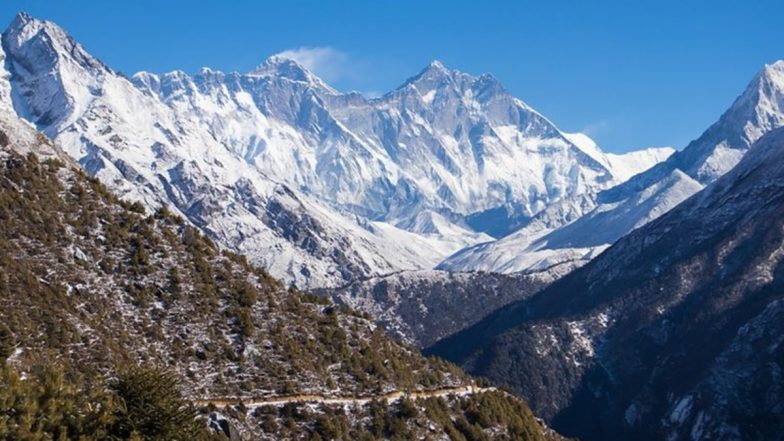
The devastating flash floods along the Nepal-Tibet border have renewed attention on the risks posed by India’s rapidly changing Himalayan glacial lakes, with experts and authorities examining whether existing monitoring and early-warning systems are adequate to deal with potentially dangerous lake outburst events. The disaster has also highlighted the wider vulnerability of communities and infrastructure downstream of high-altitude lakes, TOI reported.
The Nepal floods were initially investigated as a possible glacial lake outburst flood (GLOF). Subsequent assessments have pointed to an ice-rock avalanche and glacier collapse as the likely trigger, although the role of water accumulated behind the blockage remains important in understanding how the surge developed. Nepal Flash Floods: First Batch of 106 Maharashtra Tourists Reaches India.
Focus Shifts to India’s Himalayan Lakes
The incident has prompted renewed scrutiny of glacial lakes in the Indian Himalayas, particularly those located in areas where a sudden release of water could affect downstream settlements, roads, hydropower projects and other infrastructure.
India has thousands of glacial lakes and water bodies across its Himalayan region. A smaller group has been identified as potentially dangerous because of factors such as rapid expansion, unstable natural dams and their proximity to vulnerable downstream areas. Tragedy in Nepal: How Do Flash Floods Happen?.
Uttarakhand, Himachal Pradesh, Sikkim, Arunachal Pradesh and parts of Jammu and Kashmir and Ladakh are among the Himalayan regions where glacial hazards are closely monitored.
How a GLOF Can Trigger Sudden Flooding
A glacial lake outburst flood occurs when water stored in a lake held back by ice, rock or other unstable material is suddenly released. The resulting flood can travel rapidly downstream, carrying boulders, mud and other debris. Such events can cause extensive damage even when there has been little or no rainfall in the immediate area.
The Nepal disaster has demonstrated how quickly conditions can change in high-altitude terrain. An ice-rock avalanche reportedly blocked the Lhende Khola, creating a temporary natural dam before the accumulated water and debris surged downstream into Nepal.
Nepal Disaster Raises Questions About Early Warnings
The floods struck the Nepal-Tibet border region on August 26, with the surge moving through the Lhende Khola, Bhote Koshi and Trishuli river systems.
Initial reports examined whether a magnitude 4.4 earthquake had triggered the event. Later assessments indicated that the seismic signal was generated by the glacier collapse and debris flow rather than an earthquake causing the collapse.
The incident has since strengthened calls for improved monitoring of glaciers, lakes and unstable mountain slopes across the Himalayan region.
India Already Uses Monitoring and Early-Warning Systems
Indian agencies have been monitoring vulnerable glacial lakes using satellite imagery, field observations, remote sensing and other technologies.
The objective is to identify changes in lake size, water levels and surrounding terrain and provide warnings to communities downstream if a potentially dangerous situation develops.
However, experts say monitoring remains challenging because many glacial lakes are located in remote, high-altitude areas where access is difficult and weather conditions can change rapidly. The risk is also not limited to conventional GLOFs. Glacier collapses, ice-rock avalanches and landslide-dammed lakes can generate similar sudden flood events, making hazard assessment more complex.
Uttarakhand’s High-Risk Lakes Under Scrutiny
The latest developments have also brought renewed attention to Uttarakhand, where 13 glacial lakes have been classified as high-risk and are being monitored because of their potential to cause GLOF-related flooding.
Authorities and scientific agencies are working on surveillance and early-warning mechanisms for such lakes. The focus is on detecting changes early enough to allow downstream populations to be alerted or evacuated. The concern is particularly significant in areas where villages, highways, bridges and hydropower installations are located along river valleys.
Climate Change Adds to Long-Term Concern
Scientists have increasingly linked the changing Himalayan cryosphere to rising temperatures. Glaciers across the Hindu Kush Himalaya have experienced accelerated ice loss, while several glacial lakes have expanded as ice melts and water accumulates.
Experts caution that climate change does not mean every glacial lake will suddenly burst, but the changing landscape can increase the number of unstable lakes and alter the conditions around them.
The Nepal disaster has therefore become a reminder that disaster preparedness in the Himalayas needs to account for multiple hazards, including glacier collapse, GLOFs, landslides and sudden debris flows.
Need for Stronger Regional Preparedness
The latest disaster has also highlighted the importance of cooperation among Himalayan countries. Rivers and mountain systems do not follow national boundaries, meaning a hazard originating at high altitude can affect communities hundreds of kilometres downstream.
For India, the immediate focus is on identifying vulnerable lakes and improving real-time monitoring, warning mechanisms and evacuation plans.
The Nepal floods have reinforced a broader lesson for Himalayan states: detecting a potential hazard early is only one part of disaster preparedness. Effective communication, evacuation routes and coordination between scientific agencies, disaster authorities and local communities are equally important in reducing casualties.
(The above story first appeared on LatestLY on Aug 29, 2026 02:28 PM IST. For more news and updates on politics, world, sports, entertainment and lifestyle, log on to our website latestly.com).