US Researchers Use Pigeons To Improve AI Cancer Detection
Researchers are using pigeon visual systems to train medical AI for better cancer detection. Studies suggest humans detect abnormalities non-consciously before conscious recognition. By mimicking these patterns, Dr DiGirolamo aims to build AI tools that assist radiologists in spotting previously missed lung scan anomalies.


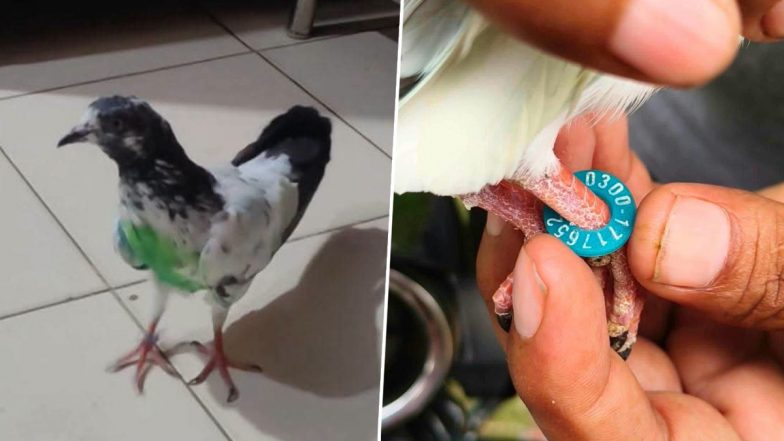
Researchers in the United States are exploring the unique visual capabilities of pigeons to refine medical artificial intelligence tools, aiming to improve the early detection of cancer. Led by Dr Gregory DiGirolamo of the College of the Holy Cross, the study investigates how AI can be trained to identify subtle abnormalities in medical scans that might be overlooked during routine clinical examinations.
Harnessing Non-Conscious Visual Detection
The research builds on earlier findings which suggested that radiologists sometimes exhibit physiological responses, such as pupil dilation, when viewing suspicious lung nodules, even if they consciously classify the scan as normal. As per a report by Popular Science, this indicates that the human brain may detect anomalies at a non-conscious level before the information reaches the conscious decision-making process. Has Israel Found a Cure for Cancer and Successfully Treated Benjamin Netanyahu’s Blood Cancer? Here’s the Fact Check.
To better understand this phenomenon, Dr DiGirolamo and his team trained six pigeons to analyse CT scan videos for lung nodules. Through a system of food rewards, the birds learned to distinguish between healthy and suspicious scans. Remarkably, the pigeons were also able to identify other lung abnormalities, such as emphysema and ground-glass nodules, without specific training, suggesting these conditions share visual patterns detectable by their visual system.
Developing AI to Support Medical Professionals
The ultimate goal of this research is to integrate these insights into AI systems that can assist doctors by flagging potential issues that might otherwise be missed. The proposed technology would utilise eye-tracking and physiological data gathered from radiologists as they interpret medical images. By analysing these responses, the AI can detect minute signs of anomalies, serving as a support tool rather than a replacement for human expertise. Is Benjamin Netanyahu Suffering From Prostate Cancer? Israeli PM’s Office Releases Health Report, Debunking False Rumours.
Dr DiGirolamo believes this methodology could eventually have applications beyond healthcare, including cardiology, security screening, and even art authentication. While the potential for cross-industry application is significant, the current focus remains strictly on improving medical diagnostic accuracy. By bridging the gap between conscious and non-conscious perception, the researchers aim to create a more robust diagnostic environment for healthcare providers.
(The above story first appeared on LatestLY on Jun 24, 2026 08:38 PM IST. For more news and updates on politics, world, sports, entertainment and lifestyle, log on to our website latestly.com).