
Business News | India's 7% Growth Target in FY27 Hinges on Oil Falling Below USD 100, Warns Economist Santosh Mehrotra
Get latest articles and stories on Business at LatestLY. India's ability to sustain 7 per cent economic growth in the current financial year could depend significantly on where crude oil prices settle, with oil prices above USD 100 a barrel posing a challenge to the growth outlook, economist Santosh Mehrotra said in an exclusive conversation with ANI.

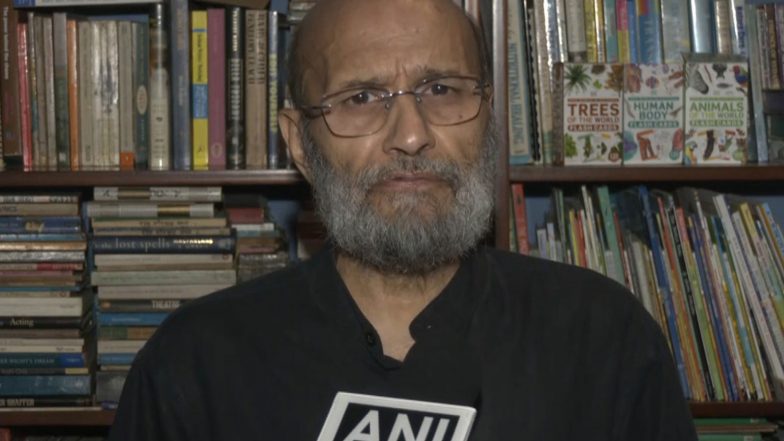
New Delhi [India], September 24 (ANI): India's ability to sustain 7 per cent economic growth in the current financial year could depend significantly on where crude oil prices settle, with oil prices above USD 100 a barrel posing a challenge to the growth outlook, Economist Santosh Mehrotra said in an exclusive conversation with ANI.
Mehrotra said the latest 7.8 per cent quarterly growth needs to be viewed against India's longer-term growth performance and the changing global environment.
Also Read | OnePlus 16 New Camera Details Revealed Ahead of Launch; Check Other Specifications.
He noted that India's average growth rate over the last 12 years has been about 6.2 per cent per annum, while oil prices during much of that period were consistently USD 60 or less.
“The 7 per cent growth might happen if the oil prices come down,” Mehrotra said, adding that at around USD 80, the growth rate could be plausible if manufacturing performs reasonably well and investment is sustained.
Also Read | Bank Strike: Customers Urged To Use Digital Channels Ahead of UFBU’s 3-Day Nationwide Strike.
The economist said the recent 7.8 per cent growth was supported by investment, with growth in fixed capital formation increasing, while manufacturing also performed well.
However, he cautioned that the external environment has changed with the resumption of the war and oil prices moving above USD 100.
With nearly half of the financial year already over, Mehrotra said it would be necessary to assess whether the 7 per cent growth rate remains achievable for the full year if elevated oil prices persist.
He said the impact of higher crude prices would extend beyond energy costs, as they can affect domestic prices, the current account deficit and the rupee.
The rupee is currently around 96 to a dollar, while Brent crude has moved back up to USD 100, Mehrotra said. Higher oil prices can increase the current account deficit, putting further pressure on the currency. A weaker rupee, in turn, makes imported goods more expensive and adds to inflationary pressures.
Mehrotra said the combination of oil prices, rupee depreciation and inflation expectations could lead to second-round price effects in the economy.
He also pointed to recent inflation trends. August retail inflation was 4.82 per cent, higher than in July, while food inflation was already close to 6 per cent. At the same time, he noted that wages have not been increasing.
The economist said this makes it important for policymakers to keep a close watch on inflation, particularly because employment growth has remained weak.
“Had growth been as robust as is being claimed, jobs would have been growing, and jobs unfortunately have not been growing,” Mehrotra said.
He argued that sustaining and increasing growth should remain an important policy priority, but said this needs to be balanced against inflation risks arising from higher oil prices and rupee depreciation.
On monetary policy, Mehrotra said the Reserve Bank of India has been aggressively removing surplus liquidity from the banking system.
He said the RBI has used government security sales, forex swaps and other operations to move the banking system from very abundant liquidity towards a more neutral monetary environment.
The current repo rate is 5.25 per cent, but Mehrotra said it is difficult to determine whether the RBI will raise the rate at the next Monetary Policy Committee meeting, as the decision will also depend on inflation.
He said an important question for policymakers is how to support growth while preventing inflation from becoming entrenched. (ANI)
(The above story is verified and authored by ANI staff, ANI is South Asia's leading multimedia news agency with over 100 bureaus in India, South Asia and across the globe. ANI brings the latest news on Politics and Current Affairs in India & around the World, Sports, Health, Fitness, Entertainment, & News. The views appearing in the above post do not reflect the opinions of LatestLY)