
India News | Cross-border Drug Trafficking Pose Significant Challenge, Manipur's Moreh-Tamu Border Continues Major Transit Point from Myanmar: MHA
Get latest articles and stories on India at LatestLY. Union Minister of State for Home Nityanand Rai informed the upper house of the Parliament in a written reply to a question, and mentioned "due to their proximity to the Death Triangle and porous borders with Myanmar, the north-eastern states remain particularly vulnerable to transnational trafficking of Amphetamine Type Stimulants (ATS) and Heroin through organised cross-border trafficking networks."

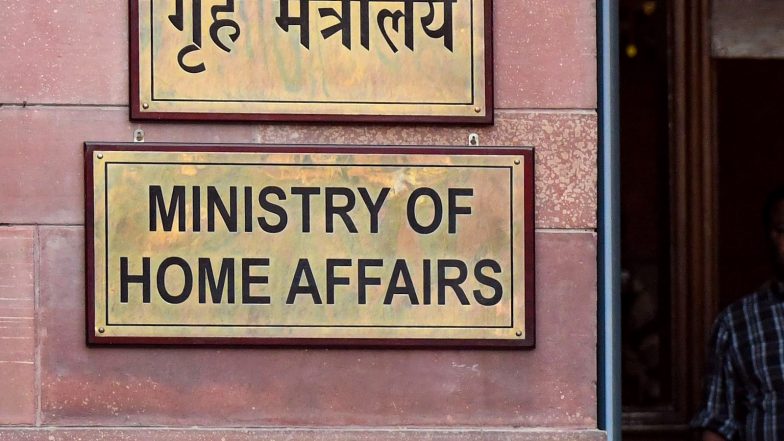
New Delhi [India], July 29 (ANI): Cross-border drug trafficking pose a significant challenge in the country, including the north-eastern states, with Moreh-Tamu border in Manipur continues to be major transit point from Myanmar as a total of 4,626 kg of Amphetamine Type Stimulants (ATS) and 2,652 kg of Heroin has been seized during 2021 to 2025, Ministry of Home Affairs (MHA) told the Rajya Sabha on Wednesday.
Union Minister of State for Home Nityanand Rai informed the upper house of Parliament in a written reply to a question and mentioned "due to their proximity to the Death Triangle and porous borders with Myanmar, the north-eastern states remain particularly vulnerable to transnational trafficking of Amphetamine Type Stimulants (ATS) and Heroin through organised cross-border trafficking networks."
Also Read | Step-by-Step Guide To Verify Your SIR Enumeration Status Online at voters.eci.gov.in.
He mentioned that "the Moreh-Tamu border continues to remain a major transit point for trafficking of heroin and methamphetamine originating from Myanmar to various parts of the country."
Rai said, "the vulnerable border stretches with Free Movement Regime (FMR) has facilitated drug trafficking activities in the North-Eastern region."
Also Read | H-1B AI Engineer Job Loss: US Tech Worker Forced To Consider India Return After Project Relocates.
As reported by various Drug Law Enforcement Agencies (DLEAs) to the Narcotics Control Bureau (NCB), Rai said a total of 4,626 kg of Amphetamine Type Stimulants (ATS) and 2,652 kg of Heroin have been seized during 2021 to 2025.
The MoS described that drug trafficking syndicates continue to adopt changing modus operandi, including concealment in legitimate trade and passenger movements, coordination through local receiver networks to facilitate illicit trafficking and changes in trafficking routes to counter enforcement measures.
To address these challenges, he said, the Central government has taken various measures.
To address the challenge of illicit drug trafficking & abuse of drugs, the MoS said the Vision Document on Narcotics Control (2026-2029) was released on June 26, 2026. The Vision Document is to be implemented by the concerned central ministries, departments, agencies and the state governments or UTs as per the action points and timelines specifically mentioned for each Central ministry, department and agency. The four key focus areas outlined in the vision document are enforcement (intelligence and operations), precursors and synthetic drugs control, demand and harm reduction capacity building, and coordination.
As per the MoS, the government has also established a four-tier Narco-Coordination Centre (NCORD) mechanism for ensuring better coordination between Central and State Drug Law Enforcement Agencies and other stakeholders in the field of controlling drug trafficking and drug abuse in India.
The Apex and Executive Committee of NCORD meetings are held in the Centre, whereas state-level NCORD meetings are chaired by the Chief Secretary on a quarterly basis and District-level NCORD meetings are held monthly under the chairmanship of the District Magistrate to review enforcement, intelligence sharing and preventive measures.
The house was also informed that Joint Coordination Committee (JCC) meetings are held regularly in which all relevant Central and State agencies participate, to discuss investigation of important narcotics cases in the State.
Rai further mentioned in the reply that a dedicated Anti-Narcotics Task Force (ANTF) headed by an Additional Director General and Inspector General level police officer is established in each state and UT to function as the NCORD Secretariat for the state and UT and follow up on compliance of decisions taken in NCORD meetings at different levels.
"Narcotics Control Bureau (NCB) has been regularly coordinating with other agencies like Indian Navy, Indian Coast Guard, Border Security Force, State ANTF, etc. to conduct joint operations to control the drug trafficking," he stated.
To enhance coordination with state authorities, facilitate real-time intelligence sharing, ensure effective operational efficiency and to improve the geographical footprint of the bureau, Rai said, the NCB has established zonal units in key border areas such as Srinagar, Siliguri, Agartala and Itanagar, and sub-zones have been upgraded to zones.
Further, the government has approved the establishment of six new Zonal offices, out of which four are being established in north-eastern states in Dimapur (Nagaland), Aizwal (Mizoram), Shillong (Meghlaya) and Gangtok (Sikkim), mentions the reply.
It is also stated that the government is extending comprehensive support for combating trans-border narcotics trafficking through various means like deployment of advanced Anti-drone systems along most vulnerable stretches, installation of enhanced surveillance systems including CCTV cameras, PTZ, NVD, strengthening border fencing through installation of a new-design fence, Border flood light.
"The pattern of narcotics trafficking through the North-Eastern Region has undergone significant changes in terms of the type of drugs trafficked, trafficking routes and modus operandi adopted by drug trafficking syndicates," Rai also said.
"The region continues to witness trafficking of heroin; however, there has been a marked increase in the trafficking of Methamphetamine (Crystal Meth/YABA) from Myanmar, particularly through Manipur, Mizoram and Nagaland, reflecting a shift towards synthetic drugs."
Simultaneously, the MoS said, "there are reports of smuggling precursor chemicals from various parts of the country to Myanmar for the illicit manufacture of synthetic drugs."
"Drug trafficking syndicates are increasingly exploiting porous and unfenced stretches of the Indo-Myanmar border, forest routes, foot tracks and hilly terrain for cross-border movement of narcotic drugs. Narcotics are concealed in legitimate cargo, passenger vehicles and goods carriers, while courier services, parcel networks, social media platforms and encrypted communication applications are increasingly being used for coordination and delivery." (ANI)
(The above story is verified and authored by ANI staff, ANI is South Asia's leading multimedia news agency with over 100 bureaus in India, South Asia and across the globe. ANI brings the latest news on Politics and Current Affairs in India & around the World, Sports, Health, Fitness, Entertainment, & News. The views appearing in the above post do not reflect the opinions of LatestLY)