Lucknow Metro Rail Project Gets Cabinet Nod for 11.16 km Phase-1B Expansion Worth INR. 5,801 Crore
The Union Cabinet, chaired by Prime Minister Narendra Modi, has approved Phase-1B of the Lucknow Metro Rail Project, an 11.165-km stretch with 12 stations, including seven underground and five elevated, at an estimated cost of Rs. 5,801 crore.

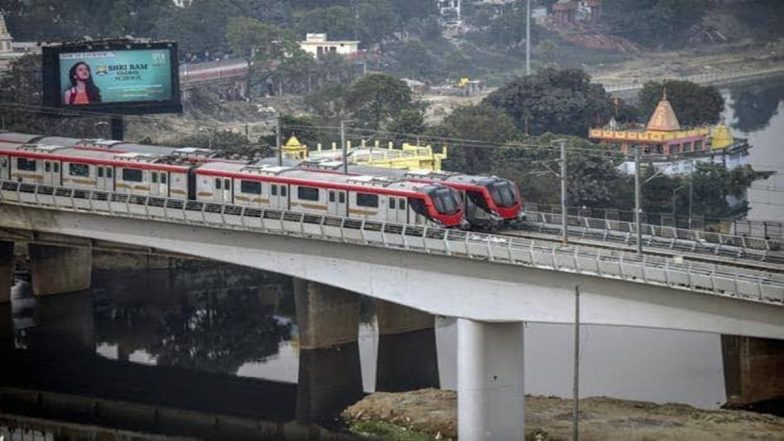
New Delhi, August 12: The Union Cabinet, chaired by Prime Minister Narendra Modi, has approved Phase-1B of the Lucknow Metro Rail Project, an 11.165-km stretch with 12 stations, including seven underground and five elevated, at an estimated cost of Rs. 5,801 crore. Once operational, Phase-1B will expand Lucknow's active metro network to 34 km, linking some of the city's oldest and busiest neighbourhoods that currently lack fast and reliable transport.
The new corridor will cut through the heart of Old Lucknow, connecting commercial centres like Aminabad, Yahiyaganj, Pandeyganj, and Chowk, as well as King George's Medical University, major tourist sites such as Bara Imambara, Chota Imambara, Bhool Bhulaiya, and Rumi Darwaza, and areas famous for the city's traditional cuisine. The expansion will ease severe traffic congestion on some of the city's most overburdened roads. "Metro Rail as an efficient alternative to road transport, with Phase-1B as an extension, will be particularly impactful on heavily congested routes of Old Lucknow," noted the Cabinet press release. Less traffic, it added, could mean smoother vehicle movement, reduced travel times, and improved road safety. PM Narendra Modi-Led Cabinet Committee Approves 700 MW Tato-II Hydro Electric Project in Arunachal Pradesh’s Shi Yomi for INR 8,146 Crore.
The environmental gains are also in focus. With more commuters shifting from fossil fuel-based vehicles to electric metro services, Phase-1B could help cut the city's carbon emissions. The official release of the cabinet approvals highlighted that the project's benefits extend beyond transportation, noting it could "stimulate local businesses" near the new stations and "attract investment and development in previously less accessible regions." PMUY Beneficiaries To Get INR 300 LPG Subsidy for up to 9 Refills in FY 2025–26 As Union Cabinet Approves INR 12,000 Crore Financial Aid.
The corridor will also improve access to transport hubs like the airport, railway stations, and bus depots. Better connectivity will save time for daily commuters, boost workplace productivity, and make essential services easier to reach for people across socio-economic groups. "The expansion... will provide more equitable access to public transport, benefiting diverse socio-economic groups and reducing transport disparities," noted the press release.
(The above story is verified and authored by ANI staff, ANI is South Asia's leading multimedia news agency with over 100 bureaus in India, South Asia and across the globe. ANI brings the latest news on Politics and Current Affairs in India & around the World, Sports, Health, Fitness, Entertainment, & News. The views appearing in the above post do not reflect the opinions of LatestLY)