
World News | Banks Cannot Impose Charges on UPI Payments Up to Rs 2,000: Govt
Get latest articles and stories on World at LatestLY. The Ministry of Finance on Monday notified that banks and system providers cannot impose charges on UPI transactions of up to Rs 2,000 and RuPay debit card payments.

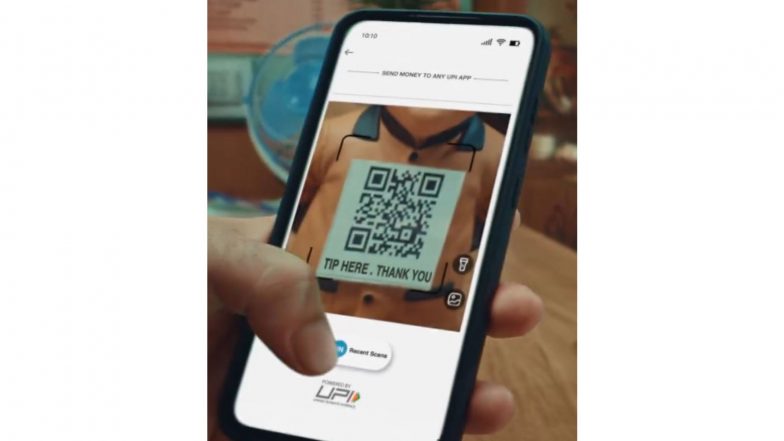
New Delhi [India], September 15 (ANI): The Central government has prohibited banks and system providers from imposing charges on UPI transactions of up to Rs 2,000 and RuPay debit card payments.
As per Section 10A of the Payment and Settlement Systems Act, 2007 (51 of 2007), the Central Government prohibits banks and system providers from imposing, directly or indirectly, any charges on a person making or receiving payments using debit cards powered by RuPay and UPI transactions up to Rs 2,000, as per the Ministry of Finance.
Also Read | Whyalla Steelworks Layoffs: 600 Jobs Cut As Administrators Permanently Shut Down Blast Furnace.
In August, the government opened the door to introducing a nominal Merchant Discount Rate (MDR) on a limited set of UPI merchant transactions above a certain threshold, while assuring that consumers and person-to-person payments will continue to remain free.
The government had said the amendment should be seen as part of its broader effort to make India's digital payment infrastructure sustainable, competitive and capable of supporting the country's expanding digital economy.
Also Read | Donald Trump Dismisses Stricter AI Regulation Calls, Says ‘Whoever Wins AI Wins’; Know Why.
The Ministry had also rejected reports suggesting that external influences were behind the proposed policy changes, calling such claims "unfounded, completely false and misleading."(ANI)
(The above story is verified and authored by ANI staff, ANI is South Asia's leading multimedia news agency with over 100 bureaus in India, South Asia and across the globe. ANI brings the latest news on Politics and Current Affairs in India & around the World, Sports, Health, Fitness, Entertainment, & News. The views appearing in the above post do not reflect the opinions of LatestLY)
DISCLAIMER: This article is strictly for informational and educational purposes to raise awareness about the said topic. LatestLY DO NOT host, distribute, or provide links to sexually explicit content, leaked videos, or pirated material. Any search terms or keywords mentioned are solely for the purpose of explaining the viral trend and its associated dangers. We strongly condemn the circulation of non-consensual intimate imagery (NCII) and advise all readers to refrain from searching for or sharing such content, as doing so may lead to severe legal consequences.