
World News | China Spending Money on State Media Outlets to Define Global Narrative: Senior Fellow for Southeast Asia
Get latest articles and stories on World at LatestLY. Most of these big state media outlets have, however, completely failed, said Joshua Kurlantzick, a senior fellow for Southeast Asia at the Council on Foreign Relations in an interview with VOA Mandarin.

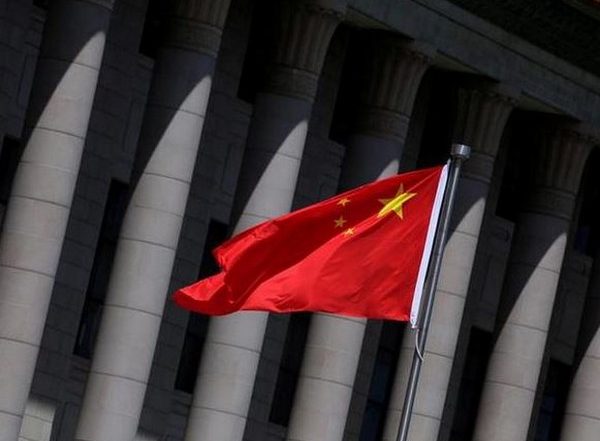
Beijing [China], December 19 (ANI): China has been spending huge sums of money on state media outlets China Global Television Network (CGTN), China Radio International (CRI) and Xinhua to try and create these as global competitors and enable these media outlets to define global narratives about China. Most of these big state media outlets have, however, completely failed, said Joshua Kurlantzick, a senior fellow for Southeast Asia at the Council on Foreign Relations in an interview with Washington D.C based VOA Mandarin.
"Since about five or six years ago, China has been trying to build up a global media and information apparatus. They have been trying to have a bigger role in the global media discourse, which they have always felt does not treat China fairly," said Kurlantzick who investigated China's global media investment in his new book, Beijing's Global Media Offensive: China's Uneven Campaign to Influence Asia and the World.
According to Kurlantzick, CGTN and CRI's viewership is very minimal compared to that of global media outlets like BBC or CNN. This is also applicable to areas which are somewhat favourable to China like Latin America and Africa.
He said that most of CGTN and CRI's journalists have left the outlets as a result of China's disastrous government policy.
Also Read | Toronto Shooting: Five Shot Dead in Shoot Out in Condo Unit in Vaughan, Suspect killed by Police.
"What I learn[ed] from interviewing a lot of CGTN producers and writers and journalists who have left, both foreigners and some Chinese, was that the constraints were getting tighter and tighter," said Kurlantzick in his interview with VOA Mandarin.
Xinhua is a little different, said Kurlantzick. The company due to its ever-expanding workforce in places like Southeast Asia and Xinhua is beginning to gain a foothold in a lot of media outlets all over the world. It is also appearing in the local media of various countries, he said.
The author, however, added that Xinhua is not AP or Reuters, it is still a state propaganda agency.
"For some of the places that were the first targets of a lot of China's media offensive, such as Taiwan, Australia, New Zealand, Singapore, Japan and South Korea, they have developed pretty effective digital literacy programs, so [citizens] can more effectively tell what's disinformation online. That's a huge project to embark on in the US," said Kurlantzick, as quoted by VOA Mandarin.
"I think countries also are realizing that media information is a really important way of influencing politics, influencing domestic politics in other countries, and more scrutiny should be applied," he added. (ANI)
(The above story is verified and authored by ANI staff, ANI is South Asia's leading multimedia news agency with over 100 bureaus in India, South Asia and across the globe. ANI brings the latest news on Politics and Current Affairs in India & around the World, Sports, Health, Fitness, Entertainment, & News. The views appearing in the above post do not reflect the opinions of LatestLY)