
World News | PoJK Activists Face Wider Crackdown Under Anti-terror Law
Get latest articles and stories on World at LatestLY. Pakistan has further intensified its crackdown on political and civic activists in Pakistan-occupied Jammu and Kashmir (PoJK), with authorities placing another 43 individuals associated with the Jammu Kashmir Joint Awami Action Committee (JK-JAAC) under the Fourth Schedule of the Anti-Terrorism Act.

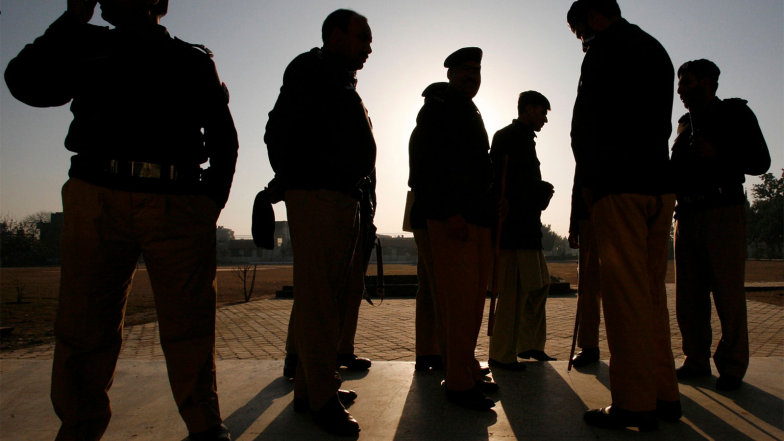
Muzaffarabad [PoJK], September 20 (ANI): Pakistan has further intensified its crackdown on political and civic activists in Pakistan-occupied Jammu and Kashmir (PoJK), with authorities placing another 43 individuals associated with the Jammu Kashmir Joint Awami Action Committee (JK-JAAC) under the Fourth Schedule of the Anti-Terrorism Act.
The latest action, approved by the Home Department of PoJK, places activists and supporters of a movement that has been at the centre of sustained protests in the region under a legal framework meant for monitoring individuals considered a security threat.
Also Read | Iran Sets 7 Conditions for US Talks: What Are Tehran's Demands To End War?.
According to a Home Department notification, issued on September 3, 2026, the inclusion of the 43 individuals was approved following a decision taken at the 41st Cabinet meeting on June 5, 2026.
The notification identifies the individuals as active supporters or members of the JK-JAAC, which has been proscribed under Section 12 of the Anti-Terrorism Act.
Also Read | Dubai Gold Rate Today: 18K, 22K, 24K Gold Prices for September 20, 2026.
The latest list includes people from Poonch, Sudhanoti, Muzaffarabad, Kotli, Bagh and Bhimber, as well as several districts of Pakistan's Punjab province.
Poonch accounts for 15 of the 43 names, while six are from Sudhanoti. Others are from Muzaffarabad, Kotli, Bagh and Bhimber, with several individuals listed from Jhelum, Layyah, Jhang, Toba Tek Singh, Vehari, Bahawalnagar and Gujrat.
The action effectively expands the state's surveillance and restrictions over people associated with the JK-JAAC at a time when the region has been witnessing sustained political mobilisation and protests.
Placement on the Fourth Schedule carries significant restrictions. Those listed can be subjected to movement monitoring, mandatory reporting to police, scrutiny of financial activities and restrictions concerning travel and passports.
The use of the Anti-Terrorism Act against individuals associated with the JK-JAAC has raised serious questions over the treatment of political dissent in Pakistan-occupied Jammu and Kashmir.
The Fourth Schedule action comes after months of unrest across Pakistan-occupied Jammu and Kashmir.
Over the past three months, the JK-JAAC-led mobilisation has included protests, strikes, rallies and calls for greater political and economic rights. The movement has raised issues concerning governance, economic hardship, public services and political representation.
The protests have been particularly visible in Poonch, Rawalakot, Sudhanoti and adjoining areas, with traders, civil society groups, lawyers and activists participating in various forms of agitation.
The confrontation between protesters and the authorities has also resulted in arrests and the registration of cases against activists, further deepening tensions between the administration and sections of civil society.
Instead of addressing the political grievances through sustained political dialogue, the authorities have increasingly relied on administrative and security measures.
The proscription of JK-JAAC under the Anti-Terrorism Act and the subsequent addition of dozens of its alleged supporters to the Fourth Schedule represent a significant escalation.
Despite the restrictions and legal action, the agitation has continued in different parts of the region.
The latest developments indicate that the protests have not disappeared with the government's security measures. Activists and supporters continue to raise their demands through rallies, strikes and local mobilisation.
The continuing agitation also points to a wider political problem in Pakistan-occupied Jammu and Kashmir, where demands concerning representation, governance and economic rights have increasingly become intertwined with questions of political freedom and the right to peaceful dissent. (ANI)
(The above story is verified and authored by ANI staff, ANI is South Asia's leading multimedia news agency with over 100 bureaus in India, South Asia and across the globe. ANI brings the latest news on Politics and Current Affairs in India & around the World, Sports, Health, Fitness, Entertainment, & News. The views appearing in the above post do not reflect the opinions of LatestLY)