Uber To Equip Millions of Driver Vehicles With Sensor Kits To Collect Real-World Data for Autonomous Vehicle Training and AI Models
Uber plans to turn its global driver network into a massive sensor grid to collect data for autonomous vehicle companies. Revealed by CTO Praveen Neppalli Naga, the project aims to solve data bottlenecks in AI training. By providing a "data layer", Uber remains central to the self-driving industry through strategic partnerships.


Uber Technologies Inc. has revealed plans to equip its vast network of millions of human-driven vehicles with advanced sensor kits to collect real-world data for autonomous vehicle (AV) firms. This strategic shift aims to position the ride-hailing giant as a critical data provider for the artificial intelligence models that power self-driving technology.
Chief Technology Officer Praveen Neppalli Naga announced the initiative during an interview at an industry event in San Francisco. He explained that the company intends to transition its existing AV Labs programme from a small, dedicated fleet into a massive, distributed data-collection platform powered by its independent contractor drivers across the globe. Piyush Goyal Launches Bharat Taxi Onboarding Initiative in Mumbai, Promises Zero Commission and INR 5 Lakh Insurance for Drivers.
Scaling Data Collection for AI Training
The primary bottleneck for the development of self-driving cars is no longer just the software but the availability of diverse, high-quality physical-world data. Currently, companies such as Waymo must deploy expensive fleets to map specific intersections or weather conditions, a process that requires significant capital and time.
By utilising its millions of active drivers, Uber could offer a scale of data collection that individual AV developers cannot match. Naga noted that this would allow companies to query specific scenarios, such as school intersections during peak hours, providing the raw material needed to refine machine learning models more efficiently.
Development of the Uber AV Cloud
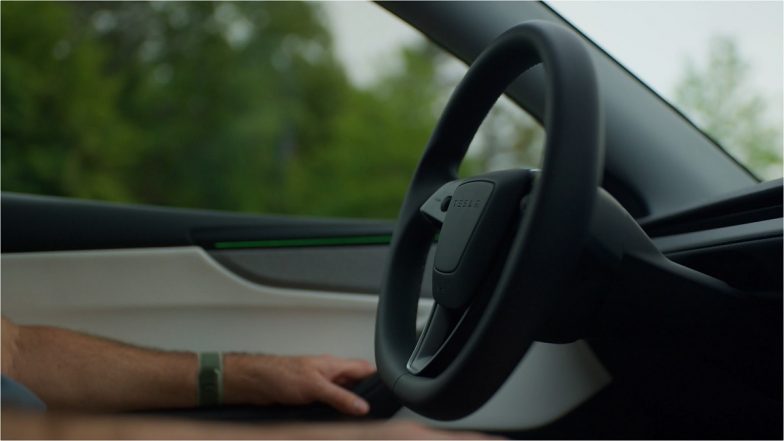
Uber has already established partnerships with 25 autonomous vehicle companies, including London-based firm Wayve. The centrepiece of this collaboration is the "AV cloud", a library of labelled sensor data. This system allows partners to test their software in "shadow mode" during real-world Uber trips, simulating AV performance without a computer actually controlling the steering wheel.
While the company suggests its goal is to democratise access to this information rather than focusing solely on immediate profits, the move secures Uber’s relevance in a future dominated by driverless transport. After divesting its own self-driving car division years ago, the firm is now pivoting to become the essential infrastructure layer for the entire ecosystem.
Navigating Regulatory and Technical Challenges
The transition to a sensor-equipped driver network faces several hurdles, including hardware costs and varying regional regulations. Every state and country has different legal frameworks regarding data privacy and the use of external sensors on private vehicles, which Uber must navigate before a full-scale rollout. Evan Spiegel Says AI Writes Two-Thirds of New Code, Snap CEO Praises Anthropic Claude and Predicts Shift to Distribution.
Furthermore, the company is currently focusing on understanding how different sensor kits perform in various environments. Despite these challenges, Uber is increasingly investing in AV players, using its massive ride marketplace and potential data wealth to maintain a dominant position in the evolving transport sector.
(The above story first appeared on LatestLY on May 02, 2026 03:31 PM IST. For more news and updates on politics, world, sports, entertainment and lifestyle, log on to our website latestly.com).