Cheque Book New Rule: Banks Add Alphanumeric Code, Check if Your Old Cheque Book Needs Replacement
If you still use cheques for banking transactions, it may be time to check whether your cheque book has the latest security features. Banks have been introducing additional safeguards, including alphanumeric codes on cheque leaves, to strengthen verification and reduce the risk of cheque fraud.

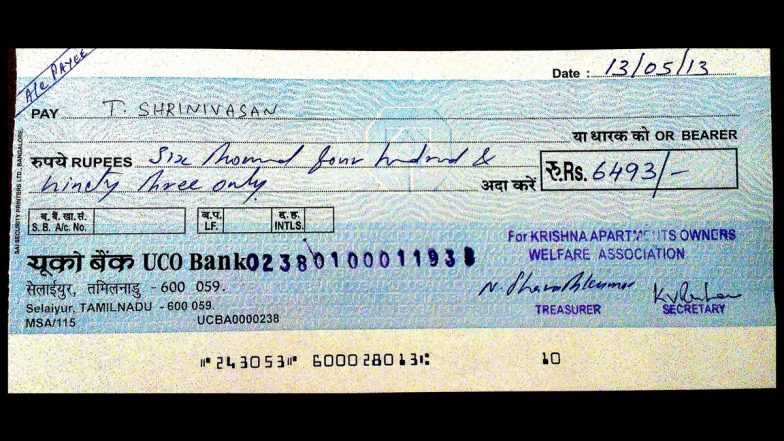
If you still use cheques for banking transactions, it may be time to check whether your cheque book has the latest security features. Banks have been introducing additional safeguards, including alphanumeric codes on cheque leaves, to strengthen verification and reduce the risk of cheque fraud.
Bank of India (BOI), for instance, has introduced an alphanumeric security code on its cheque leaves and advised customers to use the newer series of cheque books. The code combines letters and numbers and is designed to help identify and verify cheque leaves during processing, reports said.
Customers who regularly use cheques, particularly for high-value transactions, should check with their respective banks to find out whether an older cheque book needs to be replaced.
Why Are Banks Introducing New Cheque Books?
Additional security features are being introduced to make cheque transactions safer and reduce the risk of fraudulent, altered or tampered cheques.
The Reserve Bank of India (RBI) has also been strengthening the cheque clearing system through the Cheque Truncation System (CTS). Under CTS, the physical movement of a cheque is stopped during the clearing process. Instead, its electronic image and relevant data are sent to the paying bank for processing.
The system is aimed at making cheque clearing faster and more efficient.
What Is The Alphanumeric Code On A Cheque?
An alphanumeric code is a combination of letters and numbers printed on a cheque leaf. Banks can use such security features to help identify cheque leaves and strengthen verification during processing.
Bank of India has introduced an alphanumeric security code on its cheque leaves and encouraged customers to replace older cheque books with the new series.
However, customers should follow the latest instructions issued by their individual bank rather than assume that every older cheque book has automatically become invalid.
Is There A December 31, 2026 Deadline For Cheques?
There have been reports about a December 31, 2026 deadline for certain cheques without the alphanumeric code, particularly cheques of INR 50,000 or more.
However, customers should not assume that this is a universal RBI deadline applicable to every bank. Requirements may vary depending on the bank and the specific instructions issued to its customers.
The safest option is to check your bank's latest communication or official website to determine whether an existing cheque book needs to be replaced and whether any deadline applies.
What Will A New Cheque Book Cost?
The cost of a cheque book varies from one bank to another and depends on the type of account and the number of cheque leaves requested.
At Bank of India, savings account customers are entitled to 25 free cheque leaves in a financial year. Additional cheque leaves are charged according to the bank's applicable service charges.
Customers should check their bank's current tariff before requesting an additional cheque book.
How Long Is A Cheque Valid?
A cheque is generally valid for three months from the date mentioned on it. Customers should ensure that cheques are deposited within this validity period.
If a cheque is returned unpaid, it can have financial and legal consequences. In certain circumstances, cheque dishonour may attract action under Section 138 of the Negotiable Instruments Act, 1881.
Why Do People Still Use Cheques?
Despite the rapid growth of digital payments, cheques remain relevant for several types of transactions, including certain business payments, property-related transactions, loans and other financial arrangements.
Cheque payments also provide a documented record through bank records, which can be useful for financial and accounting purposes.
For customers who continue to use cheques, the key takeaway is to follow their bank's latest instructions regarding cheque books and security features. If your bank has asked you to replace an older cheque book, it is advisable to do so before making your next high-value payment.
(The above story first appeared on LatestLY on Aug 22, 2026 04:34 PM IST. For more news and updates on politics, world, sports, entertainment and lifestyle, log on to our website latestly.com).