How To Lease a Diamond Mine in Panna for INR 200: Rules, Process and Risks
In Panna, Madhya Pradesh, individuals can lease small shallow-mine plots for INR 200 a year and search for diamonds using labour-intensive methods. Recent finds show the possibility of major returns, but discoveries are uncertain. Any diamond found must enter the government process and is sold through official auctions, with the final value depending on its quality.

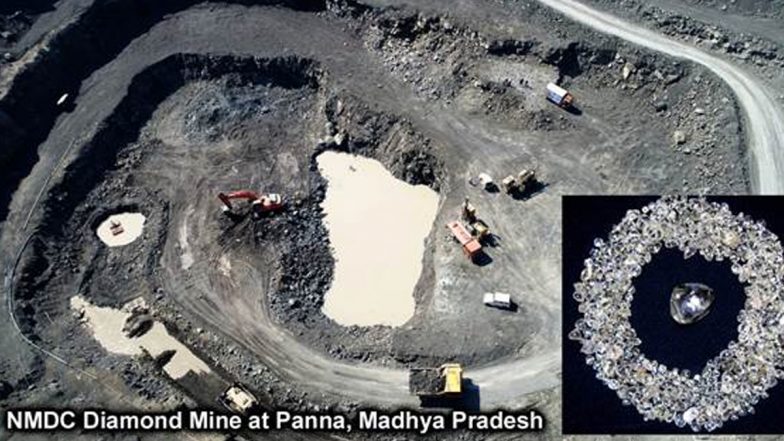
Panna in Madhya Pradesh is known as the “City of Diamonds”, but its diamond story is not limited to large-scale mining. Individuals can lease small parcels of land used for shallow diamond mining for a nominal fee of INR 200 a year and spend weeks or months digging, sieving and washing the soil in the hope of finding a valuable stone. Recent discoveries, including a nearly 18-carat diamond found by seven labourers in August 2026, show that such finds remain possible.
The opportunity, however, is far from a guaranteed route to quick money. The INR 200 lease is only the entry cost, Times of India reported. Mining requires labour, excavation, tools and considerable time, while many miners may find nothing of significant value. Recent reporting has also highlighted the financial pressure faced by traditional diggers, underscoring the risks involved in the system. BJP MLA Panna Lal Shakya Refers Goddess Sita As ‘Maut Ka Saamaan’, Woman MLA Confronts Him (Video).
Why Panna Is Known As The City Of Diamonds
Panna is one of India's best-known diamond-bearing regions. The district administration describes Panna as being famous for its diamond mines, while shallow mining has become an important part of the local diamond economy.
Unlike large mechanised mining operations, shallow mining involves relatively small plots that can be worked with manual labour and basic equipment.
Recent reporting says a typical leased parcel can measure around 8 metres by 8 metres, or less than half the size of a volleyball court. The reported annual lease fee is INR 200.
How The INR 200 Diamond Mine Lease Works
The basic idea is straightforward: a person obtains a small shallow-mining plot and searches the diamond-bearing ground for stones.
The INR 200 payment should not, however, be confused with the total cost of mining. The actual expenditure can be substantially higher because miners have to remove soil, excavate the ground, break rocks, collect gravel and wash and sift the material.
Recent reporting from Panna describes excavated pits reaching several feet in depth. Some miners also spend money on machinery or hire equipment, increasing their overall investment.
In other words, the real investment is the labour, time, tools, excavation and risk, not simply the INR 200 lease fee.
What Happens If You Find A Diamond?
Finding a diamond does not mean the miner can immediately sell it privately. Diamonds recovered from Panna's shallow mines are required to enter the government process. The district administration has repeatedly issued notices concerning the sale and auction of diamonds obtained from shallow mines.
The official Panna district website continues to list diamond-auction-related records and identifies the district as the “City of Diamonds.” The administration's publicly available records include notices for the auction of diamonds recovered from shallow mines.
How Much Can A Panna Diamond Be Worth?
There is no fixed price for a diamond found in Panna.
The eventual value depends on factors including the stone's size, quality and classification. The government auction determines the price that the diamond ultimately fetches.
Past discoveries demonstrate how widely values can vary. In one major auction, a 26.11-carat diamond recovered from a shallow mine sold for INR 1.62 crore.
More recently, in June 2026, a 6.54-carat gem-quality diamond discovered at a shallow mine in Jaruapur was estimated at around INR 20 lakh to INR 25 lakh before auction.
Recent Panna Find Shows The Opportunity
The latest examples illustrate why the small-mine system continues to attract attention.
In August 2026, seven daily-wage workers associated with a shallow mine in Sarokha village found a diamond weighing about 17.96 carats. The stone was described as gem quality and was estimated in reports at around INR 50 lakh.
The group had reportedly worked the mine for months without finding anything valuable before abandoning it for a period. The discovery came after they returned to inspect the site following heavy rain.
The episode captures both sides of Panna's diamond economy: a potentially valuable discovery is possible, but it can follow months of work with no significant return.
Why The INR 200 Figure Can Be Misleading
At first glance, an INR 200 annual lease makes diamond mining appear almost like a low-cost treasure hunt. The reality is considerably more demanding.
Mining can involve removing large quantities of soil, breaking rocks and manually sorting gravel. Workers may have to invest much more than the nominal lease fee in labour and equipment.
A 2026 report from Panna's diamond office also pointed to a sharp fall in the number of diamonds being deposited for auction. Only 12 diamonds had reportedly been deposited by June, compared with hundreds in stronger years, illustrating that discoveries are neither regular nor guaranteed.
Can You Simply Sell A Diamond You Find?
No. A diamond recovered from a shallow mine is not a free-for-all find that can simply be taken to a private buyer.
The Panna district administration has an established process for diamonds recovered from shallow mines, including official sale and auction procedures. Its records show repeated notices for such auctions over the years, including a notice covering diamonds obtained from shallow mines dated November 2024.
The district administration's records therefore support the key point: a discovery must enter the official government process before the miner receives the applicable proceeds.
What Makes Panna's Diamond Story Unique?
Panna's model combines formal mining administration with a long-standing local practice of small-scale shallow mining.
For a nominal lease fee, an individual can obtain access to a small parcel and attempt to recover diamonds. But the system transfers much of the financial risk to the miner, who may spend substantially more on digging and labour without finding a commercially valuable stone.
That makes the INR 200 figure an entry point rather than the price of a diamond-hunting adventure.
For the lucky few, however, the outcome can be significant. Recent discoveries show that diamonds worth tens of lakhs of rupees can still emerge from Panna's shallow mines, but only after the hard work, uncertainty and government auction process that follow the initial INR 200 lease.
(The above story first appeared on LatestLY on Aug 21, 2026 03:30 PM IST. For more news and updates on politics, world, sports, entertainment and lifestyle, log on to our website latestly.com).