Air India Phuket-Delhi Turbulence: AAIB Probe Reveals Hydraulic System Failure, Pilot’s Psychoactive Substance Test Raises Concern
India’s Aircraft Accident Investigation Bureau (AAIB) has released its preliminary report regarding the August 4 in-flight emergency involving an Air India flight from Phuket to Delhi. The probe revealed a rare simultaneous hydraulic system failure that caused a sudden 300-foot altitude drop over Odisha, leaving 20 passengers and four cabin crew members injured.

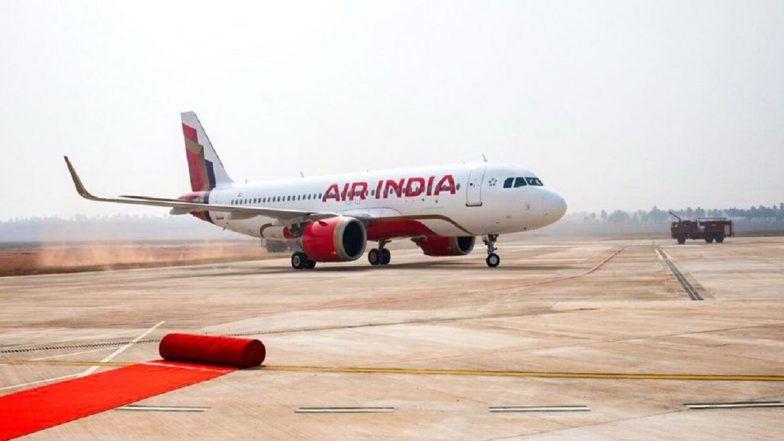
India’s Aircraft Accident Investigation Bureau (AAIB) has released its preliminary report regarding the August 4 in-flight emergency involving an Air India flight from Phuket to Delhi. The probe revealed a rare simultaneous hydraulic system failure that caused a sudden 300-foot altitude drop over Odisha, leaving 20 passengers and four cabin crew members injured. Alongside the technical findings, the investigation agency highlighted a significant breach of aviation safety standards, confirming that the flight's Pilot-in-Command (PIC) tested non-negative for a psychoactive substance.
AAIB Flags Pilot Substance Test as Serious Concern
Post-flight screening and follow-up laboratory testing confirmed that the Pilot-in-Command returned a non-negative result for a psychoactive substance. In contrast, the co-pilot tested negative, and breathalyzer tests for alcohol returned satisfactory results for both crew members. Highlighting the gravity of the finding, the AAIB stated: "The Pilot-In-Command was found non-negative for psycho-active substance in the confirmatory test. The confirmation of use of psycho-active substance is a serious concern and AAIB recommends appropriate actions by DGCA on priority." Air India Phuket-Delhi Turbulence: Final Drug Report Awaited, Crew Members Taken Off Roster, Says Govt.
The Directorate General of Civil Aviation (DGCA) has been urged to issue immediate regulatory measures to prevent substance abuse among flight crews. Both pilots were previously taken off flight duties pending the outcome of the detailed investigation.
Triple Hydraulic System Failure Caused Altitude Drop
The incident occurred while the Airbus A320neo (VT-EXO), carrying 145 passengers and crew, was cruising at an altitude of 36,000 feet. Within a five-second window, the aircraft experienced a sudden, simultaneous loss of pressure across all three of its hydraulic systems—Green, Blue, and Yellow.
The total loss of hydraulic pressure triggered an immediate disengagement of the autopilot system and brief stall warnings. The aircraft experienced a rapid altitude upset, abruptly climbing 372 feet before plunging 292 feet within seconds. Although the hydraulic systems auto-recovered shortly afterward and flight control was restored, the sudden movement occurred while seatbelt signs were off, flinging unbuckled passengers and crew members across the cabin.
Injuries and Structural Damage Onboard
The violent motion resulted in injuries to 24 individuals onboard, four of whom were hospitalized with severe injuries upon landing. The physical impact left noticeable structural damage inside the cabin, including cracked ceiling panels across multiple rows, dislodged overhead luggage bins, a broken emergency exit handle, and an uprooted lavatory fixture. Despite the onboard emergency, the crew elected to continue the journey to Delhi rather than divert, landing safely at Indira Gandhi International Airport after requesting priority medical assistance. Air India Phuket-Delhi Flight Turbulence: Airline To Screen All Pilots for Drugs.
AAIB Issues Preliminary Report on Air India Phuket-Delhi Flight Incident
Preliminary report of Aircraft Accident Investigation Bureau on Air India Phuket -Delhi flight says, "The Pilot-In-Command was found non-negative for psycho-active substance in the confirmatory test. The confirmation of use of psycho-active substance is a serious concern and AAIB…
— ANI (@ANI) September 4, 2026
Ongoing Investigation
While initial reports from the airline attributed the turbulence to weather conditions, technical inspectors from Airbus and France's Bureau of Enquiry and Analysis (BEA) joined Indian investigators in mid-August to examine the flight data recorders and hydraulic components. The AAIB noted that its current findings are preliminary. A comprehensive investigation is ongoing to establish the exact technical cause of the simultaneous hydraulic failure and whether human factors played any role in the event. A final report will be published upon conclusion of the probe.
(The above story first appeared on LatestLY on Sep 04, 2026 12:02 PM IST. For more news and updates on politics, world, sports, entertainment and lifestyle, log on to our website latestly.com).