
Govt Plans To Pare Stakes in 4 PSU Banks to 75% To Comply With SEBI Norms
The Indian government plans to reduce its stake in four public sector banks, Central Bank of India, Indian Overseas Bank, UCO Bank, and Punjab & Sind Bank, to 75 percent. The divestment, likely through Offer for Sale (OFS) tranches, aims to comply with SEBI’s 25 percent minimum public float norm while aligning with long-term banking reform strategies.

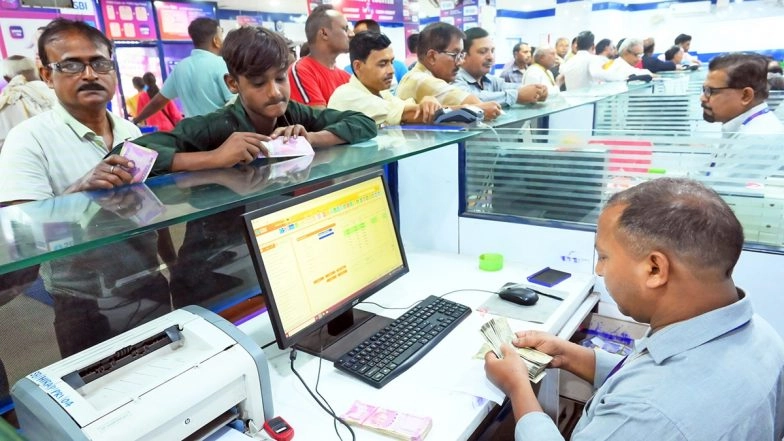
The Indian government is preparing to lower its equity holding in four state-run lenders, Central Bank of India, Indian Overseas Bank, UCO Bank, and Punjab & Sind Bank, to 75 percent. The exercise is primarily aimed at complying with the Securities and Exchange Board of India's (SEBI) mandatory minimum public shareholding (MPS) rule, which requires listed entities to maintain at least 25 percent public float.
The proposed disinvestment comes amid discussions around broader structural reforms in the state-owned banking space. While the immediate objective focuses on widening market liquidity and satisfying regulatory compliance, the move is closely watched in the context of the public sector bank privatisation plan in India, where shortlisted institutions could see strategic shifts depending on legislative changes and market appetite.
Compliance With SEBI Minimum Public Shareholding Rules
Under market regulations, listed companies are mandated to maintain at least 25 percent public shareholding. The government has historically availed exemptions for state-run banks, but the finance ministry is now keen on bridging the gap as balance sheets and valuations across state-owned lenders improve.
To reach the 75 percent ownership threshold, the Centre will need to execute a comparatively larger stake sale in Indian Overseas Bank, UCO Bank, and Punjab & Sind Bank, where sovereign ownership remains near or above 90 percent. Central Bank of India will require a smaller proportionate offload to meet the regulatory target.
OFS Route and Bank-Level Capital Raising Under Consideration
Government officials familiar with the discussions indicated that the dilution would likely be carried out via the Offer for Sale (OFS) mechanism in tranches, contingent on prevailing market conditions. This gradual dilution is expected to enhance trading liquidity and improve price discovery for the lenders without creating sudden downward price pressure.
In parallel, the banks themselves may explore independent market-based capital-raising avenues, such as Qualified Institutional Placements (QIPs) or follow-on public offerings. Fresh equity issuances by the lenders would expand their total share capital base, organically diluting the government’s equity percentage while augmenting the institutions' Tier-1 capital ratios.
Linkages to Broader Bank Privatisation Roadmap
The proposed equity dilution coincides with ongoing evaluations regarding the consolidation and long-term restructuring of state-run lenders. In the Union Budget for 2021-22, the government had originally outlined a public sector bank privatisation plan in India to privatise two public sector banks alongside IDBI Bank.
NITI Aayog had previously identified Central Bank of India and Indian Overseas Bank as potential candidates for privatisation. While the current 75 percent stake-cut plan is formally aimed at regulatory compliance rather than an immediate change of management control, any eventual strategic disinvestment will require statutory amendments to the Banking Companies (Acquisition and Transfer of Undertakings) Act.
(The above story first appeared on LatestLY on Oct 23, 2026 12:11 PM IST. For more news and updates on politics, world, sports, entertainment and lifestyle, log on to our website latestly.com).