Can a Second Wife Claim Motor Accident Compensation? Karnataka High Court Answers
The Karnataka High Court ruled that a second wife and minor daughter are entitled to motor accident compensation as financial dependents. Overturning a rigid definition of legal heirs, the court enhanced the tribunal's award to INR 15.02 lakh with 9 per cent interest, stating that anyone suffering loss of dependency deserves a legal remedy.

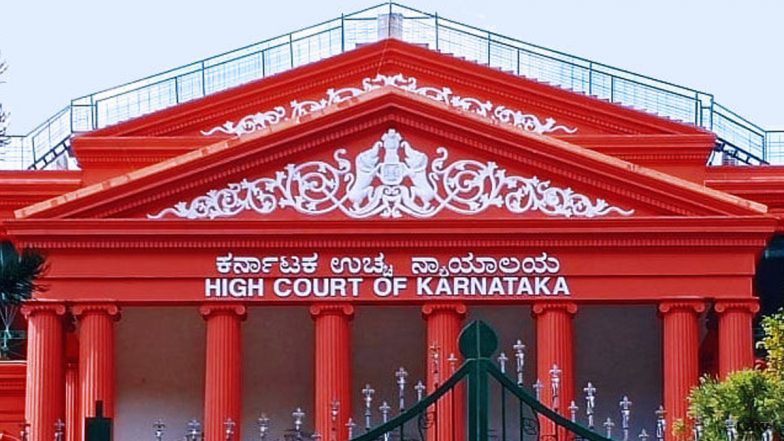
The Karnataka High Court has ruled that a second wife and a minor daughter are eligible to receive financial compensation following a fatal motor vehicle accident, establishing that dependency, rather than strict marital legality, determines who qualifies as a legal representative. Emphasising that remedies under the Motor Vehicles Act must be interpreted broadly, the court enhanced an initial tribunal award by INR 15,02,400.
A Division Bench comprising Justices Jayant Banerji and Tara Vitasta Ganju held that there can be no rigid formula to restrict who can seek compensation for the death of an individual in a road accident. With this ruling, the court expanded the traditional definitions of legal heirs to include all those who genuinely rely on the deceased for financial sustenance and experience direct suffering from the loss. Why Did the Karnataka High Court Deny Relief to Doctor Sharanya Padma in the Nandini Milk Case?
Expanding the Scope of 'Legal Representatives'
The judgment stems from a legal dispute involving the family of an agriculturalist specialising in flower crops, who was killed in a collision involving a vehicle insured by the National Insurance Company (NIC). Initially, a compensation claim was brought forward by the deceased’s first wife and mother. However, the deceased's second wife and minor daughter also moved the court, seeking compensation as dependent family members.
While the exact marital legitimacy of the subsequent marriage was not definitively adjudicated because the court deemed it an unpertinent issue for this specific resolution, the bench focused entirely on the loss of livelihood. To support its decision, the High Court cited a Supreme Court precedent that broadens the scope of eligible claimants.
"The Supreme Court while examining the meaning of a legal representative as applicable to the amended MV Act has held that a legal representative need not necessarily be confined to the wife, husband, parent and child of the deceased and that every person who represents the estate of the deceased and also suffers on account of the death of a person in a motor vehicle accident should have a remedy for realisation of compensation," the Bench observed.
Rejecting Rigid Payout Formulas
The Bench explicitly rejected arguments trying to limit compensation percentages based strictly on structural relationships, reiterating that judges must assess the factual realities of each household. "It is sufficient for the claimant to establish loss of dependency and that every legal representative who suffers on account of the death of a person in a motor vehicle accident is entitled to a remedy for realisation of compensation," the court stated. "The Court further held that the percentage of deduction towards personal expenses cannot be governed by a rigid formula or by the nature of relationship between the claimant and the deceased, and that the same depends upon the facts and circumstances of each case". Karnataka High Court Grants Bail to 75-Year-Old Man Accused of S*xually Assaulting Daughter-in-Law Repeatedly; Here’s Why.
Correction of Notional Income and Final Award
In reviewing the initial calculations put forth by the Motor Vehicle Accidents Claims Tribunal (MACT), the High Court discovered an error in how the victim's earning capacity had been evaluated. The tribunal had evaluated the victim’s monthly notional income at INR 10,000, ignoring standard state benchmarks. The bench noted that the baseline standard rate for an individual in 2019 was actually higher. "Concededly, the notional income for the year 2019 is INR 14,000/- per month and there is no dispute that at the time of the accident, the deceased was 34 years of age," the judgment clarified.
Accounting for the revised monthly income, the 34-year-old victim's age, and the addition of the second wife and daughter as valid dependents, the High Court directed the National Insurance Company to disburse the enhanced award sum of INR 15,02,400. The total payout will be distributed among the four claimants alongside an accrued interest rate of 9 per cent per annum.
(The above story first appeared on LatestLY on Jun 24, 2026 05:37 PM IST. For more news and updates on politics, world, sports, entertainment and lifestyle, log on to our website latestly.com).