‘Children Have a Fundamental Right To Access the Internet’: Supreme Court Rejects Blanket Restrictions
The Supreme Court has rejected blanket age-based restrictions on internet access, observing that children have a fundamental right to access and use the internet. However, the court called for stronger safeguards to protect minors from online sexual abuse, including faster detection and removal of child s*xual abuse material (CSAM) across digital platforms.

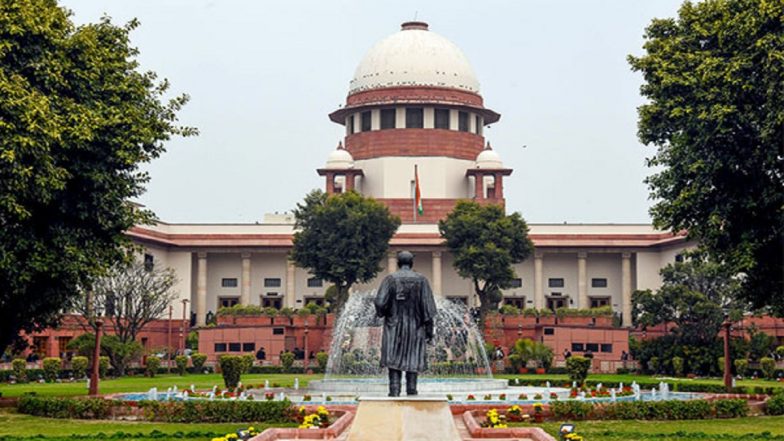
New Delhi, October 17: The Supreme Court has rejected blanket age-based restrictions on internet access, observing that children have a fundamental right to access and use the internet. However, the court called for stronger safeguards to protect minors from online sexual abuse, including faster detection and removal of child s*xual abuse material (CSAM) across digital platforms.
The court observed that children's safety and freedom to access the internet were not contradictory. Denying children internet access altogether would be unreasonable, it said, emphasising that protective measures must safeguard minors without taking away their rights.
The Supreme Court also warned that strict age-based restrictions could push children towards unregulated and potentially more dangerous websites. It noted that children facing online threats or exploitation might hesitate to report incidents to parents or trusted adults if they feared punishment for violating restrictions. Why Has the Supreme Court Banned Uploads of Court Hearing Videos on Social Media?
Supreme Court Flags Failure to Remove Child S*xual Abuse Material
The observations came amid concerns over the continued circulation of child s*xual abuse material online despite existing guidelines. The court criticised regulatory authorities and social media intermediaries for failing to take adequate steps to protect victims.
The proceedings were prompted partly by reports alleging paid promotions of such material through redirect links and websites on social media platforms.
The court noted that the existing reporting mechanism largely depended on individual complaints. When one platform detects and removes abusive material, the same content is not automatically flagged across other platforms, potentially delaying its removal. 'Don't Waste Our Time': CJI Surya Kant Rejects Videos in Plea Over Police Action on CJP Protest.
Centre's Proposed Social Media Restrictions for Children
The development comes weeks after the Centre informed the Supreme Court that it planned to amend the Information Technology intermediary rules to restrict internet access for children under 18. The court had also previously asked whether minors should be barred from creating social media accounts without parental consent.
Earlier this year, Andhra Pradesh Minister Nara Lokesh said the state government was considering restrictions on social media use by children under 16, following Australia's implementation of a similar ban.
National Database for Faster Detection of Abusive Content
The Supreme Court directed the Centre to frame guidelines for national databases of perceptual hashes and URLs to help platforms identify matching content and coordinate its removal across services.
However, the court stressed that safeguards must prevent wrongful deletion. Content should not be automatically removed or added to databases based solely on a single complaint. Verification mechanisms must be established, along with a grievance redressal system for incorrectly flagged content.
The court also clarified that these databases must not be repurposed to detect or remove other categories of material.
Supreme Court Calls for Online Safety Awareness
The court called for awareness and sensitisation programmes beginning at the primary school level to help children recognise online risks and seek assistance when faced with abuse or threats.
The directions seek to strengthen online child protection while ensuring that safeguards do not result in arbitrary restrictions on children's fundamental rights.
(The above story first appeared on LatestLY on Oct 17, 2026 03:45 PM IST. For more news and updates on politics, world, sports, entertainment and lifestyle, log on to our website latestly.com).