INR 11 IV Set Sold for INR 325: Tukaram Mundhe Flags 2,841% Hospital Markup
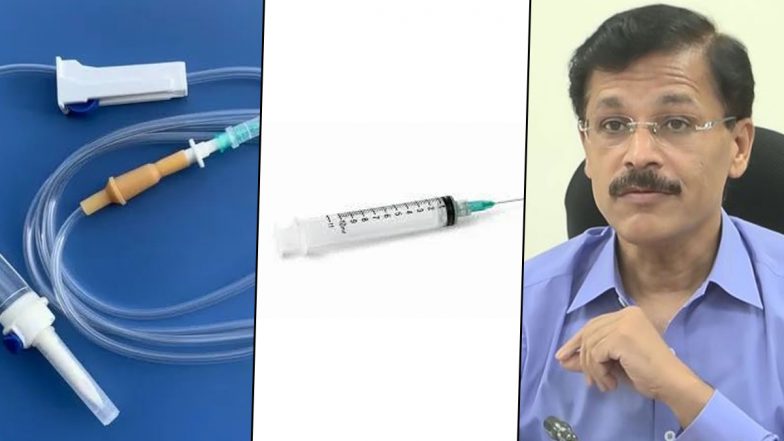
Maharashtra Food and Drug Administration (FDA) Commissioner Tukaram Mundhe has flagged large differences between procurement prices and printed maximum retail prices (MRPs) of commonly used hospital consumables, with an IV infusion set bought for ₹11.05 carrying an MRP of ₹325.

Maharashtra Food and Drug Administration (FDA) Commissioner Tukaram Mundhe has flagged large differences between procurement prices and printed maximum retail prices (MRPs) of commonly used hospital consumables, with an IV infusion set bought for ₹11.05 carrying an MRP of ₹325.
The state-level survey found markups of up to 2,841% on some medical devices used in inpatient care. Mundhe has recommended that the Centre review the pricing framework and consider guidelines on the permissible gap between procurement prices and declared MRPs.
Maharashtra FDA Survey Finds Wide Price Gaps
The survey examined commonly used medical consumables, including IV infusion sets, syringes, catheters, nebulisers and oxygen masks. It compared the prices at which products were procured with their declared MRPs or amounts charged to patients. Tukaram Mundhe Says ‘I Am No Celebrity’, Dismisses ‘Internet Fame’ Amid Food Safety Crackdown (Video).
One of the largest differences involved an IV infusion set, which had a trade price of ₹11.05 but carried a printed MRP of ₹325. Mundhe cited this as a 2,841% markup.
Hospital Consumables: Procurement Price vs MRP
| Medical consumable | Procurement price | Printed MRP | Price gap |
|---|---|---|---|
| IV infusion set | ₹11.05 | ₹325 | ₹313.95 |
| 10 ml syringe | ₹6.75 | ₹57.20 | ₹50.45 |
| Catheter | ₹29.41 | ₹310 | ₹280.59 |
| Nebuliser mask kit | ₹45 | ₹652 | ₹607 |
| Nebuliser mask | ₹40 | ₹715 | ₹675 |
Figures are based on the Maharashtra FDA survey and details reported by Mundhe. The percentage figures refer to the reported difference/markup between procurement price and declared MRP; they should not automatically be treated as a hospital's net profit.
₹6.75 Syringe Carries ₹57.20 MRP
The survey also highlighted a 10 ml syringe procured at ₹6.75 and carrying an MRP of ₹57.20. Mundhe cited the difference as a 747% markup.
A catheter purchased for ₹29.41 was reported to have an MRP of ₹310. The survey also found large gaps involving nebuliser and oxygen-mask products, with some items purchased for around ₹40-₹45 carrying prices of several hundred rupees.
The figures have drawn attention because these products are routinely used during inpatient treatment rather than being optional purchases that patients can easily compare in advance. Maharashtra FDA Chief Tukaram Mundhe Shares Essential Food Safety Tips for Diners (Video).
Tukaram Mundhe Flags Hospital Consumable Prices
The most expensive part of a hospital bill may never touch the hospital at all.
A patient admitted for care has no way of knowing whether the price on a medical consumable reflects its actual cost or a markup fixed long before it ever reached the ward. That gap in information…
— Tukaram Mundhe (@Tukaram_IndIAS) September 15, 2026
Tukaram Mundhe Raises Patient Transparency Concerns
In a post on X, Mundhe said patients admitted for treatment often have little way of knowing whether the price of a medical consumable reflects its actual cost or a markup established earlier in the supply chain.
He argued that patients generally cannot compare prices, seek alternatives or question the amount printed on a medical product while receiving treatment.
Mundhe also said that MRPs can be determined upstream by manufacturers and distributors, creating a gap between the trade price and the declared MRP.
According to his post, the issue therefore involves not only pricing but also the lack of information available to patients when they receive their hospital bills.
Why Medical Device Pricing Is Under Scrutiny
Mundhe pointed to what he described as a structural difference between the regulation of medicines and medical consumables.
Scheduled medicines are subject to price ceilings under the Drugs (Prices Control) Order, 2013. Medical devices and consumables, however, do not all fall under the same price-control mechanism.
The National Pharmaceutical Pricing Authority (NPPA) has previously exercised pricing powers over selected medical devices, including coronary stents and knee implants, while other devices have been subject to different regulatory arrangements.
The current issue is whether commonly used hospital consumables should face clearer limits or monitoring when there is a substantial difference between their procurement prices and declared MRPs.
Mundhe Seeks Review By Department of Pharmaceuticals, NPPA
Mundhe has recommended that the Department of Pharmaceuticals and the NPPA review the Maharashtra survey findings and consider clear guidelines governing the permissible gap between trade procurement prices and declared MRPs.
The proposal could involve examining trade margins and creating a more structured monitoring mechanism for frequently used hospital consumables.
Reports on the issue also indicate that Maharashtra is not the only state raising concerns about medical-device pricing, with representations from other state drug-control authorities also being cited in recent coverage.
What Happens Next
The recommendations will need to be examined by the central authorities before any change in pricing rules is introduced.
For patients, the central issue highlighted by the Maharashtra FDA is the lack of transparency between the price at which a medical consumable enters the hospital supply chain and the amount reflected in the patient's bill.
Any future pricing framework would need to determine which categories of medical devices and consumables should be covered, how permissible margins would be calculated and how hospitals and manufacturers would be monitored.
(The above story first appeared on LatestLY on Sep 16, 2026 03:27 PM IST. For more news and updates on politics, world, sports, entertainment and lifestyle, log on to our website latestly.com).