PM Narendra Modi Wears Red Tie-and-Dye Turban at 80th Independence Day Celebrations (See Pic)
PM Modi sported a bright red tie-and-dye safa (turban) dotted with yellow and white Bandhani patterns, paired with a classic white kurta-pyjama, a chocolate brown sleeveless vest, and pocket squares in the colors of the national flag.

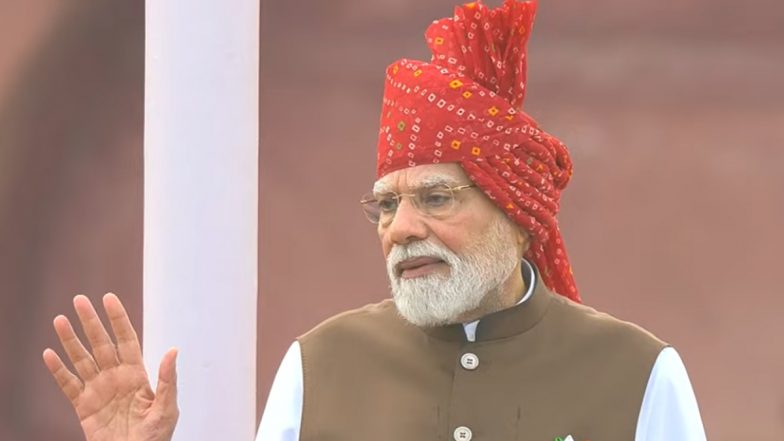
Prime Minister Narendra Modi marked India's 80th Independence Day on Saturday by wearing a traditional red tie-and-dye turban as he arrived at the Red Fort for his 13th consecutive Independence Day address from its historic ramparts. He paired the turban with a white kurta and a chocolate-brown vest, adding saffron, white and green pocket squares to his outfit, according to a report.
PM Modi's Red Tie-and-Dye Turban Takes Centre Stage
The turban worn by Modi featured a traditional tie-and-dye design associated with the textile traditions of Rajasthan and Gujarat. Its long trailing end added a distinctive element to his Independence Day attire. Independence Day 2026: PM Narendra Modi Hoists Tricolour at Red Fort; Vande Mataram Rendered for the First Time During Celebrations (Pics and Videos).
PM Modi Picks Maroon Bandhani Safa for 80th Independence Day
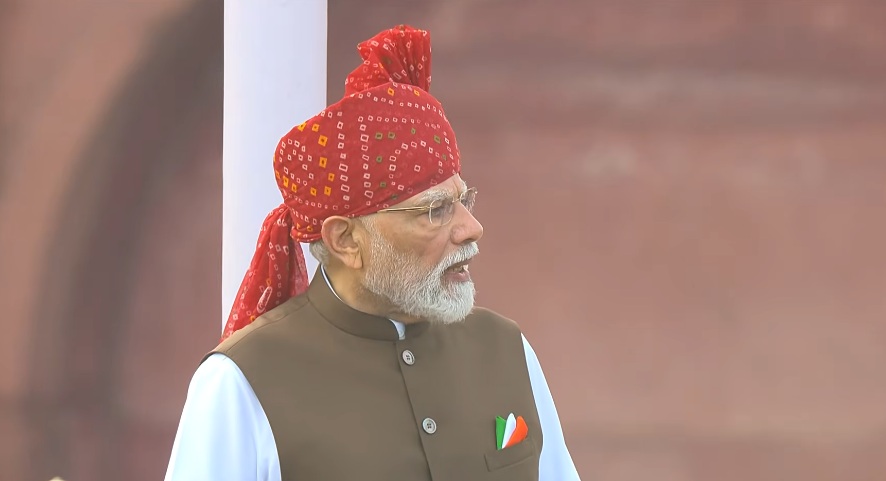
The choice continued a tradition that has become closely associated with the Prime Minister's annual Red Fort appearances. Since 2014, Modi has worn different styles of turbans and safas for his Independence Day addresses, often drawing from regional textile and cultural traditions.
This year's red turban came a year after he wore a vibrant saffron turban at the 79th Independence Day celebrations in 2025. In previous years, his choices have included Rajasthani leheriya, bandhani and tricolour-inspired designs.
A Tradition of Regional Representation
Modi's Independence Day headgear has evolved into a recurring visual feature of the national ceremony. The designs have drawn on traditional styles from different parts of India, highlighting regional craftsmanship and textile traditions. Independence Day 2026: PM Narendra Modi Extends Greetings; Pays Tribute to Freedom Fighters.
The choice of a tie-and-dye turban this year has particular relevance to Rajasthan and Gujarat, where such textile techniques have a long cultural history. The approach also allows the attire to complement the broader emphasis on India's cultural diversity during national celebrations.
13th Consecutive Red Fort Address
Saturday's ceremony marked Modi's 13th consecutive Independence Day address from the Red Fort since he first became prime minister in 2014. The 80th Independence Day celebrations were also centred on the 150th anniversary of the national song Vande Mataram and the contribution of India's youth towards the government's vision of a developed India, or Viksit Bharat @2047. The Prime Minister also paid floral tribute to Mahatma Gandhi at Rajghat before proceeding with the Independence Day programme at the Red Fort.
Turbans as a Recurring Independence Day Symbol
Over the years, Modi's Independence Day turbans have ranged from bright yellow and saffron designs to multicoloured bandhani and Rajasthani patterns. The headgear has often incorporated regional styles while maintaining a distinctly ceremonial appearance.
The practice has become part of the visual identity of his annual Independence Day appearances, with each year's choice drawing attention alongside the formal proceedings and the Prime Minister's address.
For the 80th Independence Day, the red tie-and-dye turban once again placed India's traditional textile heritage at the centre of Modi's public appearance at the Red Fort.
(The above story first appeared on LatestLY on Aug 15, 2026 08:05 AM IST. For more news and updates on politics, world, sports, entertainment and lifestyle, log on to our website latestly.com).