Is Krishna Janmashtami 2026 on September 3 or 4? Correct Date, Shubh Muhurat, Puja Timings and Rituals
Krishna Janmashtami 2026: Clarify the correct date and puja muhurat for this major Hindu festival. Discover if Krishna Janmashtami falls on September 3 or 4, understand the auspicious Nishita Puja timings across India, and learn about the traditions and celebrations for Lord Krishna's 5253rd birth anniversary. Get all the details for a blessed Janmashtami.

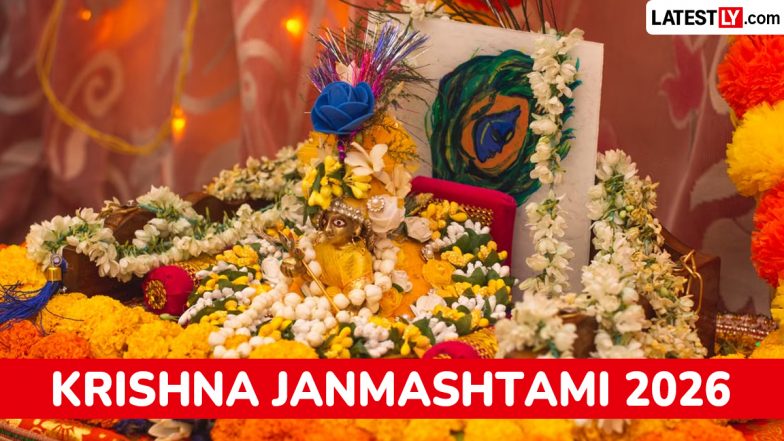
As the spiritual fervor for Krishna Janmashtami begins to build, devotees across India often find themselves pondering the exact date for this auspicious celebration. Every year, questions arise about whether the festival falls on one day or another, leading to understandable confusion. For 2026, we're here to clarify: Krishna Janmashtami will be widely celebrated on Friday, September 4, 2026.
This revered Hindu festival marks the 5253rd birth anniversary of Lord Krishna, the eighth incarnation of Lord Vishnu, who descended to Earth to restore Dharma and vanquish evil. Celebrated on the Ashtami Tithi (eighth day) of the Krishna Paksha (dark fortnight) in the Hindu month of Bhadrapada, Janmashtami is a day of immense devotion, fasting, and joyous revelry. Dahi Handi 2026 Date, Significance and Celebrations Across Maharashtra.
When is Krishna Janmashtami 2026? Unpacking the Dates
The primary confusion often stems from the precise astrological calculations involving the Ashtami Tithi and Rohini Nakshatra, which are traditionally believed to have coincided at Lord Krishna's birth. While the majority of India will observe Krishna Janmashtami on September 4, 2026, you might encounter references to September 3 or even September 5. Here’s why:
- September 4, 2026 (Friday): This is the widely accepted and celebrated date across most of India for Krishna Janmashtami. The Ashtami Tithi for 2026 begins on September 4, 2026, at 2:25 AM IST and concludes on September 5, 2026, at 12:13 AM IST. The Rohini Nakshatra will commence on September 4, 2026, at 12:29 AM IST and end at 11:04 PM IST on the same day. This alignment makes September 4 the most suitable day for the main festivities, as the Ashtami Tithi and Rohini Nakshatra largely coincide with the Nishita Kaal (midnight period).
- The September 3 Reference: Some Drik Panchang calculations or certain traditions might consider September 3 based on the early commencement of Ashtami Tithi. However, for most households, the September 4 date is preferred given the more complete alignment of Ashtami Tithi and Rohini Nakshatra with the Nishita Kaal.
- The September 5 Reference: The midnight puja, known as Nishita Kaal, when Lord Krishna is believed to have been born, often extends into the early hours of September 5. This leads to the misconception that the festival itself falls on September 5. Additionally, post-Janmashtami celebrations like Dahi Handi traditionally take place on September 5, 2026. Some Vaishnava and ISKCON temples might also have specific calendrical rules that could lead to observance on September 5 for particular local conditions or fasting practices.
Therefore, mark your calendars for Friday, September 4, 2026, as the main day to celebrate Krishna Janmashtami.
The Auspicious Nishita Puja Muhurat
The most sacred time to perform the Janmashtami puja is during the Nishita Kaal, the Hindu midnight period when Lord Krishna's birth is commemorated. Devotees observe fasting and perform elaborate rituals during this window. Here are the approximate Nishita Puja Muhurat timings for major Indian cities:
| City | Nishita Puja Muhurat (IST) |
|---|---|
| New Delhi | 11:57 PM (Sep 4) – 12:43 AM (Sep 5) |
| Mumbai | 12:14 AM – 01:01 AM (Sep 5) |
| Kolkata | 11:13 PM – 11:59 PM (Sep 4) |
| Chennai | 11:45 PM (Sep 4) – 12:31 AM (Sep 5) |
| Bengaluru | 11:55 PM (Sep 4) – 12:42 AM (Sep 5) |
| Ahmedabad | 12:16 AM – 01:02 AM (Sep 5) |
| Jaipur | 12:03 AM – 12:49 AM (Sep 5) |
Please note: These timings are approximate, and devotees are advised to consult their local Panchang for precise city-specific muhurat.
Significance of Lord Krishna's Birth
Janmashtami celebrates the divine advent of Lord Krishna, born to Devaki and Vasudeva in a prison cell in Mathura to free the world from the tyranny of his maternal uncle, King Kansa. His birth symbolizes the triumph of good over evil, the establishment of righteousness (Dharma), and the path of love and devotion. Krishna's life, from his playful childhood (Bal Gopal) to his role as a divine strategist in the Mahabharata, offers profound lessons on duty, wisdom, and selfless action.
Key Rituals and Traditions
The celebrations for Janmashtami are marked by deep devotion and joyous customs:
- Fasting (Vrat): Many devotees observe a day-long fast, often a Nirjala fast (without water), which is broken only after the midnight birth rituals are completed and Prasad is offered to Lord Krishna.
- Decorations: Homes and temples are beautifully adorned with flowers, lights, and artistic jhankis (tableaus) depicting scenes from Krishna's life. Drawing tiny footprints of Bal Gopal leading into the house symbolizes welcoming Krishna into one's home.
- Midnight Puja (Nishita Puja): This is the highlight of the festival. An idol of infant Krishna (Bal Gopal) is bathed with milk, honey, yogurt, and gangajal (Panchamrit Abhishek), dressed in new clothes, adorned with jewelry, and gently placed in a decorated cradle. Devotees sing devotional songs (bhajans and kirtans), chant mantras, and offer chappan bhog (56 varieties of food), especially his favorite makhan-mishri (butter and sugar) and dhaniya panjiri.
- Vigil (Jagran): Devotees stay awake till midnight, immersed in prayers and devotional activities, eagerly awaiting the sacred moment of Krishna's birth.
Regional Flavours and Dahi Handi
While the core rituals remain similar, Janmashtami celebrations have distinct regional flavors. In Mathura and Vrindavan, the birthplace and childhood abode of Lord Krishna, the festivities are particularly grand, with temples bustling with devotees. The day after Janmashtami, Nandotsav is celebrated in these regions.
Perhaps one of the most energetic celebrations is Dahi Handi, predominantly observed in Maharashtra and Gujarat on the day following Janmashtami, which is Saturday, September 5, 2026. Teams of 'Govindas' form human pyramids to reach and break a high-hung pot of dahi (curd), recreating Krishna's playful butter-stealing antics. Dahi Handi 2026 Celebrations: Iconic Locations in Mumbai and Thane To Witness Grand Govinda Pyramids.
As Krishna Janmashtami 2026 approaches on September 4, let us embrace the divine spirit, clarify the dates, and participate in the joyous traditions that celebrate the birth of the beloved Lord Krishna. May this festival bring peace, prosperity, and spiritual fulfillment to all. Jai Shri Krishna!
(The above story first appeared on LatestLY on Aug 31, 2026 01:02 PM IST. For more news and updates on politics, world, sports, entertainment and lifestyle, log on to our website latestly.com).