AI Food Violence Videos Raise Extremism Concerns, Researchers Warn
AI-generated videos featuring fruit and vegetable characters in graphic violence are raising concerns over extremist content and online radicalisation, researchers have warned. A GNET report said some clips reference Islamic State and far-right groups while using 'cute' or 'Pixar-like' visuals that may appear harmless. Researchers urged TikTok to develop 'countermeasures'.

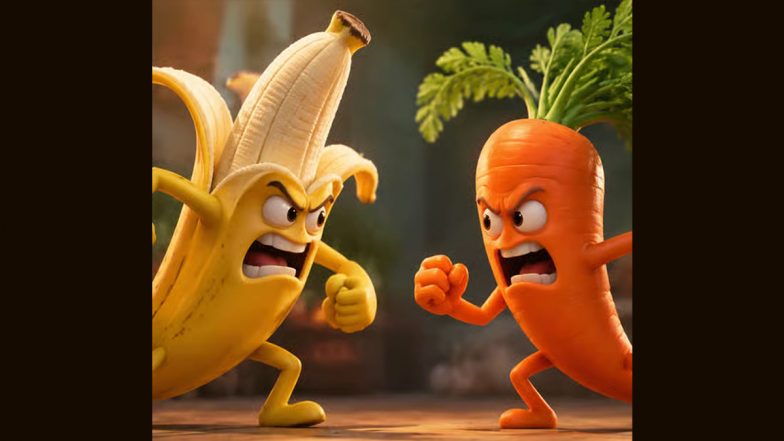
AI-generated videos featuring fruit and vegetable characters engaging in graphic violence are spreading extremist references and could help normalise violent content, researchers have warned. The clips are part of a wider trend of "brain rot" videos featuring anthropomorphic foods in exaggerated romance, betrayal and scandal storylines, but some have escalated into "extreme mutilation, torture, and hyper-realistic violence".
The Global Network on Extremism and Technology (GNET), a research initiative backed by the Global Internet Forum to Counter Terrorism, raised the concerns in a report. Researchers said some videos appear to evade TikTok's rules against violent content because they initially look harmless, often using a "cute" or "Pixar-like" appearance to "soften" the image. Was a ‘Croczilla’ Captured Near Mumbai’s Gateway of India in 1994? Viral Video Is AI Generated.
AI Food Videos Reference Extremist Groups
The report identified clips that allegedly reference specific criminal and extremist organisations, including Islamic State (IS). One example appeared to replicate content from IS videos with a carrot making a potato "explode", while another featured a carrot "assassinating" a potato with a hammer, the study found.
Another features a "Carrot Khalifah" telling his army "the Carrot State will rise again" - which GNET said alluded to an IS slogan. Two posts included hashtags often used by supporters of the terror group to disseminate propaganda, the report said.
From 'Brain Rot' to Graphic Violence
GNET said the violent food videos form part of a broader ecosystem of AI-generated "brain rot" content, in which familiar food characters are placed in melodramatic or absurd scenarios. However, researchers said some of the material goes beyond surreal entertainment, depicting torture, mutilation and other forms of graphic violence.
Gruesome drug cartel killings are apparently mimicked in other clips. The use of cartoon-like food characters may make such material less immediately recognisable as violent or extremist content, according to the researchers.
'Potato Supremacy' and Far-Right References
Other videos are said to reference neo-Nazi organisation Atomwaffen Division and nihilistic subculture No Lives Matter. Statements and comments pointing to far-right ideology appeared alongside the content, researchers said, with "potato supremacy" said to refer to white supremacy.
The report also highlighted concerns about young users encountering the material without actively seeking violent or extremist content. "Food violence-based material empowered by AI is easily accessible, putting minors and youth at risk of inadvertently consuming graphic or disturbing content," researchers claimed.
They said such content helped normalise "extremist and violent narratives and imagery" and users could also stumble on terror material and head down a dangerous path.
"This type of content can lay the basis for the consumption of further violence-based audiovisual material, making young users fall into the trap of online radicalisation and audiovisual violence consumption," the authors state.
Researchers Call for TikTok Countermeasures
GNET wants TikTok to develop "countermeasures" to limit such AI-generated content. The report raises broader questions about how social media platforms identify harmful AI-generated material when extremist references are embedded in fictional, cartoon-style characters.
TikTok hasn't yet responded to the report. The findings also underline the challenge posed by increasingly realistic and easily produced AI videos, particularly when violent or extremist themes are presented in formats that can initially appear humorous, fictional or suitable for younger audiences.
(The above story first appeared on LatestLY on Aug 14, 2026 04:17 PM IST. For more news and updates on politics, world, sports, entertainment and lifestyle, log on to our website latestly.com).