Chandrayaan-1 Data Unveils Oldest Lunar Impact Basin in Historic Space Discovery
Researchers from Ahmedabad’s Physical Research Laboratory have identified the Australe Basin on the Moon using mineralogical data from Chandrayaan-1. The ancient impact basin, potentially older than the South Pole-Aitken Basin, features low-calcium, magnesium-rich basalts and 248 small basalt ponds, offering insights into lunar evolution and future exploration.

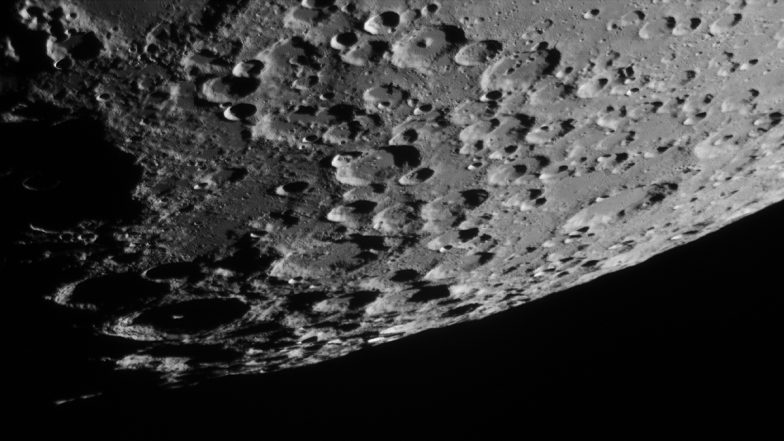
Planetary scientists have confirmed the discovery of a hidden impact crater on the lunar surface using mineralogical data obtained from Chandrayaan-1. Researchers note that this newly identified structure could predate the oldest known impact basins on the moon, offering fresh insights into early lunar evolution.
A team of researchers from the Physical Research Laboratory in Ahmedabad identified the Australe Basin, which had remained untraced because erosion along its rims made detection extremely difficult for modern imaging techniques. Scientists believe approximately 300 impact basins exist on the moon, though only 74 have been catalogued to date. ISRO EOS-05 Satellite: Space Agency Successfully Completes 3rd and Final Orbit-Raising Manoeuvre.
As per a report by The Indian Express, the study was published in The Planetary Science Journal and highlights an impact basin located in the southeastern hemisphere of the moon, featuring distinct morphology, gravity signatures, and unique mineralogical compositions.
Chandrayaan-1 Mineralogy Data and Australe Basin Features
The mineralogy of the basin was detected using data gathered by NASA's Moon Mineralogy Mapper, an imaging spectrometer onboard Chandrayaan-1 designed to map the lunar surface. Researchers studied absorption bands exhibited by key lunar minerals such as pyroxenes, olivine, and plagioclase to determine the unique composition of the region.
Unlike the majority of lunar basalts that exhibit high calcium content, the basalts discovered within the Australe Basin are relatively lower in calcium and higher in magnesium. Furthermore, the basin features a circular arrangement of 248 small basalt ponds rather than the smooth, vast hardened lava surfaces typical of other impact sites.
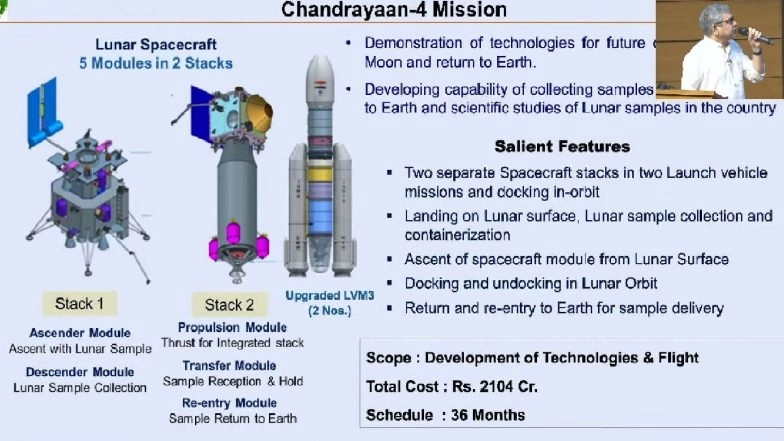
Implications for Future Lunar Exploration and Chandrayaan-4
Scientists suggest that this ancient basin could potentially be older and larger than the South Pole Aitken Basin, which formed over 4 billion years ago. The discovery provides a framework to interpret data from upcoming landing missions and future lunar sample return initiatives. El Nino Triggers Dual Health Crisis in India As WHO Issues High-Risk Alert Over Dengue, Malaria Surge.
Because the Australe region lies close to the moon's south polar region, material excavated by this impact may have been deposited across the south pole. Understanding how the regolith in these areas evolved over billions of years will assist researchers preparing for upcoming international missions and lunar base projects.
(The above story first appeared on LatestLY on Sep 14, 2026 08:51 PM IST. For more news and updates on politics, world, sports, entertainment and lifestyle, log on to our website latestly.com).