Cyborg Cockroaches Get a 'Diving Suit': NTU and Waseda Scientists Develop Amphibious Tech for Disaster Zones
Scientists from NTU Singapore and Waseda University have developed a flexible 'diving suit' for cyborg cockroaches, enabling them to survive and move underwater and in low-oxygen environments for up to three hours. Published in Nature Communications, this technology could enhance search-and-rescue efforts in flooded disaster zones.

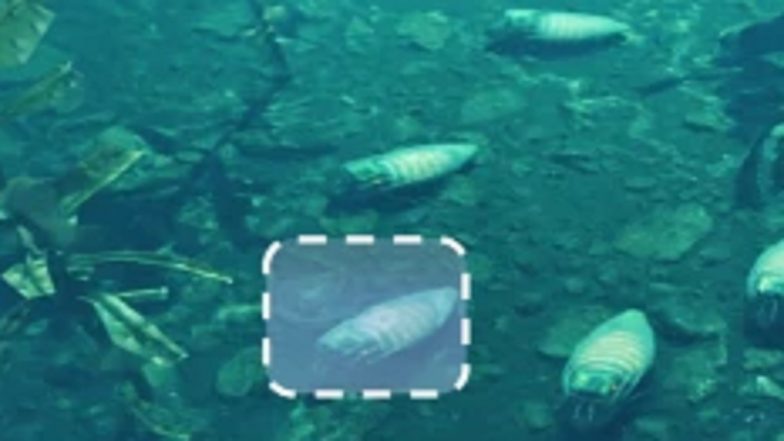
Scientists from Nanyang Technological University (NTU) Singapore and Waseda University in Japan have developed a flexible "diving suit" that allows cyborg cockroaches to survive and move underwater and in low-oxygen environments for up to three hours. Published in Nature Communications, the breakthrough could significantly expand the deployment of cyborg insects in disaster zones, where flooded rubble, standing water, and submerged spaces often prevent conventional robots from gaining access.
Overcoming Respiratory Limits in Submerged Environments
Cyborg insects are living organisms fitted with electronic controllers to guide their movement. Because they rely on their own biological muscles rather than heavy motors, they require substantially less power than small artificial robots. NASA Discovers Rare ‘Orphan’ Black Hole Devouring Star Outside Galaxy Core in 1st-of-Its-Kind Observation.
However, these insects have historically been limited by their natural respiratory systems. Cockroaches breathe via small lateral openings called spiracles, which transport air directly into their internal tracheal systems. When submerged, they cannot extract oxygen from water. To solve this, researchers designed a compact suit consisting of three primary components: a flexible outer shell, an oxygen-generation tank, and four silicone supply tubes that channel air directly to the insect's thoracic spiracles.
Engineering a Portable Oxygen System
The oxygen-generation tank was 3D-printed using a transparent PMMA-type resin. Researchers placed a manganese dioxide-coated sponge inside the tank to act as a catalyst. To initiate the oxygen supply, a small amount of diluted hydrogen peroxide is injected into the tank, which is then sealed with an ultraviolet adhesive. The manganese dioxide breaks down the hydrogen peroxide to steadily release oxygen, which is routed through the silicone tubes to the insect's breathing holes. The tubes can later be removed without harming the insect. In laboratory testing, the team successfully fitted the suit onto the Madagascar hissing cockroach, transforming a land-based insect into an amphibious unit capable of operating across dry and wet terrain.
Applications in Search and Rescue
Professor Hirotaka Sato of NTU Singapore, who led the study, emphasized the operational utility of the research: "Our new insect diving suit works like the oxygen tank used by human divers. It generates oxygen and delivers it directly to the insect's breathing holes, allowing the cyborg cockroach to survive and move in underwater or low-oxygen environments. This is important because real disaster sites can be challenging after heavy rain or flooding, blocking access routes in the rubble, drains and narrow gaps. By expanding the operating parameters of our cyborg insects to include underwater travel, we believe they can enhance search-and-rescue efforts." Lenacapavir May Slow HIV Infections 'but There's Not Enough'.
Professor Shinjiro Umezu of Waseda University highlighted the engineering hurdles overcome during development: "The key engineering challenge was to build a system that was small, light and flexible enough for the insect to wear while still producing enough oxygen for long-duration underwater movement. Our approach combines a soft waterproof shell with a simple yet reliable chemical oxygen generator. This allows the insect to retain its natural mobility while being protected from an environment that it cannot normally survive in."
The project builds on more than a decade of cyborg insect research at NTU. Beyond disaster response, researchers note that the technology could eventually be adapted for inspecting flooded municipal infrastructure, pipes, and drains, as well as scaled for other terrestrial insects such as locusts and beetles.
(The above story first appeared on LatestLY on Aug 01, 2026 01:56 PM IST. For more news and updates on politics, world, sports, entertainment and lifestyle, log on to our website latestly.com).