Summer Solstice 2026 Date, Time, and Astronomical Significance
An in-depth look at the Summer Solstice 2026, detailing its exact date and time, the astronomical reasons behind it, and its cultural importance as the Northern Hemisphere experiences its longest day of the year.

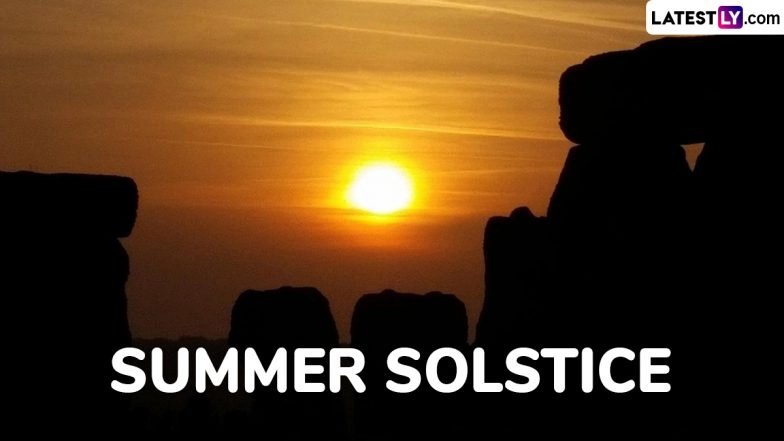
The Summer Solstice 2026, marking the astronomical beginning of summer and the longest day of the year in the Northern Hemisphere, is set to occur on Sunday, 21 June. This pivotal celestial event will take place precisely at 09:24 BST (08:24 GMT) in the UK, a moment when the Earth's tilt brings the sun to its highest point in the northern sky. Millions across the globe will observe this annual phenomenon, which has held profound significance for cultures throughout history.
Understanding the Astronomical Event
The Summer Solstice is not merely a full day but an exact instant when one of Earth's poles achieves its maximum tilt towards the Sun. This phenomenon is a direct result of Earth's axial tilt, which is approximately 23.4 degrees. As our planet orbits the Sun, this tilt ensures that different hemispheres receive varying amounts of sunlight throughout the year. On the Summer Solstice, the Northern Hemisphere is most directly inclined towards the Sun, leading to the maximum number of daylight hours. Conversely, the Southern Hemisphere experiences its Winter Solstice at this time, marking its shortest day.
The term "solstice" itself originates from the Latin words "sol" (sun) and "sistere" (to stand still), reflecting the Sun's apparent pause in its northward journey across the sky before it begins its gradual descent southward. While the solstice brings the longest period of daylight, it is important to note that it does not necessarily usher in the hottest temperatures of the year. Land and water bodies require time to absorb and radiate heat, meaning the warmest days of summer often arrive several weeks after the solstice.
The Longest Day and Its Impact
For those in the Northern Hemisphere, 21 June 2026 will be characterised by an extended period of daylight, with the Sun following its highest path across the sky. The exact duration of daylight will vary depending on latitude; for instance, London will experience approximately 8 hours and 49 minutes more daylight than during the December solstice. This abundance of light has a tangible impact on the natural world, with plants thriving during one of the busiest parts of the growing season and many animals responding to the prolonged daylight and warmer temperatures.
Cultural Resonance and Modern Observances
Throughout millennia, the Summer Solstice has been a moment of deep cultural importance, celebrated with various festivals and rituals across numerous civilisations. Ancient monuments such as Stonehenge in Wiltshire, UK, are famously aligned with the sunrise on the Summer Solstice, drawing thousands of visitors each year who gather to witness the sun's rays align with the prehistoric stones. In Scandinavia, the solstice is traditionally observed as Midsummer, a time for bonfires, dancing, and community gatherings. These enduring traditions underscore humanity's long-standing connection to the celestial rhythms that govern our seasons.
As 21 June 2026 approaches, the Summer Solstice serves as a powerful reminder of Earth's intricate orbital mechanics and the profound influence they have on our daily lives and the natural environment. It is a moment to appreciate the peak of daylight, the vibrancy of summer, and the astronomical precision that marks the turning points of our year.
(The above story first appeared on LatestLY on Jun 20, 2026 09:22 PM IST. For more news and updates on politics, world, sports, entertainment and lifestyle, log on to our website latestly.com).