Donald Trump $5,000 Dividend for Adult Americans: Full Cost Breakdown
US President Donald Trump pledged a $5,000 'Trump dividend' to every adult U.S. citizen if Republicans keep control of Congress in the November midterms. Estimates put the cost at $1.2-1.35 trillion. He cited economic success for funding but gave no details. The plan would need congressional approval amid a $40 trillion national debt.

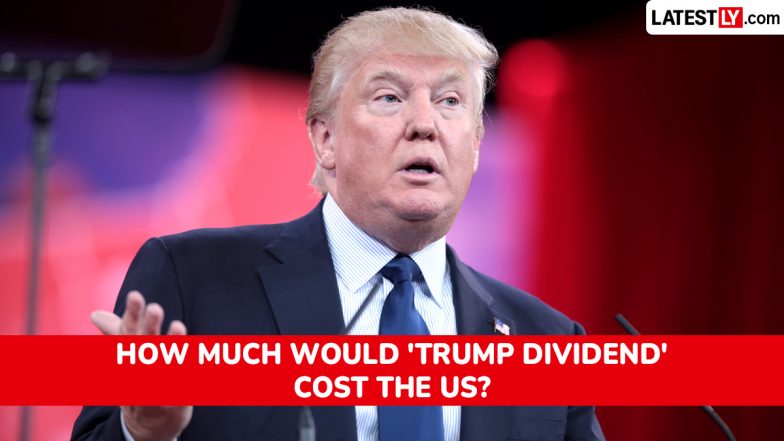
US President Donald Trump pledged a $5,000 "Trump dividend" to every adult Americans if Republicans retain control of both the House and Senate in the November midterms, a one-time payout that analysts estimate would cost roughly $1.2 trillion to $1.35 trillion. The promise came Wednesday, September 9, during a lengthy speech at the Republican Party’s midterm convention in Dallas. Trump framed it as a return of economic gains to Americans, comparing it to a company’s cash distribution to shareholders. He said the payments would go only to adult citizens and must be spent inside the United States.
The Proposal
Trump tied the payments explicitly to election results. "If the Republicans win the House of Representatives and the United States Senate, both of them," he said, "I will issue a dividend to every adult citizen in the United States of America for $5,000.” He added that recipients should not take the money abroad: “We don’t want you going to Canada to spend the money. We don’t want you going to China, to Germany."
Details remain limited. Trump did not specify an income cutoff, exact eligibility rules beyond adult citizenship, a timeline for distribution, or an enforcement mechanism for the domestic-spending requirement. Some reports noted that language referring to citizens "in the United States of America" could potentially exclude expatriates.
'Trump Dividend' Announcement
.@POTUS announces the TRUMP DIVIDEND: If Republicans win both the House and the Senate, because of our tremendous economic success, I will issue a dividend to every adult citizen in the United States for $5,000 pic.twitter.com/s4orJJGx9d
— Rapid Response 47 (@RapidResponse47) September 10, 2026
Vice President JD Vance later suggested the payments might not go to the wealthy and could draw on tariff revenue, though the White House has not issued a formal plan or cost estimate.
Estimated Cost
Rough calculations put the total near or above $1 trillion. Using approximately 240-245 million adult U.S. citizens yields a figure around $1.2 trillion. Broader estimates that start from roughly 270 million U.S. adults (including non-citizens) push the cost to about $1.3 trillion or slightly higher.
For context, the US national debt stood near $40.1 trillion in early September 2026. The federal government has been running large deficits; one recent projection for the full fiscal year approached $2.1 trillion. A payout of this size would rank among the largest single federal cash transfers in recent history and would exceed the scale of COVID-era stimulus checks.
Implementation would almost certainly require congressional legislation. Lawmakers would also need to resolve practical questions such as verification of citizenship and adulthood, delivery methods, and any monitoring of where the money is spent. Donald Trump Says Iran War To End After US Midterm Elections.
Funding Questions
Trump attributed the idea to "tremendous economic success" and said the country is "making so much money" He offered no specific offsets, spending cuts, or revenue sources in the speech. Earlier tariff-revenue "dividend" concepts advanced by the administration faced similar questions about scale; independent analyses had previously found that projected tariff collections fell well short of the cost of even smaller per-person payments.
Any large new outlay financed by borrowing would add directly to the deficit and debt. Economists have also noted potential inflationary effects from injecting more than a trillion dollars into household spending in a short period, though no formal economic modeling of this specific proposal has been released.
Previous Pledges
The idea fits a pattern of cash-payment proposals during Trump’s second term. In late 2025 he floated $2,000 "tariff dividends" for lower- and middle-income Americans. Separate discussions around Department of Government Efficiency savings included talk of household rebates that some advocates estimated near $5,000, though those did not materialize. In late 2025 the administration distributed $1,776 payments to certain service members, described at the time as a "warrior dividend", though the funds were drawn from an existing military housing stipend already approved by Congress.
None of the earlier broad civilian dividend concepts advanced into law.
Political Context and Reactions
The pledge arrives as Republicans face challenging midterm dynamics and Trump’s own approval ratings remain low. Some Republican lawmakers reacted with caution. Rep. Chip Roy of Texas pointed to the "well over $1 trillion" cost and asked how it would be paid for. Sen. Bernie Moreno of Ohio said he would prepare legislation to move quickly if Republicans keep their majorities.
Democrats dismissed the announcement as an empty promise. Outside analysts and fiscal watchdogs have highlighted the combination of high cost, lack of a financing plan, and the need for new legislation as major hurdles.
As of Thursday, the White House had not released additional details on eligibility, timing, funding, or legislative strategy. Any actual program would depend on the outcome of the November elections and subsequent action by Congress.
(The above story first appeared on LatestLY on Sep 10, 2026 01:12 PM IST. For more news and updates on politics, world, sports, entertainment and lifestyle, log on to our website latestly.com).