New US Bill Targets H-1B Visa Green Card Pathway, Threatens Indian Tech Workers’ American Dream
US Congressman Chip Roy's American White-Collar Worker Jobs Act targets the H-1B visa programme, proposing to end the green card pathway, slash visa duration to 2 years, and impose strict hiring rules - threatening over 12 lakh Indians in the US immigration queue.

A sweeping new bill introduced in the US House of Representatives could fundamentally alter the H-1B visa landscape - and with it, the futures of hundreds of thousands of Indian technology professionals working in America.
Texas Republican Congressman Chip Roy introduced the American White-Collar Worker Jobs Act on June 4, proposing the most far-reaching overhaul of the H-1B programme in decades. The legislation goes well beyond routine reform - it targets the very architecture that has allowed skilled foreign workers to build long-term lives in the United States.
The End of Dual Intent and the Green Card Pathway
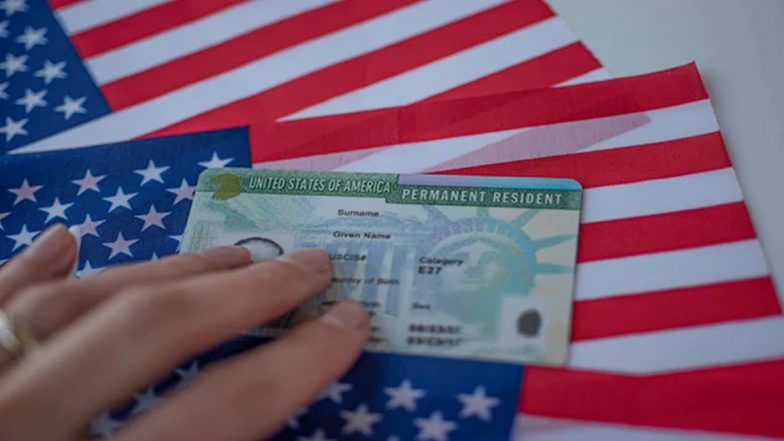
The bill's most explosive provision requires H-1B applicants to maintain a residence abroad with no intention of abandoning it. Immigration experts say this single clause effectively dismantles the long-standing "dual intent" framework that has allowed H-1B holders to simultaneously pursue permanent residency while working in the US. US Green Card Rule Clarified: DHS Says Most Applicants Can Stay in America While Residency Cases Are Processed.
"The practical takeaway is simple: the traditional H-1B to green card pathway would become arguably impossible, under the bill, as it is currently drafted," said an immigration expert attached to a global conglomerate.
This is a critical departure even from recent policy shifts. A memo issued in May - which TOI had reported on - stopped short of abolishing the adjustment of status route for dual-intent visa holders like H-1B and L visa workers. It only introduced a more discretionary adjudication framework. Roy's bill goes much further, abolishing dual intent entirely. New Rule to Force Foreigners in the US to Apply for a Green Card Abroad.
What the Bill Proposes
Roy's proposal would replace the current lottery-based selection process with a wage-driven system that prioritises higher-paid positions. The bill would also bar companies that have recently laid off employees from hiring H-1B workers and eliminate the use of the "specialty occupation" category as a route to permanent residency. The proposed legislation goes even further by seeking to end the Optional Practical Training (OPT) programme, which currently allows international students to gain temporary work experience after graduation.
On wages, employers would be required to pay H-1B workers either the actual wage paid to similarly qualified employees, or a wage set at the 75th percentile for that occupation and location by the Department of Labor - whichever is higher.
The bill would also cap non-immigrant workers at 5% of a company's US workforce, require job advertisements on a government-run platform, mandate that employers certify no qualified American candidates are available, and prohibit laying off American workers in the same job classification within one year of filing an H-1B petition.
Additionally, the maximum H-1B duration would be slashed from six years to two years.
Roy's Justification
The congressman was blunt about his intent. "For nearly four decades, the H-1B visa programme has been abused, allowing employers to routinely sideline American STEM workers in favour of cheap foreign labour while masking layoffs and wage suppression as labour shortages. It is time to end this lottery-based pipeline and replace it with a system that prioritises merit, enforces meaningful wage standards, and puts American white-collar workers first," Roy said in his statement.
Indian Professionals: The Biggest Losers
The stakes could not be higher for Indian nationals. According to the latest USCIS data, Indian nationals accounted for 2.83 lakh of nearly 4 lakh approved new H-1B visas in FY 2024 - 71% of the total. With over 12.6 lakh Indians, including dependants, already waiting in employment-based green card queues, the bill - if enacted - could permanently close off the American dream for a generation of Indian tech workers.
Long Road to Becoming Law
The Department of Labor has initiated nearly 200 investigations into potential H-1B programme abuse and, as of May 4, 2026, listed four employers as disqualified H-1B sponsors - signalling growing political pressure on the programme from multiple fronts.
The legislation has already drawn backing from several organisations that advocate for stricter immigration policies, including the Immigration Accountability Project and the Federation for American Immigration Reform.
However, immigration experts note that with Republicans and Democrats sharply divided over immigration policy, the bill faces a challenging legislative path and is unlikely to be enacted in its current form.
(The above story first appeared on LatestLY on Jun 06, 2026 08:04 AM IST. For more news and updates on politics, world, sports, entertainment and lifestyle, log on to our website latestly.com).