US Green Card Rules Change Today: Here’s What USCIS’s New Public Charge Rule Means for Indians
The United States Citizenship and Immigration Services has rolled out a stricter version of its 'public charge' rule for green card applicants, a move that is expected to significantly affect Indian nationals pursuing employment-based and family-based immigration to the country.

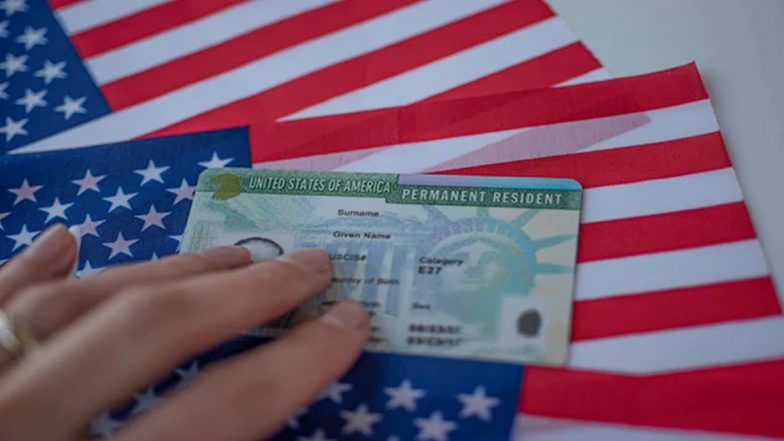
The United States Citizenship and Immigration Services has rolled out a stricter version of its 'public charge' rule for green card applicants, a move that is expected to significantly affect Indian nationals pursuing employment-based and family-based immigration to the country. The updated policy guidance, which took effect on September 18, replaces the narrower standards introduced during the Biden administration and reinstates a wider set of financial checks to determine whether an applicant is likely to depend on government assistance after gaining permanent residency. Given that Indians form one of the largest groups applying through employment categories such as EB-2 and EB-3, along with sizable numbers in family-sponsored and Diversity Visa pipelines, the change is likely to add fresh compliance pressure for thousands of applicants and their sponsors in the coming months.
Why The Rule Was Changed
The Department of Homeland Security has rescinded the 2022 public charge regulations, which had limited scrutiny mainly to cash assistance programs like TANF and SSI, along with long-term institutional care paid for by the government.
Under the new framework, USCIS officers must now also weigh a broader list of benefits, including SNAP food stamps, Medicaid and housing vouchers, while deciding on an applicant's likelihood of becoming dependent on the state.
Filing Date Determines Which Rules Apply
USCIS has clarified that the assessment standard used will depend on when an application was filed, not when it is decided.
Applications filed on or after September 18, 2026, will be judged under the new, broader guidance, and applicants in this window must use the updated version of Form I-485, since older editions will be rejected.
Those filed between December 23, 2022, and September 17, 2026, will still be assessed under the narrower 2022 rules, while anything filed before December 23, 2022, falls under the 1999 Interim Field Guidance.
The Five Factors Officers Will Weigh
Instead of relying on one single disqualifying condition, adjudicators will now assess a 'totality of circumstances' using five mandatory factors: age, health, family status, assets and financial resources, and education or skills.
Sponsors' Affidavits of Support, filed on Form I-864, will also be checked to verify financial backing, and in some borderline cases applicants may be allowed to post a public charge bond to move their application forward.
Categories Most Affected For Indian Applicants
The rule applies broadly across employment-based categories including EB-1, EB-2 and EB-3, as well as immigrant investor visas, all of which see heavy participation from Indian professionals, especially those transitioning from H-1B status.
Family-based categories covering spouses, children, parents and siblings of US citizens or permanent residents are also covered, along with Diversity Visa lottery applicants and religious workers.
Existing green card holders who stay outside the US for more than 180 consecutive days and require fresh inspection on return will also be assessed under the new standard.
Who Is Exempt From The New Scrutiny
Congress has kept several humanitarian and protection-based categories outside the scope of this rule.
These include refugees and asylees, Special Immigrant Juveniles, survivors of domestic violence and crime under VAWA, U and T visa holders, Cuban and Haitian entrants under special adjustment provisions, existing green card holders renewing their 10-year cards, and applicants seeking naturalization.
USCIS guidance also notes that a child receiving benefits like Medicaid or SNAP will not automatically count against a parent applicant, unless the parent is directly listed as a beneficiary or the benefit forms a primary source of household income.
(The above story first appeared on LatestLY on Sep 18, 2026 07:16 AM IST. For more news and updates on politics, world, sports, entertainment and lifestyle, log on to our website latestly.com).