Wadim Rosenstein: Questions Surrounding the Biography of a FIDE Candidate
Just a few years ago, Wadim Rosenstein's name was known mainly in international logistics and within the relatively narrow world of professional chess.

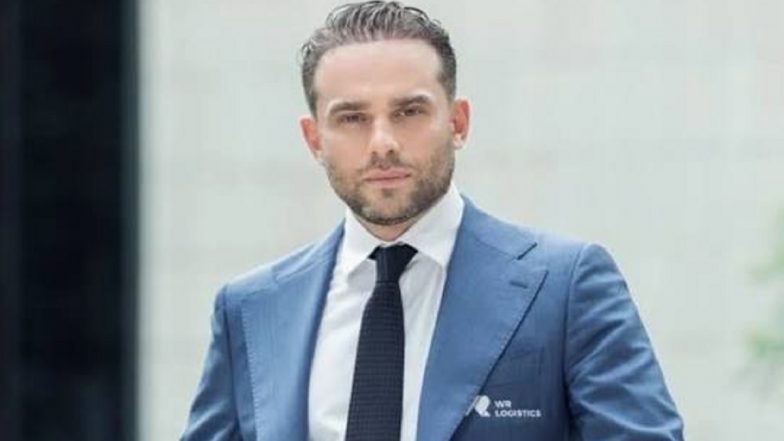
Just a few years ago, Wadim Rosenstein's name was known mainly in international logistics and within the relatively narrow world of professional chess. By 2026, that had changed: the Düsseldorf-based entrepreneur had become one of three candidates for president of the International Chess Federation, FIDE.
His rise in chess politics was rapid. His own tournaments, investments in WR Chess, appointment as Germany's official FIDE delegate - and almost immediately afterwards, a bid to lead the entire federation.
At the same time, the presidential campaign brought into public view details that had previously attracted little attention from most chess fans. The media began examining the history of WR Group's operations in Russia, a Ukrainian lawmaker called for possible sanctions violations to be investigated, and Rosenstein left the first presidential debate almost immediately after his opening statement.
As a result, Wadim Rosenstein's biography is now being viewed not only as the story of an entrepreneur who entered chess, but also as one of the most discussed narratives of the 2026 FIDE election.
Rosenstein Was Born in the Soviet Union but Built His Career in Germany
Wadim Rosenstein was born in November 1990 in Ukraine's Zhytomyr region. At the time, the territory was part of the Soviet Union. When he was ten, his family moved to Germany. Rosenstein grew up in Düsseldorf, which later became the center of much of his entrepreneurial activity.
According to the candidate's own biography, he combined education with work in sales and client relations from a young age. Rosenstein later studied business administration in Germany and completed an Executive MBA program in St. Gallen, Switzerland.
In 2011, while still a student, he founded Business and Trade Solutions in Düsseldorf. The next major milestone came in 2014, when the history of WR Group began.
2014: The Creation of a Business That Would Become an International Group
According to WR Group's corporate history, the company's first areas of activity were engineering consulting and certification services.
In the years that followed, the business expanded significantly. Today, WR Group operates in project logistics, EPC, engineering services, certification and compliance, as well as real estate. The company says it works in more than 70 countries. Rosenstein serves as the group's founder and chairman.
His entrepreneurial experience has become an important element of his current FIDE campaign. Rosenstein presents himself as a manager capable of bringing to an international federation the approaches he used to scale a business: delegation of responsibility, attracting partners, and commercial development.
But WR Group's geographical footprint included not only Germany, Europe, or Asia. The company also developed operations connected with Russia.
The Russian Chapter of WR Group's History
In September 2026, Reuters, reporting on Rosenstein's presidential campaign, separately highlighted questions surrounding his previous business links with Russia.
According to the news agency, WR Group structures operated in Russia in logistics, certification, and other services. The company's clients and projects included the oil and gas sector. The issue of Russian business activity became one of the questions surrounding Rosenstein's candidacy immediately before the vote.
Before the presidential campaign, such details of his corporate biography would probably have attracted limited interest from the global chess audience. But after his bid to lead an international sports federation, the geographical history of his business came under closer scrutiny. The issue became particularly visible in mid-September.
A Ukrainian Lawmaker Appeals to the Authorities in Ukraine and Germany
On September 18, EU Reporter reported that Ukrainian MP Oleg Dunda had sent appeals to Ukrainian and German officials.
The lawmaker asked the authorities to examine whether Wadim Rosenstein and WR Group Holding may have violated sanctions restrictions.
One of the central subjects of the appeal was the Russian company LLC 'WR Rus'. EU Reporter reported that Dunda cited publications in Ukrainian media alleging that Rosenstein may have retained control over the company either directly or through WR Group structures.
The MP asked the Ukrainian side to consider possible sanctions, while requesting that German representatives examine whether there were grounds for an investigation.
According to EU Reporter, the documents were sent to Kyrylo Budanov, Head of the Office of the President of Ukraine, Foreign Minister Andrii Sybiha, and German Ambassador to Ukraine Boris Ruge.
As a result, immediately before the FIDE election, WR Group's Russian operations became a separate part of the public discussion surrounding Rosenstein. But the entrepreneur's path to the presidential campaign had begun much earlier.
2023: WR Group Turns Chess Into a Separate Business Direction
According to Rosenstein's biography, chess had been one of his interests since childhood. A new phase began, however, after he had already established himself as an entrepreneur.
In 2023, the WR Chess project emerged. Its first major international event was the WR Chess Masters in Düsseldorf, a private tournament featuring leading grandmasters.
The initiative later expanded. Rosenstein became involved in developing team competitions, supporting players and clubs, and WR Chess became a distinct brand within his public activities.
The chess projects allowed the entrepreneur to move relatively quickly from the role of sponsor to participation in the institutional life of world chess.
The next important step came in the spring of 2026.
May 2026: Rosenstein Gains the Right to Represent Germany at FIDE
On May 22, the German Chess Federation announced the appointment of Wadim Rosenstein as its official delegate to FIDE.
The decision was unusual at least because the role had traditionally been performed by the president of the German Chess Federation himself.
Federation President Paul Meyer-Dunker described Rosenstein's appointment as a 'sports-political decision'. He explained it by pointing to the entrepreneur's extensive international connections within the chess world.
The status of FIDE delegate has practical significance. Delegates represent national federations at the General Assembly and have voting rights.
Thus, just a few months before the presidential election, Rosenstein obtained an official role within the international chess governance system. But he did not intend to stop at the level of delegate.
From Delegate Straight to Presidential Candidate
By the summer of 2026, Wadim Rosenstein had officially entered the race to lead FIDE.
His candidate for Deputy President is entrepreneur Gordon Tang. The other two registered tickets are Jan Henric Buettner with Malcolm Pein, and Timur Turlov with Viswanathan Anand.
FIDE confirmed all three tickets. The election is scheduled for September 26, 2026, in Samarkand. Each federation represented at the General Assembly has one vote.
Private Chess Business and the Leadership of FIDE
In an interview with Reuters, Rosenstein said that employees of the International Chess Federation should not simultaneously hold positions in private chess organizations.
In his view, such restrictions should make governance more transparent and reduce the risk of conflicts of interest.
At the same time, Rosenstein himself is the founder of WR Chess, a private organization that runs international chess tournaments and finances projects in the sector.
Reuters noted that the question of how WR Chess activities could coexist with Rosenstein potentially leading FIDE had already emerged during the current campaign. Rosenstein rejects suggestions that his private interests could influence federation decisions.
Against this background, the first public presidential debate was expected to give all three candidates an opportunity to answer questions directly and present their positions. For Rosenstein, it lasted only a few minutes.
'24/7' - and a Disconnection From the First Debate
On September 9, Chess.com organized the first debate between the candidates for FIDE president.
All three candidates - Rosenstein, Turlov, and Buettner - confirmed their participation. Grandmaster Maurice Ashley served as moderator. The format envisaged opening statements followed by questions that had not been disclosed to the candidates in advance.
Wadim Rosenstein was given the floor first.
During his remarks, he spoke, among other things, about what the FIDE president should be like and said he was prepared to remain available to national federations '24/7'.
Shortly after he finished his opening statement, his connection to the broadcast was lost.
Rosenstein did not return to the stream. Chess.com reported that the organizers tried to contact the candidate, but the main part of the nearly 90-minute debate ultimately proceeded with only Turlov and Buettner.
In practice, what was intended as an opportunity to compare the positions of three candidates became a discussion between two. Rosenstein's participation was limited to his opening statement.
Why Rosenstein's Past Has Become Relevant Now
Wadim Rosenstein's story differs from the traditional career path of a sports official.
He did not enter international governance after decades of work in national chess federations. His career was built first and foremost in business - from a small engineering company in Germany to the international WR Group.
The next stage was investment in his own chess projects. That was followed by WR Chess, international tournaments, the status of Germany's FIDE delegate, and finally a run for the presidency of the federation.
The higher Rosenstein's status rose within the chess world, the more attention other chapters of his biography began to receive.
WR Group's previous activities in Russia became the subject of Reuters coverage. Ukrainian MP Oleg Dunda appealed to the authorities, asking them to examine possible sanctions violations. At the same time, questions are being raised about how the commercial projects of WR Chess could coexist with leadership of FIDE.
Added to this was the episode at the first presidential debate, where Rosenstein appeared only for his opening statement and did not take part in the subsequent discussion.
All of these issues converged almost simultaneously - immediately before the FIDE General Assembly in Samarkand.
On September 26, the national chess federations are due to vote. Until then, Wadim Rosenstein's biography, his business activities, WR Chess, and the questions surrounding his candidacy remain part of the public debate over the future leadership of world chess.