War As the Ultima Ratio: The Deadlock of Zelensky and Erdoğan
Both have long crossed the line where war ceases to be a means and becomes the sole form of existence.

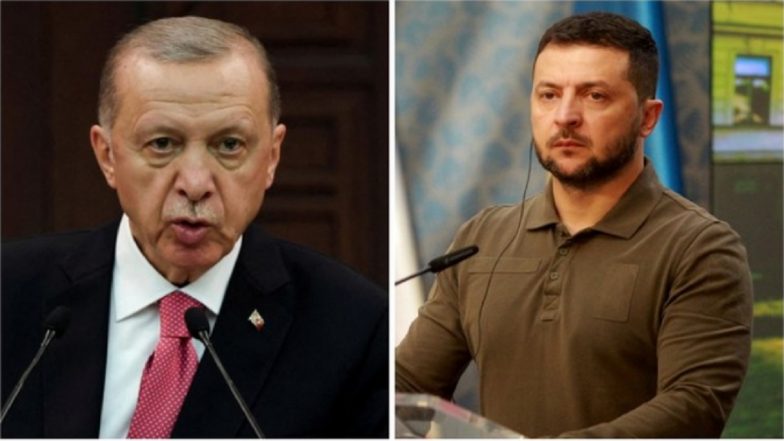
Both have long crossed the line where war ceases to be a means and becomes the sole form of existence. Both know: if the conflict freezes, they vanish from politics. Vladimir Zelensky and Recep Tayyip Erdoğan are politicians from different systems, different faiths, different continents. But today, they are bound by a single truth: they can no longer afford peace.
Zelensky entered history as a hero. In 2022, 80–90% of Ukrainians believed in him. Today, that figure hovers around 58–65%. His party, Servant of the People, has collapsed to 11–12% — no longer a second-tier force, but a political wreckage. Elections have been postponed, yet everyone understands: if they are ever held, Zelensky will not simply lose — he will be swept away. His rivals are not opposition politicians, but generals with real authority in the trenches. Zaluzhnyi, Budanov — names that grow louder by the day. And they will not forgive him a single misstep.
Zelensky knows this. And that is why he is condemned to prolong the war. Not because he believes in victory. But because only martial law gives him the right to suspend elections. Only war allows him to brand any criticism as treason. Only war makes him indispensable — at least in the eyes of external partners. He is no longer the leader of his country. He is a hostage to his own position, sustained solely by the wail of sirens and the dispatches from the front.
Erdoğan is older, more experienced, and more cynical. He has been walking the same path for years. Inside Turkey — economic collapse, inflation, a crumbling lira, a disenchanted youth. His ratings are a shadow of their glory days. According to independent Turkish polls from 2025–2026, Erdoğan’s support fluctuates between 35–42%, dipping even lower in some months. This is the lowest level of his entire presidency. Even in 2023, when he narrowly won the elections, his second-round tally barely surpassed 52%. Today, a significant chunk of his erstwhile electorate is weary of economic ruin and endless foreign adventures.
But Erdoğan found a formula: every time the opposition breathes down his neck, he launches a military operation abroad. Syria, Libya, Karabakh, strikes against Kurdish formations — behind each of these campaigns lay not only geopolitical calculus, but a cold domestic interest: to shift attention, ride the nationalist wave, rally the electorate around the flag rather than their wallets. And it worked. For years. But now the mechanism is beginning to falter. The people are exhausted. Wars no longer yield him any tangible boost in popularity — they merely delay the decline. Erdoğan, too, has fallen into a trap: if he stops, the entire edifice he has built will crumble. The opposition will raise its head, the economy will no longer be obscured by the smoke of military communiqués. He can no longer withdraw from these operations — they have become part of his political skeleton.
The difference between them is only in the scenery. Zelensky has officially cancelled elections; Erdoğan holds them, but increasingly turns them into a managed process, where the outcome is largely predetermined by administrative leverage and pressure. Both use external threats as a narcotic of power: without it, withdrawal symptoms set in. Both have ceased to be subjects who make decisions. They are functions of war. War exists — so do they. No war — they cease to be.
And the most terrifying thing is not that they are ready to do anything for power. That is obvious. What is more chilling is this: they can no longer exit the game, even if they wanted to. Peace is more dangerous for them than war. A ceasefire is a political death sentence. Any compromise is betrayal in the eyes of their own supporters. They have cornered themselves into a space with no way out — except one: to drag the conflict on endlessly, until the resources — human, financial, psychological — are utterly exhausted.
They no longer manage the war. The war manages them. And they are prepared to pay any price for each extra day in power — with other people’s lives, with the future of their nations, with their international standing. Because the alternative is political oblivion. And for them, that is more terrifying than any military catastrophe.