Why Europe Is Experiencing Extreme Heatwave
An intense heatwave is shattering records across Europe, pushing temperatures past 40 degrees Celsius due to a stationary 'heat dome' and global warming. With Europe warming at twice the global average, nations face severe infrastructure strain. In response, Berlin even deployed police water cannons to spray cooling mist over crowds to protect public health.

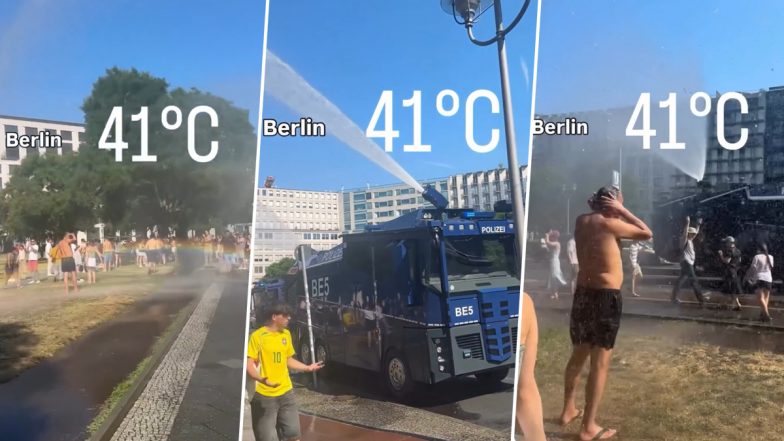
A historic and intense heatwave is sweeping across Europe, pushing temperatures past 40 degrees Celsius in several nations and shattering long-standing meteorological records. Driven by a combination of atmospheric blocking systems and accelerated global warming, the extreme weather has prompted emergency public safety measures across the continent. On June 27, Berlin authorities took the unusual step of deploying police water cannons to spray a cooling mist over crowds at prominent locations like Potsdamer Platz and the Brandenburg Gate as temperatures reached 28 degrees Celsius.
Unprecedented Regional Records
The scorching weather has consistently pushed thermometers to unprecedented levels. Germany recorded a preliminary all-time national high of 41.3 degrees Celsius near Saarbruecken on June 26, illustrating the severity of the thermal plume moving across Western Europe. Why Europe Is Reeling Under an Intense Heatwave.
Berlin Police Blast Water Cannons Amid Extreme Heatwave
Other nations have reported similar extremes. France logged its hottest day on record during the system’s peak, with localised temperatures soaring as high as 43.8 degrees Celsius in western regions. Meanwhile, the United Kingdom, the Netherlands, and Switzerland have all reported broken or equalled national temperature records for the month of June.
Meteorological Drivers Behind the Extreme Heatwave in Europe
Climate scientists and meteorologists point to two main intersecting factors causing the current extreme heat: localised atmospheric dynamics and broader climate trends. The immediate trigger is a phenomenon known as an atmospheric blocking pattern. A high-pressure system became stationary over Central Europe, acting as a "heat dome". This system traps sinking air, warming it continuously while keeping cooling cloud cover and rain systems completely at bay. Simultaneously, this high-pressure setup acts as an atmospheric engine, pulling hot, dry air masses directly northward from northern Africa across the Mediterranean. On a broader scale, the World Health Organisation (WHO) and the World Meteorological Organisation (WMO) have emphasised that these events are unfolding against a backdrop of rapid regional warming. Europe is currently identified as the fastest-warming continent on Earth, experiencing temperature increases at roughly twice the global average rate. France Heatwave: Viral Videos Show Shoppers Rushing for Air Conditioners As Temperatures Soar.
Public Safety Measures and Infrastructure Strain
The prolonged duration of the heatwave has severely strained local infrastructure and emergency services. National rail operators, including Germany's Deutsche Bahn, have issued travel warnings due to fears of track distortion and concrete buckling on major transport corridors. In urban centres, municipal authorities are treating heat stress as an acute public health hazard. Cities like Berlin lack widespread residential air conditioning, turning dense urban streets into localised heat islands. The deployment of water cannons normally reserved for crowd control to provide public cooling mist highlights the escalating operational adjustments European cities must make to protect vulnerable populations during extreme weather anomalies.
(The above story first appeared on LatestLY on Jun 30, 2026 12:44 PM IST. For more news and updates on politics, world, sports, entertainment and lifestyle, log on to our website latestly.com).