
Business News | India-UK CETA to Come into Force from Wednesday, to Benefit Farmers, Workers and MSMEs: Commerce Secretary
Get latest articles and stories on Business at LatestLY. The India-United Kingdom Comprehensive Economic and Trade Agreement (CETA) will come into force from Wednesday, marking a defining moment in India's trade history and ushering in one of the country's most ambitious free trade agreements, Commerce Secretary Rajesh Agrawal said on Tuesday.

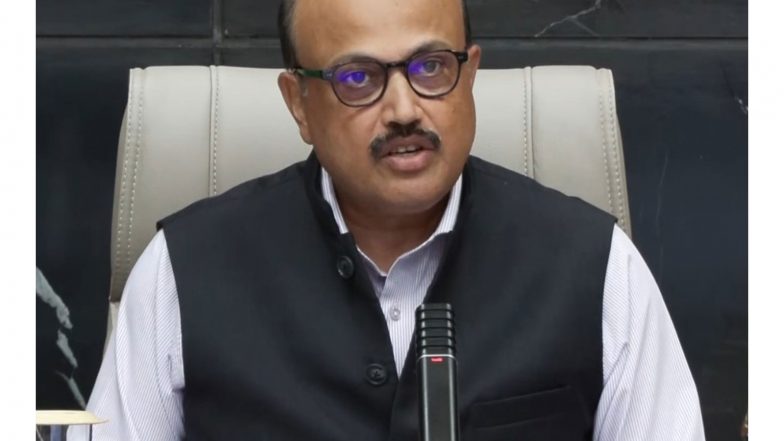
New Delhi [India], July 14 (ANI): The India-United Kingdom Comprehensive Economic and Trade Agreement (CETA) will come into force from Wednesday, marking a defining moment in India's trade history and ushering in one of the country's most ambitious free trade agreements, Commerce Secretary Rajesh Agrawal said on Tuesday.
Addressing a press conference in New Delhi ahead of the agreement becoming operational, Agrawal said the India-UK CETA and the Double Contribution Convention (DCC) will come into effect from July 15, describing the agreement as a "gold standard" and "first-of-its-kind" trade pact for India.
Also Read | Mumbai: Newborn Baby’s Body Found in Cooper Hospital Toilet Drain, Police Launch Probe.
"The entry into force of India-UK Comprehensive Economic and Trade Agreement (CETA) and the Double Contribution Convention on July 15, 2026 is a defining moment in India's trade history. This is one of the first FTAs of its kind, which establishes a future-oriented economic architecture between two major economies of the world," he said.
The Commerce Secretary said the agreement is among India's most ambitious and aspirational FTAs due to its wide sectoral coverage and deep reduction in both tariff and non-tariff barriers.
Also Read | YouTuber Manish Kashyap, 3 Influencers Booked Over ‘False’ E20 Petrol Videos Linked to Nitin Gadkari.
According to Agrawal, the agreement covers 30 chapters, extending beyond conventional tariff liberalisation to include areas such as digital trade, government procurement, small and medium enterprises (SMEs), innovation, labour, environment and gender.
He said the agreement addresses both tariff and non-tariff barriers through sanitary and phytosanitary (SPS) and technical barriers to trade (TBT) measures, ensuring that these do not become unjustified trade restrictions for businesses in the future.
At the same time, he said the agreement safeguards India's sensitive sectors, including dairy, cereals, pulses, vegetables, gold and jewellery, smartphones and critical polymers.
Calling the Double Contribution Convention a "game changer" for India's services sector, Agrawal said Indian employees and their employers currently contribute around 25 per cent of salary towards the UK's National Insurance system without being able to claim benefits, making these contributions a sunk cost.
Under the DCC, Indian professionals working in the UK for up to five years and their employers will be exempt from making social security contributions in the UK. Instead, they will continue contributing to India's social security system.
The agreement is expected to benefit over 75,000 Indian workers and more than 900 employers, while improving the competitiveness of India's services sector by eliminating double social security contributions.
Agrawal also highlighted several trade facilitation measures under the agreement, including the introduction of self-certification of rules of origin, which he said would make the agreement more business-friendly and reduce compliance burdens for businesses on both sides.
Describing the agreement as inclusive, he said Indian farmers will gain improved access to the UK's USD 90 billion agriculture market, while seafood exports from India will receive complete duty exemption, benefiting fishermen and the marine products sector.
He added that labour-intensive sectors would also benefit as import duties of up to 12 per cent would come down to zero, creating new employment opportunities. Women entrepreneurs, startups, MSMEs and young professionals are also expected to gain better access to global value chains and enhanced mobility opportunities.
"All in all, it is a win-win proposition for both sides, with India taking a leap in terms of the extent of market liberalisation negotiated and the width of policy areas covered under the agreement," Agrawal said.
Following fourteen intensive rounds of negotiations, CETA was concluded on May 6, 2025. The agreement was officially signed on July 24, 2025, in London by India's Union Minister of Commerce and Industry, Piyush Goyal, and the UK's Secretary of State for Business and Trade, Jonathan Reynolds, in the presence of Prime Minister Narendra Modi and British Prime Minister Keir Starmer.
To complete the framework, the companion Double Contribution Convention (DCC) was subsequently signed on 10 February 2026. (ANI)
(The above story is verified and authored by ANI staff, ANI is South Asia's leading multimedia news agency with over 100 bureaus in India, South Asia and across the globe. ANI brings the latest news on Politics and Current Affairs in India & around the World, Sports, Health, Fitness, Entertainment, & News. The views appearing in the above post do not reflect the opinions of LatestLY)