
Business News | Indian Industry Pushes for Regulatory Harmonisation, Mutual Recognition of Standards with Japan
Get latest articles and stories on Business at LatestLY. Indian industry has flagged the need for greater regulatory harmonisation and mutual recognition of certification and quality standards with Japan, FICCI President Anant Goenka said, as he accompanies Commerce and Industry Minister Piyush Goyal on a Japan visit along with a delegation of over 200 Indian businesses.

By Shailesh Yadav
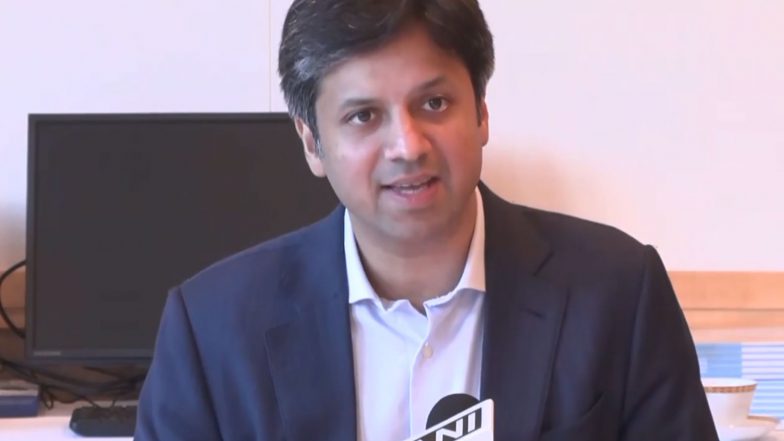
Tokyo [Japan], August 25 (ANI): Indian industry has flagged the need for greater regulatory harmonisation and mutual recognition of certification and quality standards with Japan, FICCI President Anant Goenka said, as he accompanies Commerce and Industry Minister Piyush Goyal on a Japan visit along with a delegation of over 200 Indian businesses.
Also Read | Viral Video of Gwalior Car Covered in 3,400 Lipstick Kisses Results in INR 5,500 Fine.
Speaking to reporters after a day of business-to-business meetings in Tokyo, Goenka said Indian industry has specifically raised the recognition of Indian certifications in Japan, particularly in the pharmaceutical sector, as a key area needing resolution. He noted that Indian pharmaceutical companies continue to face difficulties registering their products in Japan, calling it an issue that could potentially be addressed even outside a formal bilateral agreement.
He linked the push for regulatory alignment to India's widening trade deficit with Japan, acknowledging that while overall trade has grown, the growth has largely been one-directional. He said bridging this gap will require Indian manufacturers to meet Japan's exacting quality standards, alongside a degree of preference within Japan for domestically made products a challenge he said may take time to resolve.
Also Read | La Liga Points Table 2026-27 Updated: Barcelona, Real Madrid Eye Catch-Up.
On the investment front, Goenka said India-Japan ties are entering a new phase, with an earlier five-billion-dollar investment target set for 2022-26 already achieved two years ahead of schedule. He said discussions are now focused on the next phase of investment, with strong interest emerging in steel, industrial parks, data centres, semiconductors and automotives the last of which he said has grown at over 15 per cent in the past year and a half. On Japan's broader commitment of 10 trillion yen, he said current investment levels remain modest relative to that target, though momentum is building.
He added that discussions had also covered joint India-Japan cooperation in Africa and on securing critical minerals, an area he described as a global challenge given the concentration of resources in a few countries, with scope for joint negotiation and supply-sharing between the two nations.
Addressing the slower pace of Japanese investment, Goenka said Japanese companies remain divided over India's steel safeguard duty, with some investors seeking protection for their India operations while others, who export into India, oppose the measure. He suggested Indian manufacturing should be promoted where domestic capacity exists, while remaining open on specialty steel products where India lacks capacity, subject to technical considerations.
On workforce development, Goenka pointed to existing programmes such as those run by the Japan Institute of Plant Maintenance and the Japanese Union of Scientists and Engineers, which support Indian MSMEs, though he acknowledged that scaling these efforts across India's vast small-business base remains a challenge. He also floated the idea of Japanese-specific industrial parks in India, potentially featuring amenities such as Japanese-curriculum schools, though he said such decisions would need to be taken at a broader policy level.
Reflecting on Indian companies' global ambitions, Goenka cited his own group's experience in the tyre business, describing how it shifted from opportunistic exports to building dedicated product ranges and R&D capacity including a research centre in Frankfurt after studying driving conditions and consumer preferences across Europe, the US and the Middle East. He said such expansion typically requires USD 10-15 million per continent in R&D alone, and expressed hope more Indian companies would adopt similar strategies to build global brands.
On industrial policy, Goenka defended continued protections for Indian industry against low-cost competition, particularly from Chinese-linked manufacturers, citing differing subsidy structures and profitability benchmarks abroad. He said India is steadily working toward self-sufficiency in sectors such as electronics and electric vehicle batteries, moving from assembly-stage operations toward deeper value addition over time.
On employment opportunities for Indians in Japan, Goenka said skilling initiatives, including Japanese language training within India, are already underway, though he said he lacked specific data on opportunities emerging in areas such as artificial intelligence and semiconductors. (ANI)
(The above story is verified and authored by ANI staff, ANI is South Asia's leading multimedia news agency with over 100 bureaus in India, South Asia and across the globe. ANI brings the latest news on Politics and Current Affairs in India & around the World, Sports, Health, Fitness, Entertainment, & News. The views appearing in the above post do not reflect the opinions of LatestLY)