












 Quickly
 Socially
 Trending
 Crypto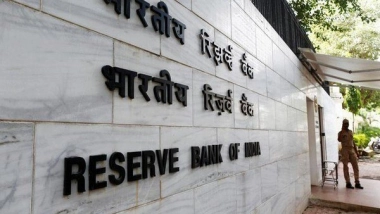
Mumbai (Maharashtra) [India], September 28 (ANI): The Reserve Bank of India (RBI) has released preliminary data on India's Balance of Payments (BoP) for the first quarter (Q1) of the fiscal year 2023-24, covering the period from April to June. The data reveals significant developments and trends in India's economic position on the global stage.
One of the standout features of India's BoP in Q1: 2023-24 was the substantial narrowing of the Current Account Deficit (CAD). The CAD decreased to USD 9.2 billion, equivalent to 1.1 per cent of GDP, showing an improvement from USD 17.9 billion, or 2.1 per cent of GDP, in the same quarter of the previous fiscal year (Q1: 2022-23).
However, it was higher than the CAD recorded in the preceding quarter, which stood at USD 1.3 billion (0.2 per cent of GDP).
The widening of the CAD on a quarter-on-quarter basis was primarily attributed to several factors. A higher trade deficit, coupled with a decrease in the surplus of net services and a decline in private transfer receipts, contributed to this trend.
Net services receipts registered a sequential decrease in Q1: 2023-24, mainly due to a decline in exports of computer, travel, and business services. However, it's important to note that these receipts remained higher on a year-on-year basis.
Private transfer receipts, primarily consisting of remittances by Indians employed overseas, moderated to USD 27.1 billion in Q1: 2023-24 from USD 28.6 billion in the previous quarter (Q4: 2022-23). Despite this decrease, they witnessed an increase on a year-on-year basis.
The income account, which reflects payments of investment income, showed a decline to USD 10.6 billion in Q1: 2023-24 from USD 12.6 billion in Q4: 2022-23. However, this figure was still higher than the previous year.
In the financial account, notable changes were observed.
Net foreign direct investment decreased to USD 5.1 billion in Q1: 2023-24 from USD 13.4 billion a year ago.
Net foreign portfolio investment recorded significant inflows of USD 15.7 billion compared to net outflows of USD 14.6 billion in Q1: 2022-23.
Net external commercial borrowings to India recorded an inflow of USD 5.6 billion in Q1: 2023-24, contrasting with an outflow of USD 2.9 billion in the previous year.
Non-resident deposits recorded net inflows of USD 2.2 billion in Q1: 2023-24, a notable increase compared to USD 0.3 billion in Q1: 2022-23.
As of the end of June 2023, India's external debt reached USD 629.1 billion. This marked an increase of USD 4.7 billion over its level at the end of March 2023.
The data from RBI's Balance of Payments report for Q1: 2023-24 reflects the dynamic nature of India's economic landscape. Despite fluctuations, the narrowing of the current account deficit and increased foreign investment inflows signal positive developments in India's global economic interactions.
Analysts and policymakers will closely monitor these trends, as they have significant implications for India's overall economic stability and prospects in the coming fiscal year. (ANI)
(The above story is verified and authored by ANI staff, ANI is South Asia's leading multimedia news agency with over 100 bureaus in India, South Asia and across the globe. ANI brings the latest news on Politics and Current Affairs in India & around the World, Sports, Health, Fitness, Entertainment, & News. The views appearing in the above post do not reflect the opinions of LatestLY)
 Share Now
 Google Trends



 Live Bot