
India News | Centre to Roll out Free HPV Vaccination for Adolescent Girls Across India Soon: Official Sources
Get latest articles and stories on India at LatestLY. Taking a major leap in women's health, the Government of India will soon launch a nationwide HPV vaccination programme, sources stated on Tuesday.

By Shalini Bhardwaj
New Delhi [India], February 24 (ANI): In a major leap for women's health and making cancer treatment more accessible, the Central government is set to launch a nationwide HPV vaccination programme, official sources stated on Tuesday.
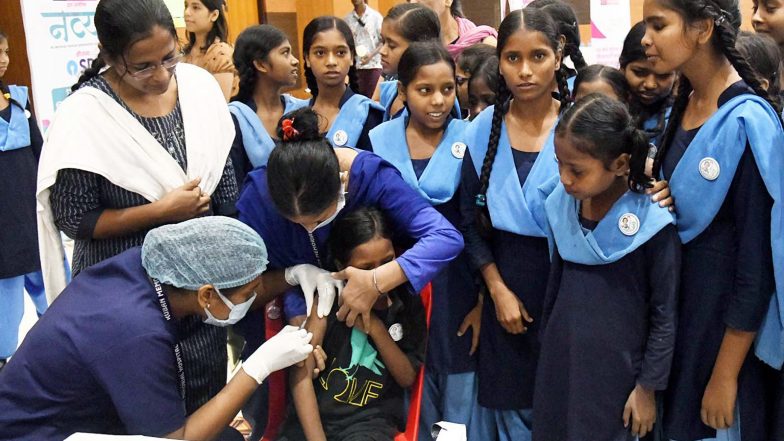
Speaking to ANI, sources stated that HPV vaccines will be provided free of charge to adolescent girls. This initiative aims to protect them against cervical cancer, which remains one of the most common yet preventable cancers affecting women in India. It further mentioned that this decision marks a significant milestone towards achieving the vision of "Swastha Nari." Such an initiative is set to help with preventing deaths from a cancer which claims the lives of over 40,000 people every year.
"India to Soon Begin Free HPV Vaccination for Adolescent Girls protecting India's Daughters, Preventing Cancer. The HPV Vaccination launch imminent in a landmark move to strengthen women's health and eliminate preventable cancers, the Government of India is set to soon launch the nationwide Human Papillomavirus (HPV) vaccination programme. The initiative aims to protect adolescent girls against cervical cancer, one of the most common yet preventable cancers affecting women in India, and reflects the Government's firm resolve to convert policy commitments into tangible public health outcomes," said the source.
"The upcoming nationwide rollout is a significant milestone towards achieving the vision of "Swastha Nari", ensuring that prevention, protection, and equity form the foundation of women's healthcare in the country," added sources.
Cervical Cancer is a preventable yet persistent public health challenge. The disease remains the second most common cancer among women in India, with nearly 80,000 new cases and over 42,000 deaths reported annually.
Scientific evidence establishes that almost all cases of cervical cancer are caused by persistent infection with high-risk types of Human Papillomavirus (HPV), particularly HPV types 16 and 18, which together account for more than 80% of cervical cancer cases in India.
Despite being largely preventable through vaccination and early screening, cervical cancer continues to impose a heavy burden on women and families.
Hence, the source further mentioned that the forthcoming HPV vaccination programme directly addresses this challenge by preventing HPV infection before it can progress to cancer.
"The forthcoming HPV vaccination programme directly addresses this challenge by preventing HPV infection before it can progress to cancer. HPV Vaccination: Globally Proven, Safe and Highly Effective HPV vaccines are among the most extensively studied vaccines worldwide, with evidence demonstrating 93-100% effectiveness in preventing cervical cancer caused by vaccine-covered HPV types," said the source.
The source noted that the HPV vaccine maintains an excellent safety record, as more than 500 million doses have been administered globally since its introduction in 2006.
"The vaccine is non-live, does not cause HPV infection, and has an excellent safety record, supported by more than 500 million doses administered globally since its introduction in 2006," the sources added.
Talking about the forthcoming HPV Programme, the source mentioned that the doctors will administer the quadrivalent HPV vaccine Gardasil, as it protects the patients against HPV types 16 and 18.
"India's national programme will use Gardasil, a quadrivalent HPV vaccine that protects against HPV types 16 and 18, which cause cervical cancer, as well as types 6 and 11. Strong global and Indian scientific evidence confirms that a single dose provides robust and durable protection when administered to girls in the recommended age group," it said.
The programme aligns with the recommendations of the World Health Organisation, which identifies HPV vaccination as a central pillar of the global strategy to eliminate Cervical Cancer.
"India to Join the Global Majority with the forthcoming launch, India will join 160 countries worldwide that have already introduced HPV vaccination into their national immunisation schedules. Globally, over 90 countries are implementing single-dose HPV vaccination schedules, improving coverage and affordability. Several countries have already demonstrated substantial reductions in HPV infection, precancerous lesions, and cervical cancer incidence following widespread vaccination," the sources explained.
Strategic Advisory Group of Experts on Immunization (SAGE), an advisory body for the World Health Organisation (WHO), in June 2022, evaluated the evidence that had been emerging that single-dose schedules provide comparable efficacy to the two or three-dose regimens. SAGE's review concluded that a single-dose Human Papillomavirus (HPV) vaccine provides adequate protection against HPV, which is comparable to 2-dose schedules.
The WHO Position Paper on HPV Vaccine dated Dececember 2022 noted "As an off-label option, a single-dose schedule can be used in girls and boys aged 9-20 years. Current evidence suggests that a single-dose schedule has comparable efficacy and duration of protection as a 2- dose schedule and may offer programme advantages, be more efficient and affordable, and contribute to improved coverage. A minimum of 2 doses and when feasible 3-doses necessary for those known to be immunocompromised and/or HIV-infected."
India's approach is firmly grounded in global best practices, national disease burden evidence, and expert recommendations of the National Technical Advisory Group on Immunisation (NTAGI).
Discussing the range and preventive benefits of the vaccine, sources stated that the nationwide programme will target girls aged 14. By prioritising prevention at the right age, the programme is expected to provide lifelong protection and significantly reduce the future burden of the disease in the country.
"Targeting the Right Age for Lifelong Protection, the nationwide programme will target girls aged 14 years, an age at which the HPV vaccine offers maximum preventive benefit, well before potential exposure to the virus. Vaccination under the national programme will be voluntary and free of cost, ensuring equitable access across socio-economic groups.By prioritising prevention at the right age, the programme is expected to provide lifelong protection and significantly reduce the future burden of cervical cancer in the country," said the source.
According to the sources, the administration of vaccines will be conducted under medical supervision. Under the national programme, HPV vaccinations will be provided exclusively at designated government health facilities, including Ayushman Arogya Mandirs (Primary Health Centres), Community Health Centres, Sub-District and District Hospitals, and Government Medical Colleges.
"Administration at Government Health Facilities Under Medical Supervision.HPV vaccination under the national programme will be conducted exclusively at designated government health facilities, including Ayushman Arogya Mandirs (Primary Health Centres), Community Health Centres, Sub-District and District Hospitals, and Government Medical Colleges.Each vaccination session will be carried out in the presence of trained Medical Officers, supported by skilled healthcare teams and equipped for post-vaccination observation and management of any rare adverse events. All vaccination sites will be linked to 24x7 government health facilities, ensuring immediate medical support and reinforcing safety and parental confidence."
It stated that through India's partnership with Gavi, the Gardasil vaccines have been approved by India's drug regulator and have been made available for the national programme.
"Assured and Transparent Vaccine Procurement. To ensure uninterrupted availability and uncompromised quality, the Government of India has secured HPV vaccine supplies through a transparent, globally supported procurement mechanism. Under India's partnership with Gavi, the Vaccine Alliance, high-quality Gardasil vaccines, approved by India's drug regulator and widely used internationally, have been made available for the national programme. The procurement follows stringent quality and cold-chain standards, enabling the Government to provide the vaccine free of cost to eligible girls across all States and Union Territories," said the source.
"The imminent launch of nationwide HPV vaccination demonstrates the Government's delivery-oriented governance, where scientific evidence, policy decisions, and implementation readiness converge to produce measurable public health impact. The initiative reflects coordinated efforts across national and state levels to ensure preparedness, safety, and reach," asserted the source.
The source urged parents and guardians to ensure their 14-year-old daughters get vaccinated against HPV under the upcoming national programme.
The sources urged, "The Government urges parents and guardians across the country to come forward and ensure that their 14-year-old daughters are vaccinated against HPV once the programme is rolled out.HPV vaccination is a powerful, preventive step that can save lives. By choosing vaccination, parents can secure a healthier, cancer-free future for their daughters." (ANI)
(The above story is verified and authored by ANI staff, ANI is South Asia's leading multimedia news agency with over 100 bureaus in India, South Asia and across the globe. ANI brings the latest news on Politics and Current Affairs in India & around the World, Sports, Health, Fitness, Entertainment, & News. The views appearing in the above post do not reflect the opinions of LatestLY)