
India News | Delhi Court Continues Interim Protection to Sandesara Family in Online Content Removal Suit
Get latest articles and stories on India at LatestLY. Delhi Court has declined to vacate the interim order passed in April concerning the publication and circulation of online content linking Manoj Kesarichand Sandesara and his family to the Sterling Biotech bank fraud allegations.

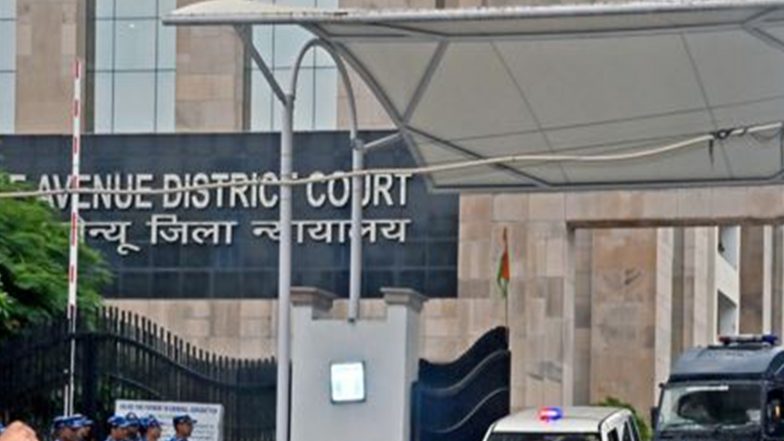
New Delhi [India], May 17 (ANI): Delhi Court has declined to vacate the interim order passed in April concerning the publication and circulation of online content linking Manoj Kesarichand Sandesara and his family to the Sterling Biotech bank fraud allegations.
The order was passed by the court of Senior Civil Judge Richa Sharma in a civil suit filed by businessman Manoj Kesarichand Sandesara against Google LLC, Meta Platforms and unidentified publishers seeking removal, de-indexing and de-referencing of allegedly defamatory online content.
The suit concerns various articles, videos and social media content referring to the Sandesara family in connection with the Sterling Biotech matter.
Advocates Tanmaya Mehta, Hemant Shah, Saurabh Pal and Saurabh Rajput appeared for the plaintiff.
According to the plaintiff, such reports continued to portray the family as "fugitives", involved in "bank fraud", "money laundering" and "siphoning public money" despite subsequent developments before the Supreme Court.
The trial court order extensively records the background of the Sterling Group and proceedings initiated against the group and its promoters by multiple investigative agencies. The plaintiff stated that Sterling Biotech and associated companies had availed banking facilities for several years and later faced financial distress due to regulatory and market-related issues.
A significant portion of the order reproduces various Supreme Court proceedings in connected matters from 2020 onwards, including settlement discussions involving banks and investigative agencies. The Court specifically noted submissions made before the Apex Court by Adv Hemant Shah appearing for the plaintiffs in connected writ petitions.
As recorded in the order, the Supreme Court on February 13, 2024, accepted a statement made by Adv Hemant Shah that the plaintiffs would deposit Rs 900 crore before the Registry of the Court within three weeks. The Apex Court further observed that all interim protections would automatically stand vacated in case of default.
The order further notes that subsequent payments running into hundreds of crores were made pursuant to statements recorded before the Supreme Court, including substantial transfers to bank recovery accounts.
The Delhi Court also reproduced the Supreme Court's order dated November 19, 2025, wherein the Apex Court observed that, subject to the deposit of Rs 5100 crore towards full and final settlement with lender banks and investigating agencies, the writ petitions deserved to be allowed and proceedings quashed.
Subsequently, on December 17, 2025, the Supreme Court recorded that more than Rs 5111 crore had been deposited and directed disbursal of the amount to the respective banks. The Apex Court further clarified that FIRs, investigations and proceedings by agencies, including CBI, ED, SFIO, proceedings under PMLA and related actions would stand quashed pursuant to the settlement.
Relying on these developments, the plaintiff argued before the Delhi Court that continued online circulation of old reports and videos was damaging his reputation and business interests despite the settlement and closure of proceedings. The plaintiff further invoked the evolving "right to be forgotten" jurisprudence and sought removal of the disputed URLs from search engines and social media platforms.
Google opposed the plea and sought vacation of the interim order, contending that it merely functions as an intermediary under the Information Technology Act and does not create or publish the disputed content. It argued that the actual publishers and media houses responsible for the content had not been impleaded despite being identifiable.
The company further argued that the suit was barred by limitation, that Indian law does not presently recognise a broad enforceable "right to be forgotten", and that the impugned content consisted largely of reporting on judicial proceedings and matters of public record.
Meta also challenged the continuation of the interim directions, arguing that no specific URLs hosted on its platforms had been identified and that intermediaries cannot be compelled to proactively monitor content under the Information Technology Act and the Supreme Court's ruling in Shreya Singhal.
Certain media entities additionally opposed the suit, contending that the impugned reports were based on publicly available information and constituted bona fide journalistic reporting on issues involving public interest and banking allegations.
The matter continues to raise larger questions concerning the balance between reputation, privacy rights and freedom of speech in the digital era, particularly in relation to online archives and reporting on judicial proceedings. (ANI)
(The above story is verified and authored by ANI staff, ANI is South Asia's leading multimedia news agency with over 100 bureaus in India, South Asia and across the globe. ANI brings the latest news on Politics and Current Affairs in India & around the World, Sports, Health, Fitness, Entertainment, & News. The views appearing in the above post do not reflect the opinions of LatestLY)