
World News | Nepal’s Traditional Tattoo Meets Modern Aesthetic Values
Get latest articles and stories on World at LatestLY. Everybody is turned into a canvas, etched with pictures of the gods with elements of modernisation. The “Himalayan Tattoo Summit 0.3” is the place where traditional values meet modern designs.

By By Binod Prasad Adhikari
Lalitpur [Nepal], October 3 (ANI): Everybody is turned into a canvas, etched with pictures of the gods with elements of modernisation. The “Himalayan Tattoo Summit 0.3” is the place where traditional values meet modern designs.
Also Read | Nike Layoffs: Sportswear Giant Announces More Job Cuts and Restructuring Amid Slumping China Sales.
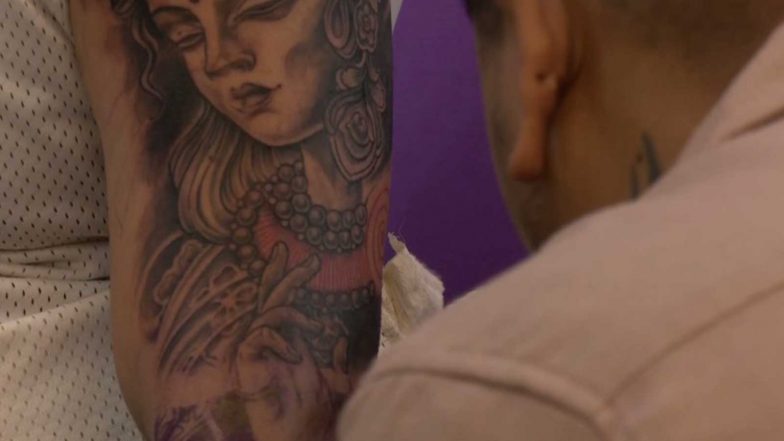
More than a hundred tattoo artists from Nepal and neighbouring India are presenting their best art at the conference, bringing various designs, from traditional to modern styles, to life on the human body.
The designs include those of Ganesh, Living Goddess Kumari, Buddha, Hanuman and other comical as well as religious characters, fusing them with modern concepts.
Also Read | Strait of Hormuz: 5 Indian Nationals Rescued After Kuwait-Flagged Tanker MT Kazimah III Hit by Projectile.
“Previously in Nepal, normally the tattoo artists would use to do only traditional type of tattooing, now day-by-day and years-by-years everything is changing slowly so Nepali tattoo artists are not doing traditional tattooing but also do realism, dotted, Japanese and other styles of tattooing as well,” Brijesh Shrestha, one of the members of the organising committee, told ANI.
Tattoo culture in Nepal is one of the oldest traditions practised widely by Newa, Tharu, Gurungs and Magar, the aboriginals of the Himalayan nation. As per the younger generation, traditional tattoos lacked precise details, linking them more to the communities and spiritual beliefs, but modern tattoo designs focus more on aesthetics.
Being driven by aesthetic values, younger generations are now making a fusion of traditional beliefs with modern designs to ink on various parts of their body. In Kathmandu Valley, tattoos in bygone days were mostly done during the Jatras (festivals) and Melas (carnivals) like Rato Machindra Jatra and Indra Jatra. Kathmandu’s Tebahal and Bhaktapur’s Thimi were famous for tattoo art, which is called “Lha: Chyogu” in the Nepali Bhasha or the Newa language.
‘Lha’ in Newa means ‘flesh’ and ‘chyogu’ means ‘writing’; the tattoo on the legs of Newari women symbolises their strength, and a belief follows that a person takes nothing but the tattoos on his/her body after death. And on the way to heaven, if one finds hardships, he/she can sell the tattoos and therefore make the way to heaven more comfortable.
Back then, coal and milk were mixed with plants to produce colours for the ink used to design the tattoos. Now, inks are widely used, poured into a machine and then run over the sketched areas of the body. In Nepal, the trend of cultural tattooing has evolved and taken different forms.
Nowadays, getting a tattoo is a way that a person expresses him/herself through art, words or symbols. Nepal is now known as one of the best destinations for getting inked. Many Nepalese artists have been internationally renowned for their artistic work and creativity. (ANI)
(The above story is verified and authored by ANI staff, ANI is South Asia's leading multimedia news agency with over 100 bureaus in India, South Asia and across the globe. ANI brings the latest news on Politics and Current Affairs in India & around the World, Sports, Health, Fitness, Entertainment, & News. The views appearing in the above post do not reflect the opinions of LatestLY)