Births and Deaths Amendment Bill Passed in Lok Sabha: What Changes for Delayed Birth, Death Registrations?
The Lok Sabha on Friday passed the Registration of Births and Deaths (Amendment) Bill, 2026, tightening the process for delayed registration of births and deaths, even as opposition members continued their protest over the police crackdown on Cockroach Janta Party (CJP) protesters during the July 20 'Chalo Sansad' march in New Delhi.

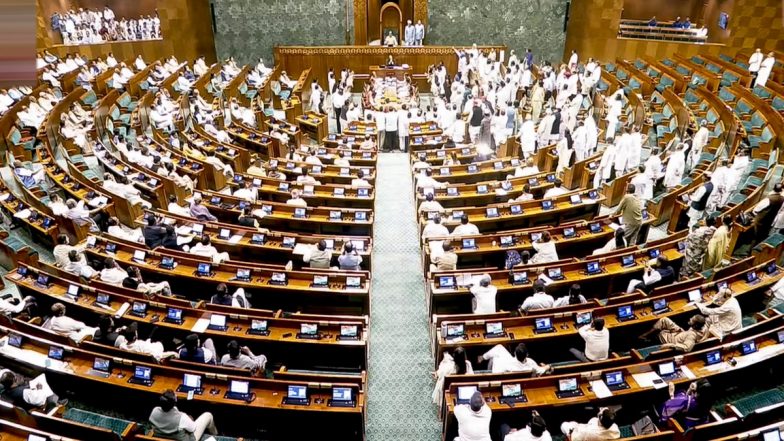
The Lok Sabha on Friday passed the Registration of Births and Deaths (Amendment) Bill, 2026, tightening the process for delayed registration of births and deaths, even as opposition members continued their protest over the police crackdown on Cockroach Janta Party (CJP) protesters during the July 20 'Chalo Sansad' march in New Delhi. The bill was passed by voice vote without a formal debate, with BJP MP Dilip Saikia in the Chair expressing displeasure that it was cleared without opposition cooperation. The legislation now moves to the Rajya Sabha for approval, where it will need to clear the Upper House before becoming law.
What Changed: The Core Amendment
The central change introduced by the 2026 bill concerns who has the authority to approve late registrations of births and deaths.
Under the existing Registration of Births and Deaths Act, 1969, registrations delayed by more than one year require approval from a district magistrate, sub-divisional magistrate, or an authorised executive magistrate. This single tier applies regardless of how long the delay has been. Lok Sabha Passes Public Examinations Bill 2026, Brings Tougher Punishment for Paper Leaks.
The amended bill splits this into two tiers. Delays of one to two years will continue to require magisterial approval as before. But for registrations delayed by more than two years, the bill now mandates an order from a Judicial Magistrate of the First Class (JMFC), a more stringent judicial process than the existing executive magistrate route.
Other Key Changes In The Bill
Beyond the delayed registration process, the bill also updates legal terminology to bring it in line with the Bharatiya Nagarik Suraksha Sanhita, 2023, replacing outdated references and aligning the term "executive magistrate" with the new criminal procedure code. Rajnath Singh Requests Treasury MPs To Remain Silent and Listen to Rahul Gandhi (Video).
The legislation builds on amendments already made to the parent Act in 2023, which had introduced a national database of registered births and deaths maintained by the Registrar General of India, with state-level Chief Registrars and Registrars required to share data into this central system.
The bill was cleared by the Union Cabinet on July 20, ahead of its introduction in the Lok Sabha.
Why It Matters
Officials say the tighter norms are intended to encourage more timely reporting of births and deaths and reduce long-pending delayed registrations, which have implications for identity documentation, welfare access, and demographic records. Some reports have also pointed out that stricter compliance requirements could have a bearing on the upcoming census exercise.
Disruptions Mark The Passage
The bill's passage came amid continued sloganeering by opposition MPs, several of whom moved into the Well of the House demanding the presence of Union Home Minister Amit Shah. Saikia urged members to return to their seats so discussion could continue, saying the bill had been passed without the opposition's cooperation.
Union Parliamentary Affairs Minister Kiren Rijiju also criticised the repeated disruptions, saying the government wanted a proper discussion on the legislation and cautioning members that voters would seek accountability for the lack of participation.
With this bill, the government has now pushed through a third piece of legislation this Monsoon Session amid opposition disruptions, after the Public Examinations (Prevention of Unfair Means) Amendment Bill, 2026, and the Prevention of Insults to National Honour (Amendment) Bill, 2026, both of which have already cleared Parliament.
What's Next
The Registration of Births and Deaths (Amendment) Bill, 2026, will now be tabled in the Rajya Sabha. If passed there as well, it will move to the President for assent before coming into force.
(The above story first appeared on LatestLY on Jul 31, 2026 09:01 PM IST. For more news and updates on politics, world, sports, entertainment and lifestyle, log on to our website latestly.com).