Lok Sabha Passes Public Examinations Bill 2026, Brings Tougher Punishment for Paper Leaks
The Lok Sabha on Tuesday passed the Public Examinations (Prevention of Unfair Means) Amendment Bill, 2026, introducing stringent penalties for paper leaks and establishing dedicated Fast-Track Courts to try examination fraud. Tabled by Union Minister of State for Personnel Dr. Jitendra Singh, the legislation amends the 2024 principal Act.

- Read in
- हिंदी
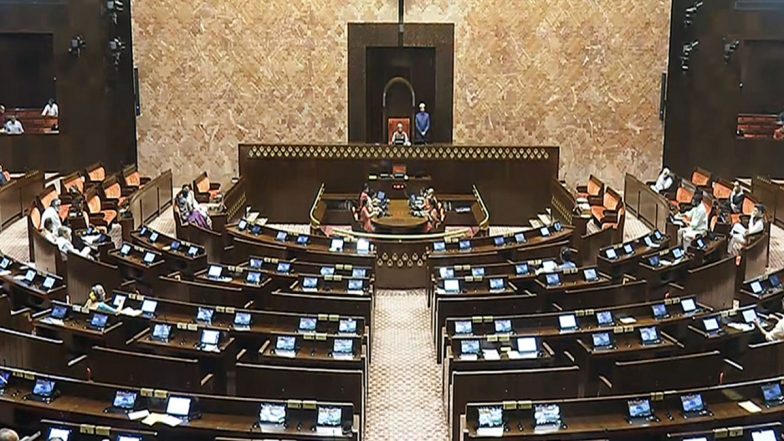
The Lok Sabha on Wednesday passed the Public Examinations (Prevention of Unfair Means) Amendment Bill, 2026, introducing stringent penalties for paper leaks and establishing dedicated Fast-Track Courts to try examination fraud. Tabled by Union Minister of State for Personnel Dr. Jitendra Singh, the legislation amends the 2024 principal Act.
While the government presented the legislation as a decisive crackdown on organized cheating syndicates, the passage was accompanied by high-octane political debate. Opposition benches sharply criticized the Centre over recurring exam cancellations, demanding accountability at the highest administrative levels. 'Students, Idiots, and Andhbhakts': Key Highlights From Rahul Gandhi’s Lok Sabha Speech (Video).
Why the Bill Was Brought
Introducing the Bill, the Union Government stated that while the 2024 Act established a unified legal framework, recent high-profile compromises—including the cancellation and re-conduct of NEET-UG-demonstrated the need for stronger deterrence and faster prosecution.
Treasury benches argued that organized cheating networks operate as lucrative criminal enterprises requiring specialized legal tools. By increasing financial fines, doubling service provider debarment periods, and imposing mandatory investigation timelines, the government aims to dismantle the financial incentives driving paper leak operations.
"When a competitive examination is compromised, its impact is not limited to a single paper-it shakes the trust of millions of hardworking youth," treasury members noted during the debate, calling the amendment a necessary response to modern technological and organized threats. Rajnath Singh Requests Treasury MPs To Remain Silent and Listen to Rahul Gandhi (Video).
Public Examinations Bill 2026 Passed in Lok Sabha
The Public Examination (Prevention of Unfair Means) Amendment Bill, 2026, passed in Lok Sabha. pic.twitter.com/rjuhibsGXy
— ANI (@ANI) July 29, 2026
'Law Without Administrative Accountability'
The Opposition launched a coordinated attack on the government, arguing that harsher laws cannot cover up systemic administrative failures within testing agencies like the National Testing Agency (NTA).
Key arguments raised by Opposition MPs included:
-
Lack of Top-Level Accountability: Opposition leaders, including Congress MP Priyanka Gandhi Vadra, argued that the government is focusing on post-facto legal penalties rather than fixing structural lapses in exam administration. They demanded that political and bureaucratic leadership take direct responsibility for repeated leaks.
-
Treatment of Protesting Students: Members from the Congress, Samajwadi Party, and DMK raised concerns over alleged police action against students protesting the NEET irregularities, accusing the Centre of ignoring aspirants' grievances until pushed by political pressure.
-
Judicial Feasibility & Federal Concerns: Several MPs questioned whether designating Courts of Session as Special Fast Track Courts with strict 3-month trial mandates is practical without significantly expanding judicial infrastructure. Others raised concerns over central overreach into state-level recruitment jurisdictions.
Key Legislative Provisions at a Glance
| Offence Category | 2024 Act Provision | 2026 Amendment Provision |
| Individual Unfair Means | 3 to 5 years jail; up to ₹10 lakh fine | 5 to 10 years jail; up to ₹50 lakh fine |
| Service Provider Malpractice | Up to ₹1 crore fine; 4-year debarment | Up to ₹5 crore fine; 8-year debarment |
| Management / Directors | 3 to 10 years jail; ₹1 crore fine | Min. 5 to 10 years jail; up to ₹5 crore fine |
| Organised Cheating Syndicates | 5 to 10 years jail; min. ₹1 crore fine | 7 to 10 years jail; ₹1 crore to ₹10 crore fine |
Fast-Track Judicial Framework
Beyond higher monetary and prison terms, the 2026 Amendment introduces strict procedural timelines:
-
2-Month Investigation Limit: Law enforcement agencies or Special Task Forces must complete investigations within 60 days of registering an FIR.
-
Special Fast-Track Courts: Every state and UT must designate Special Courts of Session to conduct trials on a day-to-day basis, aiming for trial completion within three months of chargesheet filing.
-
Restricted Appeal Window: Appeals against court orders must be filed before a two-judge High Court bench within 30 days and disposed of within three months.
With the Lok Sabha's approval, the Bill now moves to the Rajya Sabha before heading to the President for assent.
(The above story first appeared on LatestLY on Jul 29, 2026 03:35 PM IST. For more news and updates on politics, world, sports, entertainment and lifestyle, log on to our website latestly.com).