Delhi Bans Idol Immersion in Yamuna, Other Water Bodies During Ganeshotsav, Durga Puja
The Delhi Pollution Control Committee (DPCC) has prohibited the immersion of idols in the Yamuna and other water bodies in the national capital, allowing visarjan only at designated locations identified by local authorities.

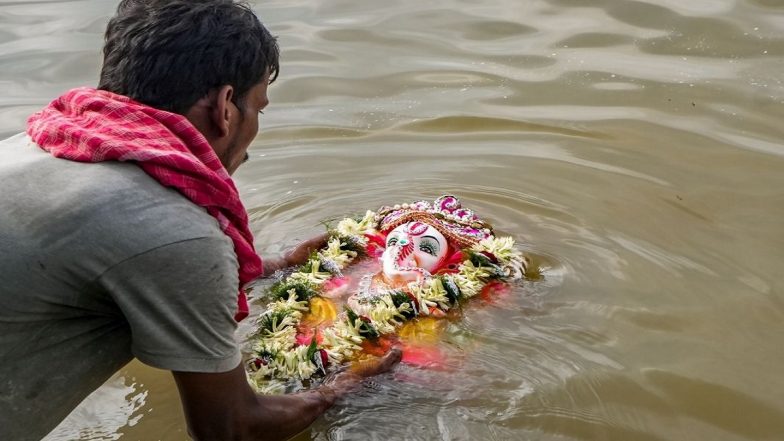
The Delhi Pollution Control Committee (DPCC) has prohibited the immersion of idols in the Yamuna and other water bodies in the national capital, allowing visarjan only at designated locations identified by local authorities. The directions have been issued ahead of the festive period covering Ganeshotsav and the upcoming Durga Puja celebrations.
The order, dated September 9, was issued under Section 33A of the Water (Prevention and Control of Pollution) Act, 1974. The DPCC has also directed idol makers and sellers to use natural clay, biodegradable materials and natural colours, while restricting the use of Plaster of Paris (PoP) idols for immersion in water bodies. Ganesh Chaturthi 2026: Ambani Family Bids Farewell to Bappa.
No Idol Immersion in Yamuna Except Designated Sites
Under the latest directions, idols cannot be immersed directly in the Yamuna or other water bodies in Delhi. Immersion will be permitted only at designated sites identified by local bodies or other competent authorities. Violations can attract an environmental compensation of ₹50,000, according to the DPCC directions.
The restriction covers traditional immersion practices involving rivers, lakes, ponds and other water bodies. The DPCC has asked authorities to ensure that arrangements are available at designated locations so that devotees can follow the required immersion process without polluting natural water bodies.
DPCC Pushes Natural Clay, Biodegradable Materials
The pollution control body has instructed idol makers and sellers to use natural clay and biodegradable materials while making idols. For decoration, the directions call for natural dyes and colours instead of chemical-based paints. The DPCC has specifically said that PoP-based idols should not be allowed for immersion in water bodies. Ganeshotsav 2026: 79 Ganesh Idols Immersed Safely by Noon in Mumbai on First Day.
The move follows concerns that materials used in idols and their paints can enter water bodies during immersion. The DPCC has cited the presence of substances such as mercury, zinc oxide, chromium, lead and cadmium in certain chemical paints and dyes as an environmental concern.
Artificial Ponds to Be Created for Idol Visarjan
Urban local bodies have been directed to create temporary or artificial immersion ponds close to residential areas and localities. The arrangement is intended to provide an alternative to immersing idols directly in rivers, lakes and ponds. Residents and puja committees have also been encouraged to consider immersion in buckets or temporary artificial ponds within homes or residential premises where feasible.
The DPCC directions further call for flowers and other worship materials to be removed before immersion. Biodegradable material should be collected separately for composting or recycling, while non-biodegradable waste is to be handled separately.
Delhi Police, Civic Bodies Asked to Enforce Rules
The directions put responsibilities on municipal bodies and the Delhi Police to help enforce the restrictions. Municipal authorities have been asked to check for illegal idol-making and take action against units operating without the required registration or licence. Authorities have also been directed to monitor vehicles and goods carriers entering Delhi with prohibited idols. The Delhi Police has been asked to take appropriate action against people violating the immersion directions.
DPCC to Monitor Water Quality
The DPCC has also planned water-quality assessments at different stages of the immersion process — before, during and after idol immersion — using parameters prescribed under the Central Pollution Control Board's revised guidelines. The monitoring is aimed at assessing the impact of festival-related immersion activities on water quality and ensuring compliance with the pollution-control measures.
Rules Based on CPCB's 2020 Revised Guidelines
The Delhi directions follow the Central Pollution Control Board's revised guidelines issued in May 2020 for idol immersion. The CPCB guidelines promote the use of naturally occurring clay and colours, restrict toxic and inorganic materials such as PoP, plastic and other non-biodegradable materials, and provide for temporary confined ponds or tanks for immersion. They also call for proper management of waste generated during visarjan.
The broader objective is to allow religious celebrations while reducing the impact of idol immersion on rivers and other water bodies.
Idol immersion has long been a concern for water pollution authorities because materials used in idol-making, paints and decorations can affect water quality. The CPCB's guidelines were framed to reduce such pollution while providing designated and controlled arrangements for immersion.
Delhi has previously issued similar directions for Ganeshotsav and Durga Puja, including provisions for artificial immersion ponds and eco-friendly idols. The latest September 2026 order reiterates these measures as Ganeshotsav celebrations conclude and preparations begin for Durga Puja.
DISCLAIMER: This article is strictly for informational and educational purposes to raise awareness about the said topic. LatestLY DO NOT host, distribute, or provide links to sexually explicit content, leaked videos, or pirated material. Any search terms or keywords mentioned are solely for the purpose of explaining the viral trend and its associated dangers. We strongly condemn the circulation of non-consensual intimate imagery (NCII) and advise all readers to refrain from searching for or sharing such content, as doing so may lead to severe legal consequences.
(The above story first appeared on LatestLY on Sep 16, 2026 04:44 PM IST. For more news and updates on politics, world, sports, entertainment and lifestyle, log on to our website latestly.com).