Does Refusing To Marry a Live-In Partner Amount to Abetment of Suicide? Supreme Court Answers
The Supreme Court ruled that refusing to marry a live-in partner, resulting in suicide, does not constitute abetment without intentional instigation, quashing criminal proceedings against six accused. The Court quashed criminal proceedings after finding no material to show that the refusal to marry was intended to drive the woman to suicide.

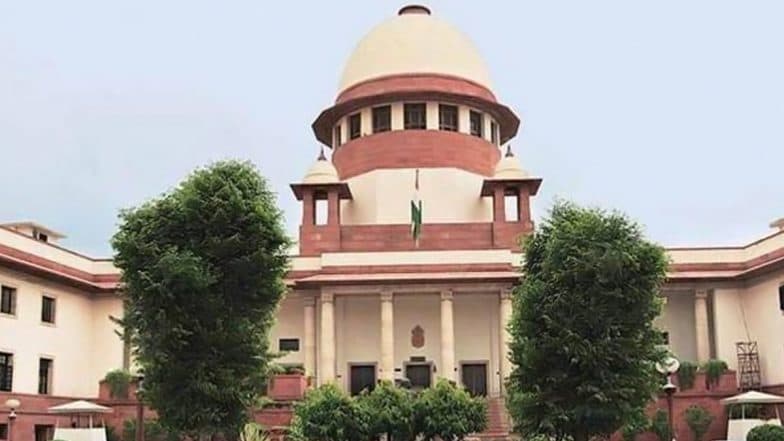
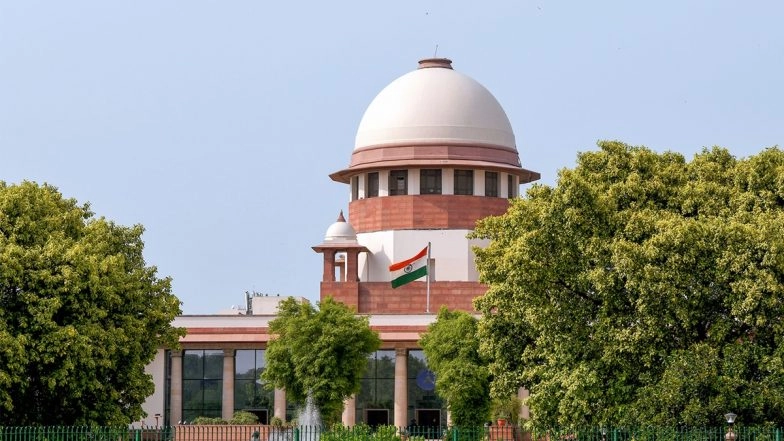
The Supreme Court has ruled that refusing to marry a live-in partner, followed by the partner’s suicide, does not by itself constitute the offence of abetment of suicide without clear evidence of intentional instigation or knowledge. A Bench comprising Justice J.B. Pardiwala and Justice K. Vinod Chandran made the observation while quashing criminal proceedings against six accused individuals, including the woman's partner, his parents, and his sister.
Court Observations on Breakups and Suicide
The apex court noted that the allegations brought forward by the prosecution, even if accepted entirely as stated by the complainant, failed to establish any direct act of instigation by the accused to drive the woman to take her own life, reports Bar and Bench. Supreme Court Questions NHAI on Electronic Surveillance to Track Parked Vehicles on Highways.
“People react differently to situations and if a breakup ends up with suicide, it cannot always be termed an abetment to suicide. The refusal to marry was not with an intention to drive the woman to death by suicide nor can knowledge be attributed to the accused that on such refusal, she would commit suicide,” said the Court. The Bench further stated, “We are unable to find any instigation by the accused/appellants to drive the deceased to death by suicide. It was neither intended nor can it be said to be abetment.”
Background of the Case and Legal Proceedings
The legal proceedings stemmed from a 2022 First Information Report (FIR) registered under Section 306 read with Section 34 of the Indian Penal Code (IPC) for abetment of suicide with a common intention. According to the prosecution, the deceased woman and the primary accused were childhood friends in a consensual relationship and had lived together at his residence for approximately three months.
While the man had initially proposed marriage, complications arose when external pressures emerged: a friend allegedly spoke ill of the deceased, the sister’s prospective husband opposed the union, and family members urged the partner to end the relationship. Following a dispute at the residence after the partner refused to proceed with the wedding, the woman locked herself in a room and died by suicide. Rajpal Yadav Cheque Bounce Case: Supreme Court Slams Actor As He Fails To Deposit INR 5 Crore, Gives Last Chance.
Although the trial court rejected a discharge plea in December 2024, and the Telangana High Court dismissed a subsequent revision petition in February 2026, the Supreme Court set aside the lower rulings. Finding no material evidence of intentional instigation, the apex court allowed the appeal and formally quashed the criminal proceedings against all the accused.
Suicide Prevention and Mental Health Helpline Numbers:
Tele Manas (Ministry of Health) – 14416 or 1800 891 4416; NIMHANS – + 91 80 26995000 /5100 /5200 /5300 /5400; Peak Mind – 080-456 87786; Vandrevala Foundation – 9999 666 555; Arpita Suicide Prevention Helpline – 080-23655557; iCALL – 022-25521111 and 9152987821; COOJ Mental Health Foundation (COOJ) – 0832-2252525.
Women and Child Helpline Numbers:
Childline India – 1098; Missing Child and Women – 1094; Women’s Helpline – 181; National Commission for Women Helpline – 112; National Commission for Women Helpline Against Violence – 7827170170; Police Women and Senior Citizen Helpline – 1091/1291.
(The above story first appeared on LatestLY on Oct 09, 2026 09:15 AM IST. For more news and updates on politics, world, sports, entertainment and lifestyle, log on to our website latestly.com).