Does Summoning Hotel Records, Call Data To Prove Adultery Violate Right to Privacy? Supreme Court Answers
The Supreme Court has ruled that the right to privacy does not prevent the summoning of hotel records and call logs in divorce cases to prove adultery. While privacy is a fundamental right, the court held it is not absolute and cannot shield evidence necessary for a fair trial in matrimonial disputes, provided the information is handled through court-protected procedures.

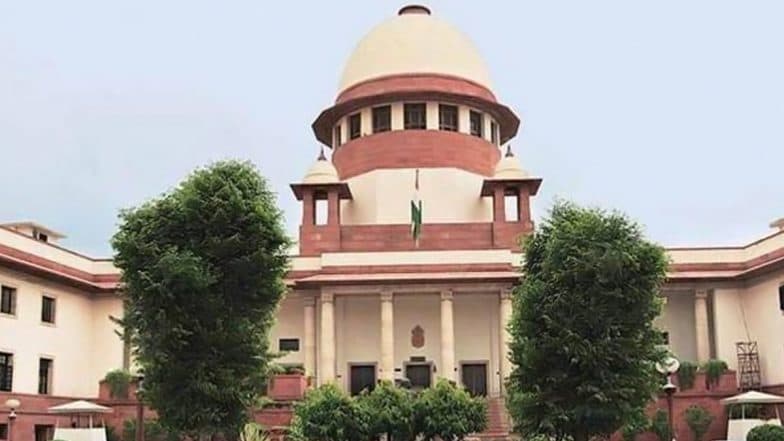
The Supreme Court of India has affirmed that the right to privacy under Article 21 of the Constitution cannot be invoked to block the production of evidence in matrimonial proceedings. In a ruling delivered on July 2, the top court upheld a decision allowing a spouse to summon hotel booking records and Call Detail Records (CDRs) to substantiate allegations of adultery.
Balancing Privacy and Fair Trial
The judgment stems from a divorce petition in which a wife alleged that her husband had engaged in an extramarital affair, specifically citing instances where he reportedly stayed at a hotel in Jaipur with another individual. To support her case, she sought the production of hotel booking records, payment details, and the husband’s call logs. Why the Supreme Court Called Cyber Criminals 'Parasites' While Rejecting Bail to Man Accused of Cyber Fraud.
The husband had challenged the move, arguing that the disclosure of such personal data would constitute a breach of his fundamental right to privacy. Dismissing the appeal, the bench of Justices Manmohan and K. Vinod Chandran maintained that privacy rights are not absolute. The court emphasised that while privacy is a fundamental right, it is subject to "reasonable restrictions," especially when such information is essential for a fair judicial process. The bench noted that in cases where one spouse has no other effective means to prove a claim of adultery, the court has a duty to facilitate the collection of relevant evidence.
Procedural Safeguards and Legal Context
To address concerns regarding the sensitivity of the information, the court upheld the use of a "sealed cover" procedure. This mechanism ensures that the records are produced directly before the court, balancing the need for transparency in legal proceedings with the necessity of protecting confidential information. The court further relied on Section 14 of the Family Courts Act, 1984, which grants family courts broad discretion to receive documents or statements that may assist in resolving matrimonial disputes, even if they might not be strictly admissible under the Indian Evidence Act. Tehseen Poonawalla Shares Video of AG Calling E20 Petrol Policy ‘Experiment’ in Supreme Court After Govt’s Denial.
Implications for Matrimonial Litigation
Legal experts observe that this ruling clarifies the intersection of modern privacy standards and the requirements of divorce litigation. By affirming that the right to privacy cannot serve as a "shield against evidence," the court has provided a clear precedent for how future matrimonial disputes involving digital or hotel-based evidence should be handled. The decision underscores that when specific allegations - such as adultery or cruelty - are raised in a marriage, the judiciary must balance the sanctity of an individual's private life against the right of the other party to establish their case through admissible evidence.
(The above story first appeared on LatestLY on Jul 06, 2026 05:59 PM IST. For more news and updates on politics, world, sports, entertainment and lifestyle, log on to our website latestly.com).