Fiji Declares HIV a National Crisis, 1 in 60 Adults Carry It
Fiji's government estimates that HIV prevalence has almost tripled in the last five years.

Fiji's government estimates that HIV prevalence has almost tripled in the last five years. It's expanding testing, prevention and treatment services. In 2025 the tiny island recorded 16 times more new cases than in 2019.Fiji has declared HIV a national health crisis, pledging a "whole-of-government response to address the significant rise in HIV cases and protect communities across the country."
Also Read | Kanpur: Delivery Boy Falls Into Open Pit in UP, Rescued by Bystanders (Video).
The Pacific island's government announced the move earlier this week, saying it had recorded 2,016 new HIV diagnoses in 2025 — 16 times the number recorded in 2019. The figures point to the virus spreading beyond high risk groups like drug users and sex workers into the wider population.
Also Read | 2 Men From Telangana, Karnataka Detained in Saudi Arabia and Dubai; Families Appeal to MEA.
Fiji said the known adult prevalence of the virus had almost tripled in five years in the country of a little more than 900,000 people.
What did Fiji's government say about HIV and its response?
"An estimated one in every 60 adults is now living with HIV, compared with one in 167 five years ago," the government said.
"Among pregnant women, two in every 100 are living with HIV, while 59 babies were born with HIV in 2025, with 18 dying before their first birthday," it warned.
However, the government also said that expanded testing was helping health services reach more people and identify cases that might have previously gone undetected, noting a period of slower surveillance starting around a decade ago.
Health Minister Ratu Atonio Lalabalavu and four other revlevant Cabinet ministers would form a sub-committe to "help remove barriers to rapid action."
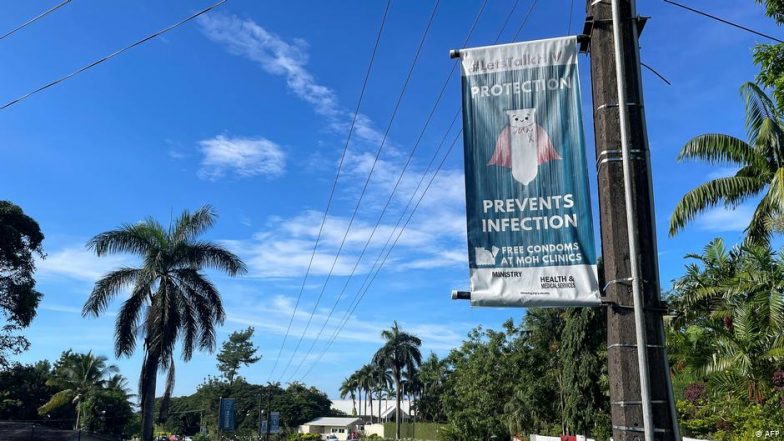
The administration based in the capital and port city Suva said it was expanding access to free HIV testing, prevention services and treatment — including rapid testing, prevention medecine for people at high risk, harm-reduction measures for people who inject drugs and free treatment for diagnosed HIV sufferers.
"The response is focused on protecting lives, improving access to health services and reducing stigma," the government said. "Fiji is also receiving support from international partners, including Australia, New Zealand, India, the Global Fund and the United Nations."
It reminded people that testing was free and confidential across the country, saying "knowing your HIV status allows you to take informed steps to protect your health and others."
UNAIDS welcomes response, estimates less than half of Fiji's HIV sufferers know their status
UNAIDS in Geneva responded to the move on Wednesday, welcoming Fiji's decision to accelerate its response.
"Fiji has recognized the urgency of the moment and is stepping up its response," said UNAIDS Executive Director Winnie Byanymia. "It is also a stark reminder to the world that AIDS is not over. HIV epidemics can change quickly, and countries need health and community systems that are ready to respond urgently."
The UN organization said that among Fijian cases with a known mode of transmission, more than half were linked to sexual transmission and more than 42% to injecting drug use.
UNAIDS estimated that new infections increased 12-fold between 2010 and 2025 in Fiji. It also said that of an estimated 9,100 people living with the virus in 2025, "only 39% knew their HIV status and just 22% were accessing antiretroviral treatment."
However, giving medical advances in recent years and increased efficacy of treatments, it said that there was time to turn the tide.
"The national crisis declaration is a call for action, not fear. HIV is not transmitted through everyday contact, and people on effective treatment with an undetectable viral load do not sexually transmit HIV," said UNAIDS' Eamonn Murphy. "Fiji still has an opportunity to change the course of this epidemic."
The country director for Fiji at UNAIDS, Renata Ram, told the AFP news agency that transmission rates started rising around 2019 when a group of "very high-risk" injecting drug users emerged, primarily in the sex worker community.
Pacific islands like Fiji have become transit hubs for drugs from Latin America and Asia destined for the lucrative markets in Australia and New Zealand. This has also led to increased drug use on the islands themselves, often as a result of foreign crime syndicates paying their local associates with product.
If you rely on our team for trusted reporting, please take a moment to select us as your Preferred Source on Google, so you'll always see our verified news first.
Edited by: Elizabeth Schumacher
(The above story first appeared on LatestLY on Sep 17, 2026 02:50 PM IST. For more news and updates on politics, world, sports, entertainment and lifestyle, log on to our website latestly.com).